
Do Laser Caps Work for Hair Loss? What a 12-Month Study Found
Do laser caps work for hair loss? Yes. In hereditary pattern hair loss, clinical research shows that specific low-level laser and light devices can increase hair density and shaft thickness. A 2026 study enrolled 68 people with androgenetic alopecia; 64 completed the 48-week protocol. Mean hair density increased from 99.2 to 124.2 hairs per cm², while mean shaft thickness increased by about 16%.
That is positive evidence, but it does not mean every laser cap works for every cause of hair loss. The study was open-label, had no sham-control group, was funded by the manufacturer of the tested device and evaluated a different laser-and-LED system from the Resty MARS Laser Cap. The precise conclusion is that the LLLT category has evidence for androgenetic alopecia, while outcomes remain device-, dose- and person-specific.
What did the new 12-month study investigate?
The peer-reviewed paper Long-Term Efficacy and Safety of Low-Level Laser Therapy for Androgenetic Alopecia was first published on 8 January 2026 in Dermatologic Therapy. It was a prospective multicentre trial of long-term home low-level laser therapy, usually shortened to LLLT.
The researchers screened 82 adults and enrolled 68: 51 men and 17 women aged 19 to 64. All had dermatologist-diagnosed androgenetic alopecia. Men had Hamilton-Norwood IIa to V hair loss; women had Ludwig or Sinclair I to II. Other causes such as alopecia areata, scarring alopecia and active scalp disease were outside the study.
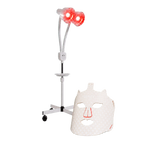
Participants used the LG Pra.L MediHair HGN1. The helmet contained 146 laser diodes at 646 to 675 nm and 104 LEDs at 645 to 665 nm. Each session lasted 20 minutes, three times weekly on nonconsecutive days, for 48 weeks. Hair density and shaft thickness were measured by phototrichogram at baseline and weeks 8, 16, 24, 36 and 48.
The results: more hairs per cm² and thicker shafts
Mean hair density rose from 99.2 to 124.2 hairs per cm². That was an average gain of 25.0 hairs per cm², or roughly 25.6% from baseline. The change first became statistically significant at week 16 and continued through week 48.
- 78% achieved at least a 5% increase in hair density at 48 weeks.
- 55% achieved at least a 15% increase.
- 25% achieved at least a 20% increase.
- 58.8% were rated visibly improved by investigators using global photographs.
- 85% reported satisfaction and willingness to continue.
Mean hair shaft thickness increased from about 65.9 to 75.3 micrometres. The absolute gain was 9.33 micrometres, or about 16%. Thickness improved later than density: the change became statistically significant from week 24. More than half of participants had at least a 15% increase in shaft diameter at the end.
Mean adherence among completers was 97.61%. That matters. The trial indicates not only that light parameters matter, but that consistent use over many months formed part of the tested outcome.
Does the wider evidence agree?
The new trial is not isolated. A 2025 systematic review and meta-analysis included 38 studies and 3,098 participants, 2,930 with androgenetic alopecia. Across studies lasting 4 to 26 weeks, LLLT significantly improved hair density versus placebo. Heterogeneity was high, which is consistent with large differences between devices, doses and protocols.

An earlier meta-analysis of seven double-blind randomized home-device trials also found a clear improvement versus sham. Positive subgroup findings appeared in men and women and with comb- and helmet-style devices. A 24-week randomized sham-controlled helmet trial also reported greater gains in density and diameter with the active laser helmet.
The combined evidence is therefore stronger than one manufacturer-funded study: multiple controlled trials point in the same direction. The careful claim remains that LLLT is an evidence-supported option for androgenetic alopecia, not that every buyer is guaranteed regrowth.
Which type of hair loss does this evidence cover?
The evidence primarily covers androgenetic alopecia: gradual hereditary pattern thinning. In men it often starts at the hairline, temples or crown. In women it often appears as a widening part or diffuse thinning over the top. These studies say much less about sudden shedding, round bald patches, scarring loss, hair breakage, post-illness shedding or nutritional causes.
The distinction is practical. If the cause is wrong, a well-followed protocol can still be the wrong intervention. Seek assessment for sudden or patchy loss, redness, scaling, pain or marked itching. The American Academy of Dermatology stresses that hair loss has many causes and that identifying the cause determines treatment.
Not a diagnosis: a consumer cap cannot establish why hair is falling out.What the study does not prove about Resty MARS
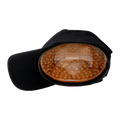
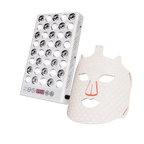
The Wiley study did not test the Resty MARS Laser Cap. The devices sit in a similar red-wavelength category, but the hardware and treatment protocol differ.

| Feature | Study device | Resty MARS |
|---|---|---|
| Light sources | 146 lasers + 104 LEDs | 272 laser diodes |
| Wavelength | Lasers 646 to 675 nm; LEDs 645 to 665 nm | 660 nm |
| Stated laser output | 3 mW per laser diode | 5 mW per laser diode |
| Session time | 20 minutes | 30-minute timer |
| Frequency | 3× weekly on nonconsecutive days | Follow the final MARS instructions |
Do not copy the study schedule to MARS. An analysis of LLLT parameters found that per-session energy, exposure time and pulsing were associated with hair-density change, while diode count alone was not. The complete dose matters more than one large number on a product page.
For setup, fit and a practical routine, use the separate guide How to use a laser cap: a practical 30-minute routine. Also review red-light eye safety; product-specific instructions always take priority.
How long can a result take?
In the 2026 study, objective hair density became significantly different from baseline at week 16. Shaft thickness became significant at week 24. Group averages continued to rise through week 48. An evaluation after a few days or weeks is therefore not meaningful.

A research timeline is not a personal guarantee. Record a consistent baseline before the first session and repeat photographs about every four weeks with the same camera, distance, part, hair length and lighting. Daily images mainly increase the chance that styling and light are mistaken for change.
- Week 0: photograph the front, part and crown under fixed light.
- Every session: record use and any discomfort.
- Every four weeks: repeat the same views, not a new angle.
- After several months: review the trend and discuss persistent or accelerating loss with a professional.
Safety and adverse effects
The 48-week study reported no device-related adverse events, burns, chronic scalp damage or systemic laboratory changes. That is reassuring for the exact device and schedule tested. Other randomized trials have occasionally described temporary shedding or mild itching; serious adverse events were uncommon.
Safe does not mean unlimited. Never look into active laser diodes, do not use a damaged cap, cable or power source, and do not extend sessions to chase a faster result. Stop with eye pain, persistent afterimages, unusual light sensitivity, marked itching, burning, rash or pain, and follow the instructions for the exact device.
The main limitations of the 2026 study
- No sham group: the 48-week study was open-label. Objective measurements help, but a control group would estimate the device's net effect more cleanly.
- Small subgroups: only 17 women and 5 participants with severe AGA were included.
- Manufacturer funding: LG Electronics funded the study and made the device. The authors declared no conflicts of interest.
- One protocol: the outcome applies to the tested sources, dose and 20-minute sessions, not every cap.
- No public raw data: data are available only on request.
- Possible concomitant treatment: the paper reports that some participants used minoxidil or finasteride at enrolment even though other hair-loss treatment was not intended during the protocol.
- Limited duration: 48 weeks is long for this field but does not show what happens after treatment stops.
These limits do not erase the result. They determine how strongly it can be stated. The positive finding aligns with sham-controlled trials and meta-analyses, but direct comparisons across devices and longer follow-up remain necessary.
Frequently asked questions
Do laser caps really work for hair loss?
For androgenetic alopecia, multiple randomized studies and meta-analyses show increased hair density with specific LLLT devices. This supports the category but does not guarantee an outcome for every cap or person.
Does the Wiley study prove that Resty MARS works?
No. It tested an LG helmet with 146 lasers and 104 LEDs, not Resty MARS. The result supports related low-level red-light technology in AGA, but it is not a product-specific MARS trial.
Which hair loss has the strongest evidence?
Gradual hereditary pattern hair loss, or androgenetic alopecia. Sudden, patchy, scarring or unexplained loss should be assessed to establish the cause.
How soon can a laser cap show a change?
In the 2026 study, density was significantly improved from week 16 and thickness from week 24. Individual timing varies and no fixed result date can be promised.
Should I use Resty MARS three times a week?
Do not copy that schedule. It belonged to the study device with 20-minute sessions. Resty MARS has a 30-minute timer; follow only the final product-specific frequency instructions.
Are more laser diodes automatically better?
No. Parameter research found no significant relationship between diode count and hair-density change. Output, dose, time, pulsing, distribution and fit work together.
Can I combine a laser cap with minoxidil or finasteride?
Discuss it with the clinician or pharmacist who assesses the cause and medication because suitability and risks are individual.
Are laser caps safe?
Studied LLLT devices were generally well tolerated and serious device-related events were uncommon. Use remains device-specific: do not look into lasers, do not use damaged components and stop with eye or scalp symptoms.
Compare the technology, not just the promise
Check the exact device's wavelength, laser output, fit, timer and safety information. Expect a consistent routine over months, not a guaranteed change in a few weeks.
View the Resty MARS Laser Cap Read the practical guide
Sources
- Shin et al. (2026), 12-month LLLT trial in androgenetic alopecia.
- Low-Level Laser and LED Therapy in Alopecia: systematic review and meta-analysis.
- Meta-analysis of randomized home devices for pattern hair loss.
- Analysis of LLLT device and usage parameters.
- 24-week randomized double-blind sham-controlled helmet trial.