


How to Use a Laser Cap: A Practical 30-Minute Routine
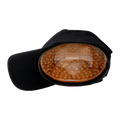
To use a laser cap, first confirm the fit, inspect the cap and power equipment, place it evenly on the head before activation and run only the session built into your exact device. The Resty MARS Laser Cap has a 30-minute timer. That is the session frame for this product, not permission to copy a daily, alternate-day or three-times-weekly schedule from another brand.
Laser caps differ in wavelength, output, beam layout, pulsing, scalp geometry and session length. Research protocols range from short daily sessions to longer sessions several times per week. The useful rule is therefore simple: use the Resty timer and the final product-specific instructions, do not add minutes or frequency because another cap advertises a different routine, and treat visible progress as something to document over months rather than promise in advance.
Resty MARS setup in 60 seconds
- Measure before ordering: the stated fit range is 58 to 61 cm head circumference.
- Inspect before every session: do not use a damaged cap, cable or power bank.
- Connect the supplied power: the set includes a 10,000 mAh power bank and two USB cables.
- Put the cap on before activation: settle it evenly and never look into illuminated laser diodes.
- Use the timer: one MARS session is framed by the built-in 30-minute timer; frequency follows the final manual.
The specifications that actually change the routine
A diode count is not a complete dose. These current product specifications describe the Resty hardware and the practical decision attached to each number.
| Specification | Resty MARS | What it means in use |
|---|---|---|
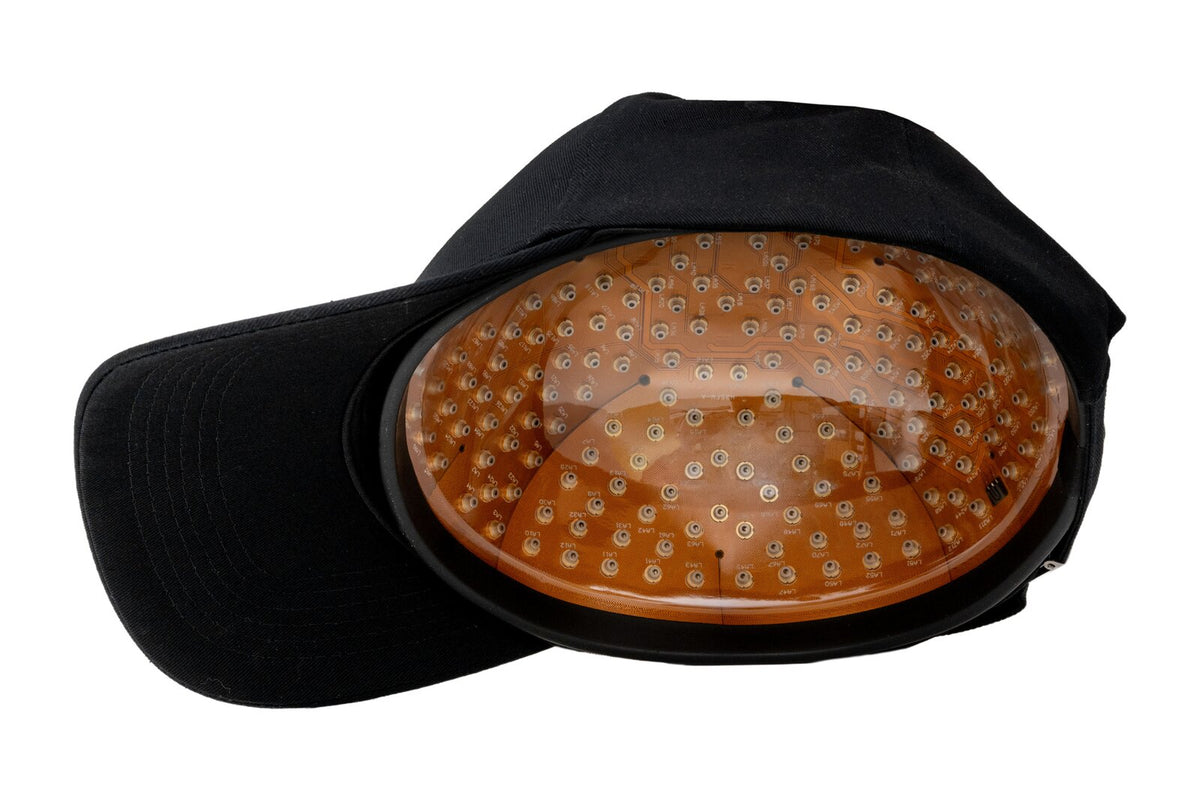
| Light source | 272 laser diodes | Distributed full-cap layout; do not compare by diode count alone |
| Wavelength | 660 nm | Visible red laser light; not a near-infrared mode |
| Specified power | 5 mW per diode | A hardware value, not a stand-alone result guarantee |
| Timer | 30 minutes | The fixed frame for one session |
| Weight | 222 g | Light enough for a hands-free seated routine |
| Fit | 58 to 61 cm | Measure around the head before buying |
| Dimensions | 340 × 265 × 145 mm | Check storage and fit rather than assuming one-size-fits-all |
| Power | 10,000 mAh power bank included | Use away from a wall socket with the supplied compatible cables |
How to use the Resty MARS Laser Cap step by step
This is a setup checklist based on the current Resty product information. The final manual remains decisive for frequency, care and any extra warning.

- Measure the fit. Measure the widest part of the head where the cap will sit. A cap outside the stated 58 to 61 cm range may sit unevenly, feel uncomfortable or fail to place the inner array as designed.
- Inspect the complete setup. Check the fabric cap, inner array, connectors, USB cable and power bank. Stop if a cable is frayed, a connector is loose or the power equipment is damaged.
- Connect compatible power while the cap is off. Use the supplied 10,000 mAh power bank and one of the included USB cables. Do not improvise with incompatible power equipment.
- Place the cap evenly before activation. Settle it in the intended wearing position. Do not switch it on while holding the illuminated interior toward your face or another person.
- Start one timed session. Let the built-in 30-minute timer define the session. Do not restart it immediately, stack sessions or extend the time to chase warmth, brightness or a faster result.
- Switch off, disconnect and store. Let the equipment return to room temperature, inspect it again and store it where the laser array, cable and power bank cannot be damaged.
How often should you use a laser cap?
There is no universal frequency for every laser cap. One randomized helmet study used 18 minutes daily, another used 20 minutes three times per week and another tested 30 minutes three times per week. Those are study protocols for those devices, not interchangeable instructions for MARS.
The current Resty product data confirms a 30-minute timer but does not publish a daily or weekly frequency. Follow the frequency in the final manual supplied with your cap. Until that instruction is in front of you, the honest answer is not to invent one.
Do not translate a competitor's six-minute daily routine into six minutes or daily use on MARS. Different output, coverage, pulsing and geometry change the delivered exposure. The same reason applies in reverse: a 30-minute MARS timer says nothing about how long another cap should run.
What the research says, without turning it into a Resty claim
Low-level laser and light devices have been studied for pattern hair loss, but the cited devices are not the Resty MARS Laser Cap. Their findings support careful interest in the category, not a guaranteed outcome for this product.

A systematic review and meta-analysis of seven randomized trials found a higher hair-density outcome for tested home-use LLLT devices than sham controls. It also called for longer follow-up and better device comparisons.
A review of device and use parameters found that session energy, exposure duration and pulsing mattered, while diode count was not significantly associated with the change in hair density. More diodes alone is therefore not proof of a better result.
A 24-week randomized trial tested a different 224-diode, 660 nm helmet for 20 minutes three times weekly. Hair-density and diameter outcomes exceeded sham, but the sample was small and the protocol belongs to that exact study device.
Another randomized trial used a different helmet with 630, 650 and 660 nm light for 18 minutes daily. Its schedule demonstrates protocol variation; it is not an instruction to use MARS every day.
How to track a routine without fooling yourself
Hair changes are slow and photography is easy to distort. Take a baseline before the first session, then compare at a fixed interval with the same camera, room, distance, parting, hair length and lighting. A bathroom mirror under different light is not a measurement.
Track adherence, comfort and one visual area. Do not change the cap schedule, haircut, styling product, medication and camera setup at the same time and then assign every change to the cap. Research often measures outcomes after 16 to 26 weeks, but that range is context for other devices, not a promised MARS timeline.
- Week 0: front, temples, part and crown in fixed lighting.
- Every four weeks: repeat the same views, not daily close-ups.
- Each session: record completion and any scalp or eye discomfort.
- Review point: discuss persistent or worsening hair loss with a qualified clinician instead of only adding exposure.
Laser-cap safety and reasons to pause
MARS is a laser product. Never look directly into illuminated diodes and never aim the active interior at another person. Read the exact eye-safety guide, but let the product manual overrule general internet advice.

Hair loss has many causes. The American Academy of Dermatology stresses that identifying the cause matters, especially when loss is sudden, patchy, accompanied by scalp symptoms or possibly related to medication. A consumer cap cannot diagnose the cause and should not delay appropriate assessment.
- Stop for eye symptoms: pain, persistent afterimages, unusual light sensitivity or a vision change.
- Stop for equipment damage: a frayed cable, loose connector, damaged power bank or exposed component.
- Stop for scalp symptoms: marked itching, pain, burning, rash or worsening irritation.
- Do not alter treatment: do not stop or combine prescribed hair-loss medication without the clinician or pharmacist who manages it.
- Keep the dose device-specific: use the same principle explained in the distance and session-time guide.
Is the Resty MARS Laser Cap a practical fit?
The main purchase signals are concrete: 272 laser diodes at 660 nm, 5 mW specified per diode, a 30-minute timer, 222 g weight, a 58 to 61 cm fit and an included 10,000 mAh power bank. Measure first and decide whether a half-hour hands-free routine is realistic for you.
Do not buy by an unsupported promise such as guaranteed regrowth, the highest diode count or a universal number of weeks. Compare the product, manual, fit and routine with the wider Resty red-light collection, then choose only if the exact setup is repeatable.
Frequently asked questions
How long is one Resty MARS Laser Cap session?
The built-in timer frames one session at 30 minutes. Do not restart or extend it unless the final product-specific instructions explicitly tell you to do so.
Can I use a laser cap every day?
There is no universal daily rule. Research protocols differ and the current Resty product page does not state a weekly frequency. Follow the final MARS manual instead of another brand's schedule.
Should hair be wet or dry?
Use the condition stated in the final manual. Do not transfer a dry-hair instruction from another cap to MARS or apply liquids beneath the device unless the product instructions allow it.
Does more laser diodes mean better results?
Not by itself. A review found no significant association between diode count and hair-density change across randomized studies. Output, session exposure, pulsing, geometry and adherence also matter.
How soon should I expect visible results?
Resty does not promise a fixed timeline. Studies of other devices commonly assessed changes after several months, but those outcomes and schedules cannot be assigned to MARS.
Can I use the cap with minoxidil or prescription treatment?
Ask the clinician or pharmacist managing the treatment. Do not change medication timing, dose or use based on a blog article or product comparison.
Does a laser cap diagnose hair loss?
No. Sudden loss, round patches, scalp inflammation, pain or unexplained shedding deserves professional assessment because hair loss has many possible causes.
What is the difference between laser and LED caps?
Laser diodes emit a narrower, more directional beam, while LEDs generally spread non-coherent light more widely. That is a technical distinction, not proof that every laser cap outperforms every LED device.
Build the routine around the exact device
Measure the fit, check the 30-minute commitment and use only the final MARS instructions. The strongest routine is the one that remains safe, consistent and honest about what has and has not been tested.
View the Resty MARS Laser Cap