
Can You Use Red Light Therapy With Your Eyes Open?
Can you use red light therapy with your eyes open? The safest general answer is: do not stare directly into bright LEDs, and do not assume that open eyes are safe for every panel, mask or setting. Follow the instructions for your exact device, including the stated distance, session time and eye protection.
Why “eyes open” is not a simple yes-or-no question
Red and near-infrared light are not ultraviolet light, but that does not make every bright source harmless to look at. Visible red light can create glare and retinal exposure. Near-infrared light is largely invisible, which means you cannot judge its intensity by how bright it looks.
The International Commission on Non-Ionizing Radiation Protection explains that risk from visible radiation depends on factors including wavelength, brightness or radiance, exposure duration and source size. That is why advice for one small clinical device cannot automatically be transferred to a large home panel. See the ICNIRP visible-radiation guidance.
Looking at the LEDs is different from light reaching the eye
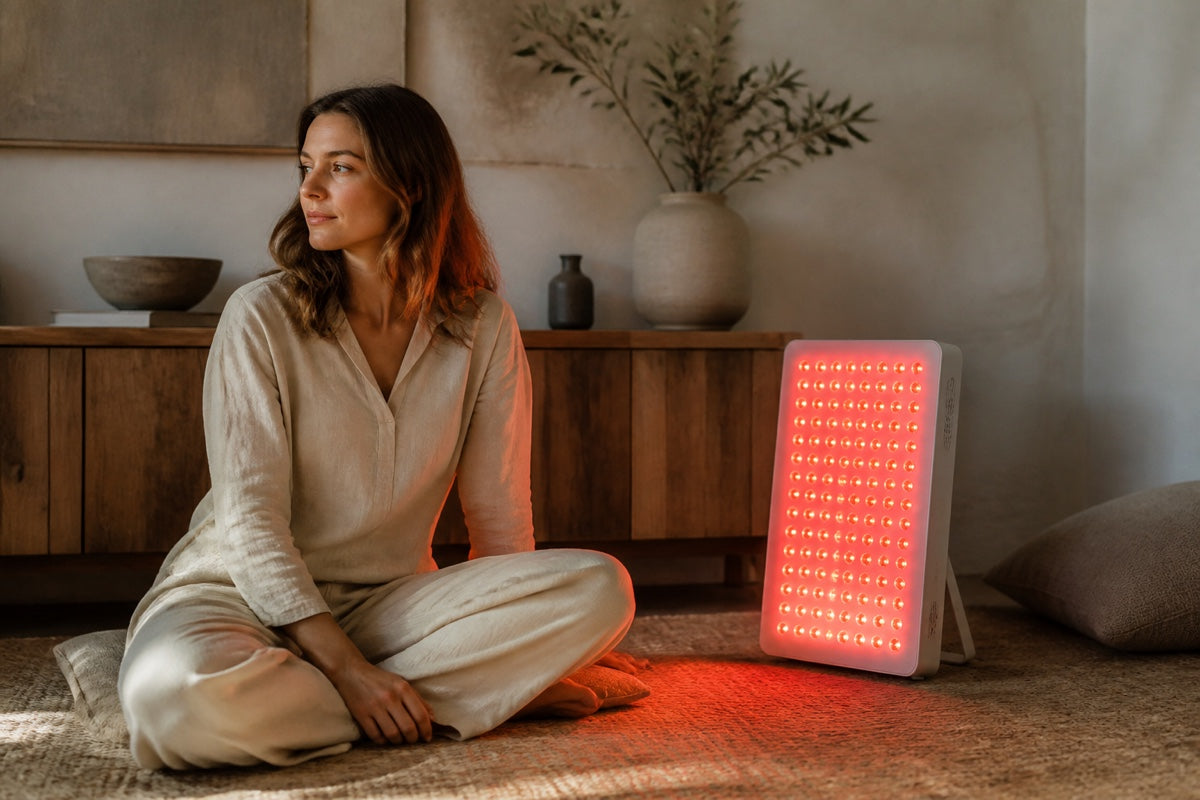
A panel can illuminate your face without you staring into it. Position the device as instructed, keep your gaze away from the LEDs and use the supplied goggles or other protection if the manual requires it. Simply closing your eyes may reduce glare and improve comfort, but it is not a substitute for device-specific instructions.
This distinction matters for face-focused routines. If the panel is directly in front of you, a small change in angle can stop direct viewing while keeping the target area in the treatment field. Do not improvise a closer distance or longer session to make the light feel “stronger.” More exposure is not automatically better.
What research on red light and the eyes can, and cannot, tell us
Photobiomodulation is being studied for several eye-related applications, but those studies use specific wavelengths, doses, devices and monitoring. A 2025 review of ocular red-light therapy described promising areas of research while stressing the need for standardized protocols, device quality and longer-term safety data.
A 2024 systematic review of repeated low-level red-light therapy for myopia did not identify permanent vision loss in the studies it reviewed, but temporary afterimages were commonly reported and longer follow-up remains important. These findings concern controlled ocular treatment devices; they are not permission to stare into a general wellness panel.
Device design also matters. A 2024 review of repeated red-light devices and exposure limits found that specifications and safety margins varied. The useful lesson for home users is not that every red-light device is dangerous. It is that wavelength labels alone do not prove an eye-safe setup.
A practical eye-safety checklist for home red light
- Read the exact manual. Check the recommended distance, timer, frequency and eye-protection instructions for your model.
- Avoid direct viewing. Position the panel first, then direct your gaze away before starting the session.
- Use the supplied protection. If goggles or eye shields are provided or required, use them as instructed rather than replacing them with a guess.
- Keep the stated distance and time. Do not move closer or add minutes because the session feels comfortable.
- Change one variable at a time. A consistent setup makes it easier to understand comfort and prevents accidental dose stacking.
- Stop if symptoms appear. End the session if you notice eye pain, persistent afterimages, unusual light sensitivity, headache or a change in vision.
For the other half of a safe setup, use our red light therapy distance and session-time guide. It explains why the manual for the exact device is more useful than a universal internet schedule.
When should you ask a professional first?
Ask a qualified eye-care or medical professional before use if you have an eye condition, recent eye procedure, unusual sensitivity to light or medication that can increase photosensitivity. The same applies when you are treating an area close to an injury or concerning symptom. A home wellness panel should not delay diagnosis or care.
Stop and seek advice if symptoms continue after the light is off. Temporary brightness immediately after looking at any strong light is not a performance target and should never be chased as proof that a session “worked.”
Common home-use situations
Face or neck routine
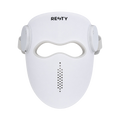
Direct facial exposure makes eye positioning especially important. Set the panel at the instructed distance, look away, close your eyes and use protection where the manual calls for it.
Whole-body panel
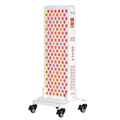
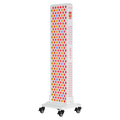
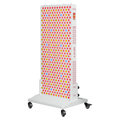
A larger source can expose more of the visual field even when it does not feel sharply bright. Follow the setup instructions and avoid turning your head toward the active LEDs.
Near-infrared mode
Near-infrared light may be invisible, so comfort and apparent brightness cannot confirm a safe exposure. Use the same device-specific caution even when the panel looks dimmer.
Frequently asked questions
Is red light therapy safe for eyes?
Safety depends on the device, wavelength, output, distance, duration and intended use. Do not treat a general wellness panel like a clinical eye-treatment device. Follow the manual and avoid direct viewing.
Are closed eyes enough?
Not as a universal rule. Closed eyelids may reduce visible glare, but the manufacturer’s eye-protection instructions remain decisive. Use supplied goggles or shields when required.
Can I use red light on my face every day?
There is no schedule that fits every device. Use the frequency and session length stated for your model, start conservatively and stop if the routine causes discomfort.
What if I see an afterimage?
Stop the session and let your eyes recover. If the afterimage persists, recurs or comes with pain or a change in vision, seek professional advice before using the device again.
Bottom line
Do not stare into red-light or near-infrared LEDs. Build the routine around the exact device instructions, correct distance and time, and the prescribed eye protection. Clinical eye research is interesting, but it does not turn a home panel into an eye-treatment device.
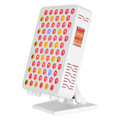
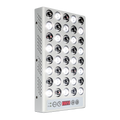
New to the topic? Start with our red light therapy evidence and safety guide. For a compact, targeted setup, view the MARS 400 red light panel and follow the included instructions for your model.