
Why Tour de France Riders Wear Nasal Strips
Nasal strips are visible again in the Tour de France peloton. Riders may like the feeling of a more open front of the nose, the repeatable pre-race routine or simply the look. That does not mean a strip creates more oxygen or makes a cyclist faster. The clearest evidence supports a mechanical effect around the nasal valve; it does not show a reliable endurance-performance gain.
Why cyclists choose nasal strips
A strip visible on a rider does not tell you their reason for using it, their brand or whether it changed their performance. Choose your own setup by fit, skin response and comfort during repeatable training rides.
Cycling Weekly reported that only a minority of riders use them and described several possible reasons: subjective comfort, routine and aesthetics. Its report on nasal strips in the Tour peloton also quotes an EF team doctor explaining that at high intensity most airflow goes through the mouth. No rider shown with a strip should be assumed to use or endorse Resty.
What an external nasal strip actually changes
A strip sits on the outside of the nose and applies a gentle outward pull over the nasal valve. A small study of nasal resistance during exercise found lower nasal resistance and less resistive work of nasal breathing in responders.
That local mechanical change is not the same as raising oxygen delivery to working muscles. It also does not correct asthma, infection, a deviated septum or another cause of persistent obstruction.
Do nasal strips make cyclists faster?
There is no good evidence that a nasal strip reliably makes a healthy cyclist faster. A systematic review and meta-analysis of sports activity found no significant improvement in VO₂max, heart rate or rating of perceived exertion with external nasal dilator strips.

A later running-specific systematic review found small favourable signals for VO₂max and perceived effort, but rated the certainty of that evidence very low. That mixed result is a reason to avoid performance promises, not a reason to turn a personal feeling into a claim.
Where a nasal strip may fit into a cycling routine
Warm-up and steady riding
On an easy warm-up, endurance ride or controlled section, a strip may feel comfortable if you notice restriction around the front of the nose. Use the feeling as feedback, not as a command to keep the mouth closed. Normal breathing can move between nose and mouth as workload, heat and terrain change.
Climbs, attacks and sprints
During hard climbing, repeated attacks or a sprint, ventilation rises sharply and mouth breathing is normal. Do not sacrifice pace, concentration or comfort to preserve nasal-only breathing. A strip can stay on the nose, but it cannot replace training, pacing, hydration or medical treatment.
How to keep a nasal strip on through sweat and sunscreen
Wash and completely dry the nose before application. Keep moisturiser, facial oil and sunscreen away from the exact adhesive zone. Apply the strip before the warm-up, press it down evenly and avoid repeatedly touching the edges.
Test the same skin preparation, helmet straps, glasses and sunscreen in training. Remove the strip slowly after the ride. Stop if the skin becomes painful, damaged or persistently irritated.
Which Resty nasal strip suits cycling?
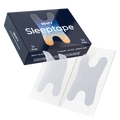
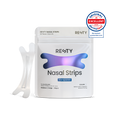
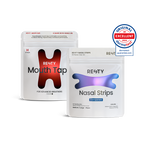
Transparent nasal strips are a simple one-piece option with a subtle appearance for riders who want quick application.

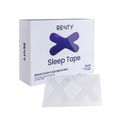
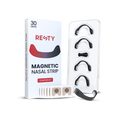
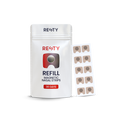
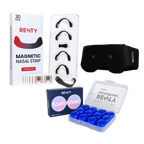
Magnetic nasal strips use a reusable clip with a fresh pair of adhesive tabs per session. Test the placement before a demanding workout and choose by comfort on your own nose.
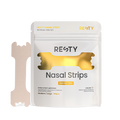
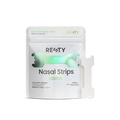
Minty nasal strips add a mint scent. Sandy Tan strips offer a warm tan finish. Scent and appearance are product preferences; neither establishes a sports-performance benefit.
Not sure which system fits your routine? Compare magnetic and regular nasal strips before choosing.
A simple on-bike A/B test
- Choose a repeatable ride. Use the same indoor session or a safe, familiar route at a similar time of day.
- Keep the main variables stable. Match duration, target power or pace, caffeine, warm-up and cooling as closely as practical.
- Record the useful outcomes. Note nasal comfort, perceived effort, edge lift, skin response and whether you kept reaching for the strip.
- Repeat. Compare more than one ride with and without the strip. A single good day is not proof of a performance effect.
If you use a power meter, treat power and heart rate as context rather than proof. Wind, fatigue, temperature and training status can easily outweigh a small equipment change.
Safety and realistic limits
Never use mouth tape while cycling, training or driving. Your mouth must remain free for breathing, drinking and communication. Remove a nasal strip if it distracts you, affects vision or causes a skin reaction.
Do not force nasal breathing through wheezing, chest pain, dizziness or unusual breathlessness. Persistent one-sided blockage, repeated nosebleeds or exercise-related breathing symptoms should be assessed by a qualified clinician.
Frequently asked questions
Why do Tour de France riders wear tape on their noses?
The visible tape is usually an external nasal dilator. Riders may use it for the feeling of a more open nose, as part of a routine or for appearance. Use in the peloton is not proof of a measurable performance advantage.
Do nasal strips give cyclists more oxygen?
They can mechanically reduce resistance at the front of the nose for some people, but studies have not shown a reliable increase in VO₂max or cycling performance.
Can I breathe only through my nose on the bike?
You can use nasal breathing during low-intensity riding if it feels natural. As effort rises, allow combined nose-and-mouth breathing instead of forcing a restriction.
What is the best nasal strip for cycling?
The best practical option is the one that stays comfortable on your skin and remains predictable with sweat, glasses and sunscreen. Test regular and magnetic systems before an important ride.
Test comfort, not a performance promise
Choose one format, test it on repeatable training rides and keep it only if the fit and skin response work for you.
Shop transparent strips Shop magnetic strips