
Magnetic Nasal Strips vs Regular Nasal Strips: Which Is Right for You?
Magnetic nasal strips and regular adhesive nasal strips aim for the same basic result: they gently lift the sides of the nose from the outside so nasal airflow can feel more open. The difference is how they create that lift, how much setup they need and how they fit into a nightly or training routine.
Compare magnetic nasal strips with transparent nasal strips by application, skin contact and the parts you replace. Both provide external mechanical support. Your own fit and comfort matter more than an unsupported ranking of lifting strength.
Are magnetic nasal strips better than regular nasal strips?
Neither type is better for everyone. Both lift the sides of the nose from the outside and leave the nostrils and mouth open. Magnetic strips pair a reusable clip with fresh adhesive tabs for each session; regular strips are one-piece and single-use. Choose by fit, skin comfort and routine.
| Feature | Magnetic nasal strips | Regular nasal strips |
|---|---|---|
| How it attaches | Fresh adhesive tabs go on the sides of the nose; magnets connect the reusable clip to the tabs | One adhesive strip goes across the bridge and sides of the nose |
| What creates the lift | The clip gently pulls the sides of the nose outward | Flexible bands inside the strip try to return to their original shape |
| What you reuse | The clip only; each pair of tabs is single-use | Nothing; each strip is single-use |
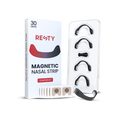
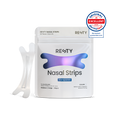
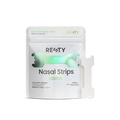
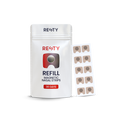
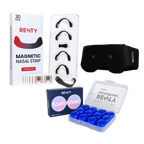
| What is in the Resty pack | Starter kit: one reusable clip plus 30, 90 or 180 pairs of tabs. Refill: tabs only, no clip | Transparent strips: 36 single-use strips per pack (108 and 216 in larger packs) |
| How you refill | Keep the clip and buy refill tabs; use one fresh pair per session | Buy a new pack; use one fresh strip per session |
| Adhesive on the skin | Yes, on the tabs | Yes, across the whole strip |
| Setup | Secure the tabs first, then attach the clip; positioning matters more | Peel, position and press |
For either option: start with clean, dry skin and remove the product if the lift feels uncomfortable.
How regular nasal strips work
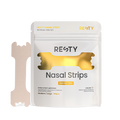
A regular nasal strip contains flexible bands inside one adhesive strip. Once it is placed across the bridge and sides of the nose, those bands try to return to their original shape. That creates a gentle outward pull on the skin and can make the nasal entrance feel more open.
The appeal is simplicity. You peel, position, press and use a fresh strip for each night or session. There is no separate part to store. A transparent finish is also useful when you want something subtle for sleep, travel, work or a daytime training session.
How magnetic nasal strips work
A magnetic system separates the adhesive part from the lifting part. Fresh adhesive tabs sit on the outside of the nose. A reusable magnetic clip connects to those tabs and gently pulls the sides of the nose outward. The nostrils and mouth remain uncovered.
Keep the magnetic clip after each use and discard the adhesive tabs. Apply a fresh pair for the next night or workout, even if the old pair still feels sticky. This separates the reusable component from the ongoing refill supply.
Magnetic vs regular nasal strips: the differences that matter
1. Reusable parts and daily setup
A regular strip combines the adhesive and flexible support in one disposable piece. The magnetic system uses separate tabs and a reusable clip. The format alone does not establish which will lift more comfortably on your nose or stay in place longer.

2. Speed and convenience
Regular strips win on speed. They are one piece and single use. Magnetic strips need fresh tabs plus the reusable clip, so positioning matters more. If you travel light or prefer zero fuss, regular strips are easier. If you already have a steady routine, the extra setup becomes small.
3. Skin contact
Both systems still use adhesive on the skin. Magnetic does not mean adhesive free. Clean, dry skin matters for both, and neither belongs on irritated or damaged skin. If removal feels firm, warm water can help loosen the adhesive before you peel slowly.
4. Sleep, sport and appearance
Both formats can fit a sleep, travel or training routine. Apply them before sweating and follow their placement instructions. Transparent strips offer a discreet finish; magnetic strips add a component to keep and clean as directed. Neither guarantees a sleep or sports result.
Starter kit or refill: what should you buy first?
- New to magnetic strips? Choose a magnetic nasal strip starter kit. It includes the reusable clip and fresh adhesive tabs. The smallest option provides 30 sessions.
- Already own the Resty clip? Choose magnetic nasal strip refill tabs. Refills contain adhesive tabs only, with no clip. Use one fresh pair per session.
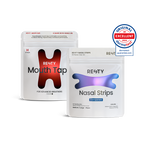
- Prefer one piece with no reusable part? Choose transparent nasal strips. The smallest pack contains 36 single-use strips.
Compare the cost per use, not just the pack price
For regular strips, divide the displayed pack price by the number of strips. For magnetic strips, compare the first purchase using the starter-kit price and the number of included sessions; then calculate ongoing use separately using the refill price. Count sessions, not individual adhesive tabs: one magnetic session uses a pair.
Use the current price for your country and include delivery when comparing the final total. A reusable clip does not automatically make every refill option cheaper. Start with the smallest supply while you check the fit, before committing to a larger pack.
Which nasal strip should you choose?
- Choose magnetic if you prefer a reusable clip with fresh adhesive tabs for every session.
- Pick regular if you want the fastest, simplest application.
- Pick transparent regular strips if visibility matters during work, travel or daytime wear.
- Pick magnetic if you like a reusable clip with refill tabs and expect to use it consistently.
- Try a gentler option first if your skin is sensitive or you are new to external nasal support.
How to get a better fit with either option
Wash and fully dry the skin first. Avoid moisturiser, oil and sunscreen where the adhesive needs to sit. Position the product according to the instructions, then press it for several seconds. Applying it after you are already sweaty is the easiest way to make a good product look bad.
Judge the fit by comfort and airflow, not by how dramatic it looks. If one side pulls unevenly, remove and reposition with fresh adhesive. Do not keep tightening or stacking products to chase a stronger sensation.
Breathe Right vs magnetic nasal strips: what changes?
Breathe Right-style strips are one-piece external adhesive dilators. Resty's magnetic system separates the clip from the single-use tabs; magnets connect the parts while the support remains mechanical. Reusable refers to the clip, and does not mean adhesive-free. For internal dilators and other formats, see our Breathe Right alternatives for sleep. A different mechanism does not prove better snoring control or athletic performance.
Magnetic vs regular nasal strips: frequently asked questions
Are magnetic nasal strips adhesive-free?
No. The clip is reusable, but the tabs stick to the skin with adhesive, just as a regular strip does. Use either type on clean, dry skin and never on irritated or damaged skin.
Do magnetic nose strips work?
They work on the same principle as regular strips: an external mechanical lift at the sides of the nose that can make nasal airflow feel more open. According to the Sleep Foundation, nasal strips are also known as external nasal dilators. Comfort varies from person to person, and the format alone does not show which type will lift your nose more comfortably.
Are magnetic nasal strips a form of magnetic therapy?
No. The magnets only connect the reusable clip to the adhesive tabs. The lift is mechanical, not a magnetic health effect.
Can I use Resty refill tabs with another brand's magnetic clip?
Compatibility is confirmed only for the Resty reusable magnetic clip. Do not assume that another brand uses the same tab spacing, connector strength or fit.
Should I use nasal strips if I have sleep apnoea?
If you have or suspect sleep apnoea, a structural blockage in your nose or persistent loud snoring, see a doctor before relying on nasal strips of either type. A sleep physician quoted by the Sleep Foundation advises screening snorers for obstructive sleep apnoea before they try nasal strips. A 2016 systematic review of 14 studies found no improvement in obstructive sleep apnoea outcomes with nasal dilators, apart from a mild improvement in one measure with internal dilators.
See a doctor if your breathing stops and starts while you sleep, if you make gasping, snorting or choking noises, or if you always feel very tired during the day. These are the main symptoms for which the NHS advises seeing a GP.
Choose the lift that fits your routine
Choose a reusable clip with fresh tabs, or a simple one-piece strip. Start with the format you can position comfortably and use consistently.
Shop magneticShop transparentBoth options work externally and leave the nostrils and mouth open. Comfort comes first.
Want to stock magnetic nasal strips in your shop? Resty offers trade terms for retailers.