
Breathe Right Alternatives for Sleep: Nasal Strips, Dilators and Reusable Options
The best Breathe Right alternative for sleep depends on what you want to change. Choose a regular external nasal strip if you like the familiar one-piece format but want another colour, finish, scent or pack size. Choose a magnetic external system if you prefer to keep a reusable clip and replace only the adhesive tabs. Consider an internal nasal dilator if you want no adhesive on the bridge of your nose and are comfortable placing a correctly sized device inside the nostrils.
These formats can mechanically support the nasal valve and may make nasal airflow feel more open for some people. They do not all feel the same, and none should be bought as a treatment for obstructive sleep apnoea. The useful comparison is not “which brand cures snoring?” but “which mechanism, fit, skin contact and cost per use suit my routine?”
Answer first
Three practical alternatives to a traditional Breathe Right strip
All three options act mechanically, but they pull or support the sides of the nose in different ways. Start with the place you are willing to wear the device: on the bridge, beside the nose or inside the nostrils.

Closest like-for-like format
Regular external nasal strips
A flexible one-piece strip adheres across the nose and gently lifts from the outside. Single-use, no internal device and available in clear, tan or mint-scented Resty versions.

Reusable clip, fresh tabs
Magnetic external system
Fresh tabs sit beside the nose and connect to a reusable magnetic clip. The clip is kept; the adhesive tabs are replaced after each sleep or training session.
No bridge adhesive
Internal nasal dilator
A sized stent or clip sits partly inside the nostrils and pushes outward. Often reusable, but cleaning, size, retention and internal pressure become the main trade-offs.
Short answer: regular external strips are the easiest direct substitute; a magnetic system suits shoppers who want a reusable component without putting a device inside the nostrils; an internal dilator suits shoppers who prioritise avoiding adhesive and accept an internal fit. No format is universally strongest or most comfortable.
Breathe Right alternatives compared at a glance
On mobile, swipe horizontally to view every column.
| Decision factor | Regular external strip | Magnetic external system | Internal dilator |
|---|---|---|---|
| Where it sits | Across the bridge and sides of the nose | Adhesive tabs beside the nose; clip spans outside | Partly inside both nostrils |
| How it opens | Flexible bands pull the lateral walls outward | Reusable clip tensions fresh side tabs | Stent or clip pushes outward from inside |
| Adhesive | Yes, one full strip | Yes, two fresh tabs | Usually no external adhesive |
| Reusable part | No; use a fresh strip | Yes; keep the magnetic clip | Often yes; follow the exact product instructions |
| Main comfort question | Bridge pressure and skin contact | Tab placement and clip tension | Size, internal pressure and retention |
| Visibility | Clear, tan or coloured depending on the strip | Clip and side tabs remain visible | Less material on the bridge but may show at nostrils |
| Cleaning | None; single-use disposal | Clean/store the clip; replace tabs | Clean and dry as the manufacturer directs |
| Best trial | One small pack and three properly fitted nights | Starter kit; verify tab position before larger refills | A size set or returnable option if available |
| Typical reason to switch | Different finish, hold, scent or pack size | Want a reusable component and separate refills | Want to avoid bridge adhesive |
| Main limitation | Ongoing single-use cost and possible skin irritation | Still uses adhesive and has more setup steps | Internal sensation, sizing and hygiene |
| For sleep apnoea? | Not a treatment | Not a treatment | Not a treatment |
| For complete nasal blockage? | Do not force nasal breathing | Do not force nasal breathing | Do not insert against pain or obstruction |
Trademark note: Breathe Right is a trademark of its respective owner. Resty is not affiliated with, sponsored by or endorsed by Breathe Right. The name is used here only to identify the product category shoppers are comparing.
How Breathe Right-style nasal strips work
A traditional external nasal strip combines adhesive with spring-like bands. Once centred across the lower bridge, the bands try to return to their original shape and gently pull the sides of the nose outward. That can increase space around the nasal valve and reduce the tendency of the lateral walls to move inward during inhalation.
This is a mechanical effect, not a decongestant effect. A strip does not shrink swollen tissue, treat an allergy, correct every structural obstruction or hold the throat open. That distinction explains why an external strip can feel useful when sidewall support is the limiting factor yet make little difference when congestion is caused elsewhere.
Brand name alone does not predict the result. Width, stiffness, adhesive area, placement, skin oil, nose shape and the type of obstruction all influence the perceived lift. Compare mechanisms and fit instead of assuming every “extra strength” or reusable option produces the same force.
Why people look for an alternative
The most common reasons are practical: the strip is too visible, an adhesive edge lifts overnight, removal irritates the skin, the bridge shape does not match the strip, or single-use cost adds up. Other shoppers simply want a clear finish for daytime use, a warm tan colour, a mint scent, larger supply packs or a reusable component.
Name the problem before changing products. If the issue is oil or skincare under the adhesive, a different mechanism may not be necessary; clean, completely dry skin and earlier application may solve the hold problem. If every adhesive product causes a reaction, trying increasingly strong glue is the wrong direction. If internal pressure feels unpleasant, returning to an external format is more logical than forcing a smaller device.
A useful alternative solves the specific friction without inventing a medical promise. Visibility points toward transparent or tan strips. Ongoing waste points toward a reusable clip or internal device. Bridge sensitivity points away from a full strip. Uncertain fit points toward the smallest trial quantity, not the largest “value” pack.
Alternative 1: regular external nasal strips
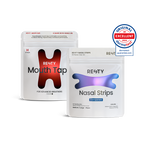
A regular external strip is the closest like-for-like Breathe Right alternative. It keeps everything outside the nose, takes seconds to apply and requires no cleaning. Resty offers three one-piece versions with the same broad external-lift purpose but different buying signals.
Transparent: prioritise a discreet finish
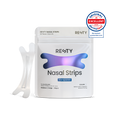
Choose transparent nasal strips when visibility is the main objection. The clear finish is less noticeable than a coloured strip, which makes it the most natural Resty option for travel, a shared sleeping space or daytime use. Each pack contains 36 single-use strips; current supply options contain 36, 108 or 216 strips.
Transparent does not mean invisible under every light or on every skin tone. Check it in front, side and overhead lighting. The mechanical lift and skin-contact limits remain the same as for any adhesive external strip.
Sandy Tan: prioritise a warm, understated colour
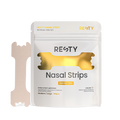
Sandy Tan is the better match when a warm tan finish blends more naturally than clear plastic or a white strip. Each pack contains 48 single-use strips, with 48-, 144- and 288-strip supply options. Colour is the purchase signal; it does not imply a stronger lift or a universal skin-tone match.
Minty: prioritise a noticeable mint scent
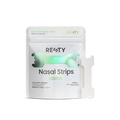
Minty nasal strips add a noticeable mint scent to the same external routine. Choose them for the sensory preference, not as a medicated decongestant. They contain 48 strips per pack and are available in 48-, 144- and 288-strip supplies. Avoid them if fragrance itself is the thing you want to remove from bedtime.
Alternative 2: a magnetic external nasal strip system
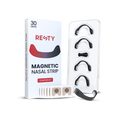
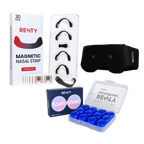
Resty Magnetic Nasal Strips split the system into a reusable magnetic clip and fresh adhesive tabs. The starter set includes the clip plus tabs for 30, 90 or 180 sessions, depending on the selected supply. After use, the tabs are discarded and the clip is kept for the next routine.
This is not an adhesive-free alternative. It reduces the disposable component to the side tabs and adds a reusable clip, but skin still needs to tolerate the tabs. It also introduces more placement steps than a one-piece strip. For the right shopper, that trade-off is worthwhile: the main tension component is reusable and the bridge is not covered by a full strip.
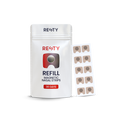
Buy the starter set if you do not already own the clip. The refill page contains tabs only in 30-, 90- or 180-session quantities; the magnetic clip is not included. This distinction matters because a low refill price is not a complete first purchase.
Alternative 3: an internal nasal dilator
Internal nasal dilators include small stents, cones and clips that sit partly inside each nostril and support the nasal valve from within. Many are washable and reusable. They avoid adhesive on the bridge, which makes them a logical category for people whose main objection is skin contact.
Their trade-offs move inside the nose: size, shape, pressure, retention, cleaning and removal. A device that is too large can feel painful; one that is too small can shift or fail to provide useful support. “Reusable” also does not mean indefinite. Follow the exact cleaning and replacement instructions, and never share an internal device.
Independent evidence does not let us declare every internal dilator better than every external strip. Some studied devices changed airflow more than a tested external strip, but results belong to those specific devices, populations and methods. Treat broad marketplace claims such as “guaranteed snoring cure” or “medical-grade airflow” without a named test as warning signs.
Non-device options are not direct substitutes
Saline, humidification, allergen management and medical assessment solve different problems from a mechanical dilator. Saline may be useful for dryness or rinsing in an appropriate routine; a humidifier may improve an overly dry room; allergy treatment can target inflammation. None should be presented as a one-for-one mechanical replacement without first identifying why the nose feels blocked.
Be especially careful with decongestant nasal sprays. They are medicines, not reusable nasal strips, and the correct product and duration depend on the label and your health. The FDA warns that using decongestant sprays for more than a few days can cause rebound congestion. Ask a pharmacist or clinician when symptoms persist instead of rotating between devices and medicines indefinitely.
Persistent one-sided blockage, repeated nosebleeds, pain, loss of smell or obstruction that does not change deserves assessment. A consumer dilator can reveal that opening the valve feels different; it cannot diagnose a deviated septum, enlarged tissue, chronic rhinitis or another cause.
Nasal strips, snoring and sleep apnoea: the evidence boundary
A nasal dilator may reduce nasal resistance or make airflow feel more open, but snoring can originate at several levels of the airway. Improving the nasal valve does not automatically stop vibration in the soft palate or prevent the throat from narrowing during sleep.
A systematic review and meta-analysis of internal and external nasal dilators in people with obstructive sleep apnoea found no significant improvement in the main OSA outcomes, including the apnoea hypopnoea index, lowest oxygen saturation or snoring index. That is why this guide treats nasal strips as comfort accessories and not as substitutes for diagnosis, CPAP or another prescribed treatment.
Seek assessment when breathing stops and starts during sleep, someone notices gasping, snorting or choking, or daytime tiredness is persistent. Loud snoring alone is not proof of sleep apnoea, but it is also not a reason to hide red flags behind a stronger strip.
How to run a useful three-night comparison
- Night 1: baseline: record which nostril feels restricted, your sleep position, congestion, skincare and whether a partner notices unusual breathing.
- Night 2: first device: apply or insert it exactly as directed, then rate airflow feel, skin or internal comfort, overnight retention and morning removal.
- Night 3: repeat or compare: keep room, position and routine similar. A second fit attempt separates a poor first placement from a consistently poor match.
- Stop early: pain, bleeding, marked irritation, dizziness or breathing difficulty is a stop signal, not a challenge to tighten the device.
- Judge the right outcome: compare fit and perceived openness. Do not turn one quiet night into proof that a product treated snoring or sleep apnoea.
Cost per use without false savings
For a one-piece strip, divide the current pack price by the number of strips you will actually use. For a magnetic system, separate the starter cost from the ongoing refill-tab cost. For an internal dilator, include realistic replacement and cleaning rather than assuming a lifetime of use.
The cheapest theoretical night can be the most expensive purchase if the format irritates your skin, falls off or feels impossible to wear. Start with 30 to 48 sessions, depending on the chosen Resty format, unless you already know the fit. Move to a larger supply only after the mechanism and routine have earned it.
How to fit external and internal alternatives
Correct fit matters more than adding force. Follow the product-specific instructions; these checkpoints help you recognise a sensible starting position.
External strip or magnetic tabs
- Wash away oil and skincare, then dry the skin completely.
- Place the strip or tabs on intact skin at the position shown in the instructions.
- Press evenly and allow the adhesive to settle before lying down or sweating.
- Check that the lift feels supportive rather than sharp, tight or asymmetric.
- Remove slowly in the morning; stop using the product if irritation persists.
Internal nasal dilator
- Start with clean hands and the size recommended by the manufacturer.
- Insert gently and symmetrically; never force the device past pain or resistance.
- Breathe normally while awake for several minutes and test your usual sleep position.
- Confirm that the device is stable and remains easy to grasp for removal.
- Remove, clean, dry and replace it exactly as the product instructions require.
Which Resty nasal strip should you buy?
Choose by the feature you can verify, not by an unsupported promise. All quantities and availability below were checked in the product records on 26 July 2026; use the product page for current pricing.
36, 108 or 216 strips
Best starting point when a discreet clear finish and simple one-piece application matter most.
48, 144 or 288 strips
Choose a warm tan colour when visual blending is the deciding factor.
48, 144 or 288 strips
Choose a noticeable mint scent as a sensory preference, not a medical effect.
30, 90 or 180 sessions
Choose a reusable clip with fresh side tabs. The starter includes the required clip.
30, 90 or 180 sessions
Tabs only. Buy these only if you already own the reusable magnetic clip.
Compare every current option in the Resty nasal strip collection. Begin with the smallest sensible supply when fit or skin tolerance is still unknown.
What the evidence supports, and what it does not
A systematic review of over-the-counter mechanical nasal dilators classified external strips, internal stents, nasal clips and septal stimulators. It found objective support for some external strips and clips, while stressing that only a small share of available devices had been scientifically studied. Category evidence is not proof for every listing.
A small randomised study of 20 participants found that an external strip increased maximum nasal inspiratory flow by stabilising the sidewalls. The test concerned maximum-effort airflow, not sleep quality, snoring cure or long-term outcomes.
A systematic review and meta-analysis in obstructive sleep apnoea found no significant change in AHI, lowest oxygen saturation or snoring index with nasal dilators. This directly supports the boundary that a consumer dilator is not OSA treatment.
Two randomised trials of external strip patency and seven-night skin tolerability reported changes in nasal dimensions and flow in healthy volunteers. The work included industry-affiliated authors and does not establish long-term tolerance or equivalence for every adhesive strip.
Current NHS sleep-apnoea guidance lists breathing pauses, gasping or choking and persistent daytime tiredness as reasons to seek assessment. A nasal accessory should never delay that step.
The FDA overview of allergy medicines warns that decongestant nose sprays used for more than a few days can cause rebound congestion. Drug choices and durations should follow the label and professional advice, not a comparison-table shortcut.
Safety limits and red flags
Do not apply adhesive to broken, sunburned, infected or actively irritated skin. Do not insert a reusable dilator into a painful, bleeding or injured nose. Stop if the product causes persistent redness, swelling, bleeding, sharp pressure, dizziness or breathing difficulty.
Do not force nasal-only breathing when the nose feels blocked, and do not add mouth tape merely to compensate for poor nasal airflow. A mouth strip changes the escape route for air; it does not fix nasal obstruction. If you are considering both products, first confirm comfortable nasal breathing while awake and read the separate safety guide.
- Seek medical assessment: observed breathing pauses, gasping or choking, loud snoring with persistent daytime sleepiness, or morning headaches and concentration problems.
- Seek nasal assessment: persistent one-sided obstruction, recurrent nosebleeds, pain, new loss of smell, injury or symptoms that do not settle.
- Skin first: do not keep increasing adhesive strength when repeated irritation is the problem.
- Hygiene first: never share an internal dilator or reusable clip; clean and store reusable parts as directed.
- No guaranteed outcome: perceived airflow, hold and comfort vary by anatomy, congestion and fit.
Magnetic or regular? Use the detailed magnetic versus regular nasal-strip comparison for setup, refill and one-piece trade-offs.
Buying mainly for snoring? Read the evidence-aware guide to nasal strips for snoring before treating silence as a guaranteed result.
Considering mouth tape too? Check when it is inappropriate to combine mouth tape and nasal strips, especially when nasal breathing is not already comfortable.
Frequently asked questions
What is the closest alternative to Breathe Right strips?
A regular one-piece external nasal strip is the closest format. Resty Transparent, Sandy Tan and Minty strips all sit outside the nose and use flexible external lift. Choose among them by finish, scent and pack size rather than assuming a universal strength difference.
Is there a reusable alternative to Breathe Right?
Yes, but “reusable” can mean different things. Resty Magnetic Nasal Strips reuse the clip while the adhesive tabs remain single-use. Many internal nasal dilators are washable and reusable, but their lifespan, cleaning and sizing depend on the exact product.
Are magnetic nasal strips adhesive-free?
No. The external clip is reusable, but fresh adhesive tabs are applied for every session. Choose an internal dilator if avoiding bridge and side adhesive is the main goal, provided an internal fit is comfortable and suitable.
Are internal nasal dilators better than external strips?
Not universally. Some specific internal devices have produced larger airflow changes in particular studies, but that does not rank every marketplace product or predict your comfort. Internal options trade adhesive for sizing, pressure, retention and cleaning.
Can a nasal-strip alternative stop snoring?
No product should be bought with a guaranteed stop-snoring promise. A dilator can support the nasal valve, but snoring can arise elsewhere in the airway. Compare perceived nasal openness and fit, and seek assessment when snoring accompanies breathing pauses, gasping or daytime sleepiness.
Can these alternatives treat sleep apnoea?
No. A meta-analysis did not find meaningful improvement in the main obstructive sleep-apnoea outcomes with nasal dilators. Do not replace CPAP, a mandibular device or another prescribed plan with a strip or dilator.
Which Resty option is least visible?
Transparent is designed for the most discreet finish. Sandy Tan offers a warm understated colour. Visibility still changes with lighting, viewing angle and skin tone, so neither should be described as invisible for everyone.
Which option is cheapest per night?
Calculate from the current price and the number of sessions you will truly use. Regular strips have a simple single-use cost; magnetic systems separate starter and refill costs; internal devices require realistic replacement and cleaning. Fit failure makes a theoretical bargain expensive.
What if every strip falls off overnight?
Remove oil and skincare, dry the skin fully, place the strip at the instructed point and press evenly before bed. If correct preparation still fails, compare another external shape or magnetic placement. If stronger adhesives repeatedly irritate your skin, stop escalating and choose a different mechanism.
Can I combine an alternative nasal strip with mouth tape?
Only consider mouth tape when you can already breathe comfortably through the nose while awake and have no relevant contraindication. Mouth tape is not a workaround for obstruction and does not make a nasal dilator an OSA treatment.
Choose the mechanism first
Compare all Resty external nasal-strip options
Start with a clear, tan, mint-scented or magnetic format according to the friction you actually want to solve. Every Resty option provides external mechanical support; individual lift, hold and comfort can vary.
Compare Resty nasal strips