

Nasal Strips for HYROX: Breathing, Comfort & Race-Day Limits
Nasal strips can make the front of the nose feel more open during HYROX training, but they are not a shortcut to a faster race. The best evidence shows that external nasal dilators can reduce nasal resistance for some people, while studies have not shown a reliable improvement in VO₂max, heart rate, perceived effort or maximal power. Use a strip as a comfort and fit tool, not as a performance guarantee.
Why HYROX creates a different breathing challenge
HYROX’s official race format alternates eight 1 km runs with eight functional workout stations. That creates repeated shifts between steady running, heavy muscular work and short transitions. Your breathing strategy therefore has to change with the task.
Nasal-only breathing may feel calm during an easy warm-up or an early controlled run. It can become needlessly restrictive during a sled push or the final wall balls. A practical plan lets the mouth open when intensity demands it and uses nasal breathing as a cue, not a rule.
What a nasal strip actually does
An external nasal strip applies a gentle outward lift to the skin over the nasal valve. In a small exercise study, strips reduced nasal resistance and the work required for nasal ventilation in participants who responded to the device. Read the nasal-resistance study.
That mechanical effect is not the same as improving whole-body performance. A systematic review and meta-analysis found no significant improvement in VO₂max, heart rate or perceived exertion in healthy people exercising with an external nasal dilator.
More recent research points in the same cautious direction. A randomized crossover study in trained endurance athletes found no significant cardiopulmonary or performance differences between oral and oronasal breathing conditions. A separate Wingate study found no difference in peak or average power between nasal and oral breathing, although post-exercise muscle reoxygenation was faster after nasal breathing. Neither study tested HYROX, so neither proves a race-time benefit. See the endurance study and the Wingate study.
Where nasal breathing can fit during HYROX
Warm-up and start area
Use a few quiet nasal breaths while walking, mobilising or waiting to start. The goal is not to take unusually deep breaths. It is simply to notice whether airflow feels comfortable before the workload rises.
Controlled running and transitions
During an easy or controlled kilometre, nasal inhalation may help you avoid starting too aggressively. As effort rises, switch naturally to combined nose-and-mouth breathing. In the Roxzone, one or two relaxed breaths can act as a reset, but do not delay the next task to protect a nasal-only streak.
High-output stations
During sled push, sled pull, burpee broad jumps, heavy carries, lunges and wall balls, ventilation and bracing take priority. Keep the jaw relaxed when possible, exhale with the working rhythm and let the mouth open. Never use mouth tape during HYROX training or racing.
A station-by-station breathing plan
- SkiErg: exhale on the pull and avoid breath-holding through repeated strokes.
- Sled push and pull: use short, purposeful exhales around each drive or pull. Reset upright when needed.
- Burpee broad jumps: breathe continuously and take a settling breath when standing, not while folded over.
- Row: choose a repeatable rhythm, such as exhaling through the drive and inhaling on recovery.
- Farmers carry: avoid locking the breath for the full length. Use small exhales while keeping the trunk stable.
- Sandbag lunges: exhale as you rise and use the turn as a brief reset.
- Wall balls: match one consistent breath pattern to your cadence instead of forcing nasal-only breathing.
A nasal strip can remain in place through every station, but its useful role is still external support around the nose. It does not replace pacing, technique or conditioning.
How to test a nasal strip before race day
- Start with a baseline. Complete an easy run without a strip and note nasal comfort, skin condition and when mouth breathing begins.
- Change one variable. Repeat a similar session with the strip. Do not also change shoes, caffeine, pacing and warm-up.
- Add compromised work. Test it during a controlled run-to-station session before using it in a full simulation.
- Check fit, not hype. Record whether it stayed comfortable, whether the edges lifted and whether airflow felt different. One good session does not prove a performance effect.
- Make race day boring. Use only a product and placement you have already tested at least twice.
Keeping a nasal strip on when you sweat
Wash and fully dry the nose before application. Avoid moisturiser, oil and sunscreen where the adhesive needs to sit. Apply the strip before the warm-up, press it down evenly and do not stretch the skin underneath it. If an edge lifts, do not keep pressing dirty adhesive back onto sweaty skin.
Remove the strip slowly after training. Stop using it on irritated, sunburned or damaged skin. If a strip causes pulling, pain or a skin reaction, take it off rather than trying to finish the session with it.
Which Resty nasal strip fits a HYROX routine?
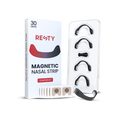
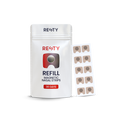
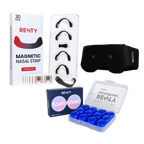
Magnetic nasal strips use fresh adhesive tabs with a reusable clip and provide Resty’s strongest external lift. They take slightly more setup, so test the placement well before race day.
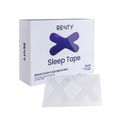
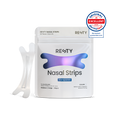
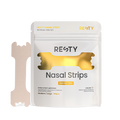
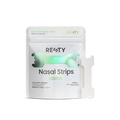
The one-piece options are quicker to apply. Choose Transparent nasal strips for a subtle look, Minty nasal strips for a visible mint finish or Sandy Tan nasal strips for a warm skin-tone finish. The right option is the one that feels comfortable and stays predictable in your own training.
If you are deciding between systems, compare magnetic and regular nasal strips. For the broader exercise context, read our guide to nose breathing during exercise.
Safety and realistic limits
Do not force nasal breathing through significant congestion, wheezing, chest pain, dizziness or unusual breathlessness. Persistent one-sided blockage, repeated nosebleeds or breathing symptoms deserve professional assessment. A nasal strip does not treat asthma, structural obstruction, infection or another underlying cause.
Check the latest event rules before racing, because equipment rules can change. A strip should never cover the nostrils, interfere with vision or distract you from safe movement.
Frequently asked questions
Do nasal strips improve HYROX performance?
There is no direct evidence that they improve HYROX times. Research supports a mechanical effect on the nasal valve in some people, but not a consistent improvement in VO₂max, heart rate, perceived effort or maximal power.
Should I breathe only through my nose during HYROX?
No. Nasal breathing can be a useful low-intensity cue. At high intensity, allow combined nose-and-mouth breathing so ventilation can match the workload.
Magnetic or regular nasal strips for HYROX?
Magnetic strips offer a stronger external lift with a reusable clip and fresh tabs. Regular strips are faster and simpler. Test both fit and skin response before choosing.