
Infrared Heat Lamp vs Heating Pad: Which Is Better for You?
Infrared heat lamp vs heating pad sounds like a simple choice between two warm devices. In daily use, the bigger difference is how the warmth reaches you. A floor-standing infrared lamp sends radiant heat across a gap and can be aimed without touching the body. A heating pad rests against the body and transfers contact heat across the shape of the pad. Neither format is automatically better. The right choice depends on the area you want to warm, whether you want contact, how much room you have and whether one or two adjustable lamp heads improve the routine.
Infrared heating pad vs regular heating pad: what should you compare?
Start with the exact pad’s temperature controls, size, cover, auto-off and permitted placement. An infrared label alone does not establish deeper heating or better results. Both pad types remain contact formats: compare how they fit the body and whether the manual allows wrapping or leaning against them. A floor-standing infrared lamp adds a different option, radiant warmth across a gap. Choose that format when avoiding a pad against the skin or adjusting the aiming angle matters.
Compare heat formats
Choose the heat setup you will actually use
Different spaces, different routines. Compare contact, coverage and control before you guess.

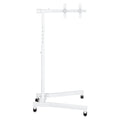
Focused radiant heat
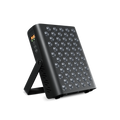
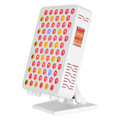
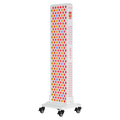
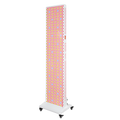
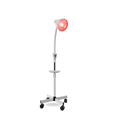
275 W single-head heat lamp
Best when you want non-contact warmth aimed at one local area from an adjustable floor stand.

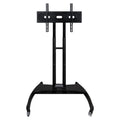
Wider radiant heat
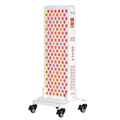
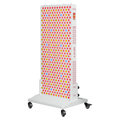
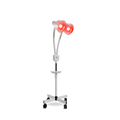
550 W double-head heat lamp
Best when two independently aimed heads reduce repositioning or warm a broader setup.
Contact heat
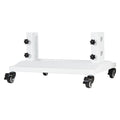
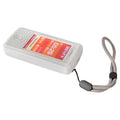
Compact contact warmth
Electric heating pad
Best when a soft pad that follows the body and stores compactly matters more than non-contact aiming.
Short answer: choose a heating pad for compact, body-conforming contact warmth; choose the 275 W lamp for one focused non-contact zone; choose the 550 W lamp when two angles or wider radiant coverage justify the extra floor space and power.
Infrared heat lamp vs heating pad at a glance
| Decision factor | 275 W | 550 W | Heating pad |
|---|---|---|---|
| Heat delivery | Radiant heat across a gap | Radiant heat from two heads | Contact heat through the pad |
| Body contact | No pad against the body | No pad against the body | Rests on or around the body |
| Warm area | One focused local zone | Wider area or two nearby zones | Fixed by the pad’s shape and size |
| Positioning | Adjust head, arm and height | Adjust both heads separately | Place, wrap or strap only as designed |
| Session control | 10 to 25-minute timer and remote | 10 to 25-minute timer and remote | Heat settings and auto-off vary by model |
| Room and storage | Needs floor space; compact single base | Needs more floor space; cross base | Usually stores flatter and smaller |
| Pressure on the area | None from the device | None from the device | The pad touches and may press on the area |
| Electrical rating | 275 W | 2 × 275 W; 550 W total | Varies: check the exact label |
| Strongest buying signal | One adjustable non-contact heat zone | Two angles or broader radiant warmth | Contact, portability and body conformity |
| Main trade-off | You must aim and keep a safe distance | Larger setup and higher power draw | Contact, folding and placement rules matter |
The real difference: radiant heat versus contact heat
A heating pad first warms its own surface, then passes heat to the area touching it. That is why the pad’s dimensions, flexibility, cover, temperature settings and fit matter. Direct contact can feel contained and steady, but it also means the same skin area may remain exposed to warmth for a long time if you do not move or check it.
An infrared heat lamp emits thermal radiation that is absorbed and felt as warmth without a pad on the body. You control the practical footprint by changing distance, angle and head position. The lamp does not need to mould around the shoulder, back or leg, but the area must stay in the beam and the stand needs a stable position.
A peer-reviewed overview of heat and temperature explains the useful physics boundary: conduction requires physical proximity, while radiation can transfer energy at a distance. That distinction is more reliable than marketing phrases such as “deep heat”. Depth claims depend on the actual spectrum, intensity, distance, exposure time and tissue, not simply whether a product contains the word infrared.
When a heating pad is the more practical choice
Choose a heating pad when compact storage and close contact are the priority. A pad can suit a chair, sofa or travel bag more easily than a floor-standing lamp. A shaped or wearable model may follow a shoulder, neck or lower-back contour, but only if its manual permits that placement. A flat pad should not automatically be folded, trapped underneath the body or wrapped tightly.

A pad also makes sense when you prefer warmth that stays with the body rather than an aimed source across the room. Check the exact pad for dimensions, heat levels, auto-off time, washable cover, cord position and whether it is designed to be sat or lain on. Those features vary too much to treat “heating pad” as one fixed specification.
When an infrared heat lamp is the more practical choice
Choose a lamp when you want warmth without fabric or pressure against the area. The adjustable head can be useful for a shoulder, back, thigh or lower leg when you can remain in a stable seated or lying position. A non-contact setup can also be easier to share because the device does not wrap directly around each user, although normal cleaning and safe handling still apply.
A lamp earns its extra floor space when aiming flexibility matters. The Resty 275 W model targets one area. The 550 W model uses two separately adjustable 275 W heads, so you can create a broader footprint or direct them towards two nearby zones. The second head is a coverage and positioning upgrade; it is not proof of a stronger health effect.
Choose by body area and routine, not by a universal winner
For shoulders and upper back
A lamp avoids the need to hold a pad in place and can be aimed from behind or to the side. A shaped heating pad can be more convenient if it is specifically designed to sit securely over the shoulders. Compare the posture you can maintain comfortably, not just the maximum temperature.
For lower back while sitting
A pad can fit between the back and a chair only when the product instructions allow that use; pressure and folding can create hot spots in unsuitable designs. A lamp avoids contact pressure but needs a clear line of sight, enough room behind or beside the chair and a position that cannot be knocked over.
For legs or two nearby areas
The 275 W lamp is the simpler choice for one calf, thigh or knee area at a time. The double-head version becomes useful when two angles reduce repositioning or when a wider area is the actual goal. A pad may follow one leg more closely, but its dimensions and fastening method decide the coverage.
Is an infrared heating pad the same as an infrared heat lamp?
No. Some pads are marketed as far-infrared or contain ceramic, mineral or carbon-based heating elements, while many ordinary electric pads are simply sold by temperature level. A lamp remains a non-contact radiant source; a pad remains a contact format. The word infrared does not erase that practical difference.

Do not assume that an “infrared” pad reaches deeper, works faster or is medically superior without device-specific measurements and evidence. Likewise, do not assume a 275 W or 550 W lamp is a photobiomodulation panel. If your goal is defined red and near-infrared LED wavelengths rather than felt warmth, that is a separate product comparison.
Power, controls and total setup
The Resty ratings are electrical input for a warmth-first device: 275 W for one head and 550 W total for two heads. Those numbers let you compare the two Resty lamps, but they do not rank a lamp against an unspecified pad. Check a pad’s own wattage, voltage, temperature range and auto-off function on its current product label.
Also compare setup friction. A pad normally wins on storage. A lamp wins on adjustable non-contact positioning. The single-head lamp has a smaller floor footprint than the double-head cross base. Both Resty lamps include a remote and a 10 to 25-minute timer; a pad may offer several heat levels, but controls differ by manufacturer and model.
275 W lamp, 550 W lamp or heating pad?
Use the smallest setup that solves the real positioning problem. More wattage is not automatically a better purchase.
Choose 275 W for one focused area
The Resty 275 W single-head infrared heat lamp is the cleaner fit when one adjustable head covers the area you normally want to warm. It takes less room than the double model and keeps the decision simple.
Choose 550 W for two angles or broader coverage
The Resty 550 W double-head infrared heat lamp combines two separately adjustable 275 W heads. Buy the extra head when it prevents repeated repositioning or serves a genuinely wider routine, not because 550 W guarantees a better outcome.
Choose a heating pad for contact and compact storage
A heating pad is the sensible winner when body-conforming contact, a soft surface and smaller storage matter most. Compare the exact size, heat levels, auto-off, cord, cover and placement rules before buying; generic pad claims are not specifications.
What authoritative sources support, and what they do not
The U.S. regulatory definition of an infrared lamp describes infrared energy used to provide topical heating. The separate definition of a powered heating pad describes an electrical device that provides dry heat to body surfaces and maintains an elevated temperature. These definitions help separate the formats.

A peer-reviewed overview of heat-transfer mechanisms states that conduction requires physical proximity whereas radiation can occur at a distance. That supports the contact-versus-non-contact comparison, not a blanket claim that one consumer device heats “deeper” or works better.
The International Commission on Non-Ionizing Radiation Protection overview explains that infrared is thermal radiation and that excessive exposure can thermally injure skin and eye tissues. Safe exposure depends on factors including intensity, duration, wavelength and source size.
A clinical study of low-temperature burns documents that prolonged contact with relatively low heat can still cause serious injury. It is a safety reason to avoid sleeping on a heating device, to check the skin and to follow model-specific placement and timer instructions. It is not evidence that normal, correctly supervised use will cause a burn.
Safety rules for both heat formats
Heat comfort is not a dose contest. Stop when warmth becomes painful, sharp, numb or unusually intense, or when redness persists. Reduced heat sensation is not protection: it can make a hot spot harder to notice. If you have impaired sensation, circulation problems, damaged skin, a relevant condition or medication that changes heat perception, ask a qualified clinician before use.
Never fall asleep with a heating pad in place or under an operating infrared lamp. Keep both devices dry and inspect the cord, plug and housing before use. Use the exact manual for distance, placement, coverings, temperature and timer instead of copying another product’s routine.
- With a lamp: use a stable, level base; keep flammable materials away; maintain a comfortable instructed distance; do not stare into the source; never leave it running unattended.
- With a pad: do not fold, bunch, crush, pin, sit or lie on it unless the specific manual explicitly permits that use; check the skin and avoid trapping heat under extra insulation.
- With either: stop using damaged equipment, do not use over broken or irritated skin without professional advice, and keep children and anyone unable to report heat discomfort under appropriate supervision.
Exact Resty product specifications
The commercial comparison uses current product records rather than generic assumptions:
- 275 W single head: one infrared lamp head for focused local warmth.
- Single-head adjustment: 360° adjustable head, arm and height.
- Single-head controls: 10 to 25-minute timer, remote and stable floor base.
- 550 W double head: two separately adjustable 275 W heads; 550 W total.
- Double-head positioning: broader warmth footprint or two nearby aiming angles.
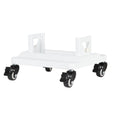
- Double-head controls: 10 to 25-minute timer, remote and stable cross base.
Frequently asked questions
Is an infrared heat lamp better than a heating pad?
Not universally. The lamp is better for adjustable non-contact radiant warmth; the pad is better for compact, body-conforming contact warmth. Choose by body area, posture, storage and the exact device manual.
Which is better for the back: a heat lamp or heating pad?
A pad can follow the lower-back shape, but pressure, folding and sitting rules depend on the model. A lamp avoids contact pressure and can cover the back from a distance, but it needs room, stable aiming and a clear path.
Does infrared heat go deeper than a heating pad?
Do not use that as a generic buying claim. Heating depends on spectrum, temperature, intensity, distance, time, tissue and heat dissipation. A lamp and pad mainly differ in radiant versus contact delivery; “deeper” needs model-specific measurements.
Can I sleep with a heating pad or infrared lamp?
No. Prolonged unnoticed heat increases burn risk. Use an awake, supervised session, follow the timer and manual, and stop with discomfort or persistent skin changes.
Should I buy the 275 W or 550 W Resty lamp?
Choose 275 W when one adjustable head covers one local area. Choose 550 W when two separately aimed heads meaningfully reduce repositioning or provide the wider footprint you will actually use.
Is a heating pad cheaper to run than a heat lamp?
Often a pad has a lower electrical rating, but there is no safe universal number. Compare the exact pad wattage with 275 W or 550 W and multiply by your real session time and electricity tariff. Auto-off and frequency matter too.
Can an infrared heat lamp replace red light therapy?
Not automatically. These Resty heat lamps are bought for felt warmth and are not sold as wavelength-rated 660/850 nm LED panels. If controlled red and near-infrared light is the goal, compare a dedicated panel separately.
Choose by the routine
Prefer adjustable warmth without a pad?
Start with the 275 W single head for one focused area. Step up to the 550 W double head only when two independent angles or wider coverage solve a real positioning problem.
View the 275 W heat lamp View the 550 W heat lamp