Silicone vs Foam Earplugs for Sleeping: Which Should You Choose?
Silicone vs foam earplugs for sleeping is not a contest with one material winner. Choose moldable silicone when you prefer a reusable seal over the ear opening and do not want a plug expanding inside the canal. Choose roll-down foam when you want a compact, low-cost in-canal plug and can insert it correctly. For side sleeping, the shape that remains flat and pressure-free on your own pillow matters more than the material name. Compare the exact design, fit and published attenuation, not a generic claim that all silicone or all foam performs the same.
Answer first
Choose the shape before the material
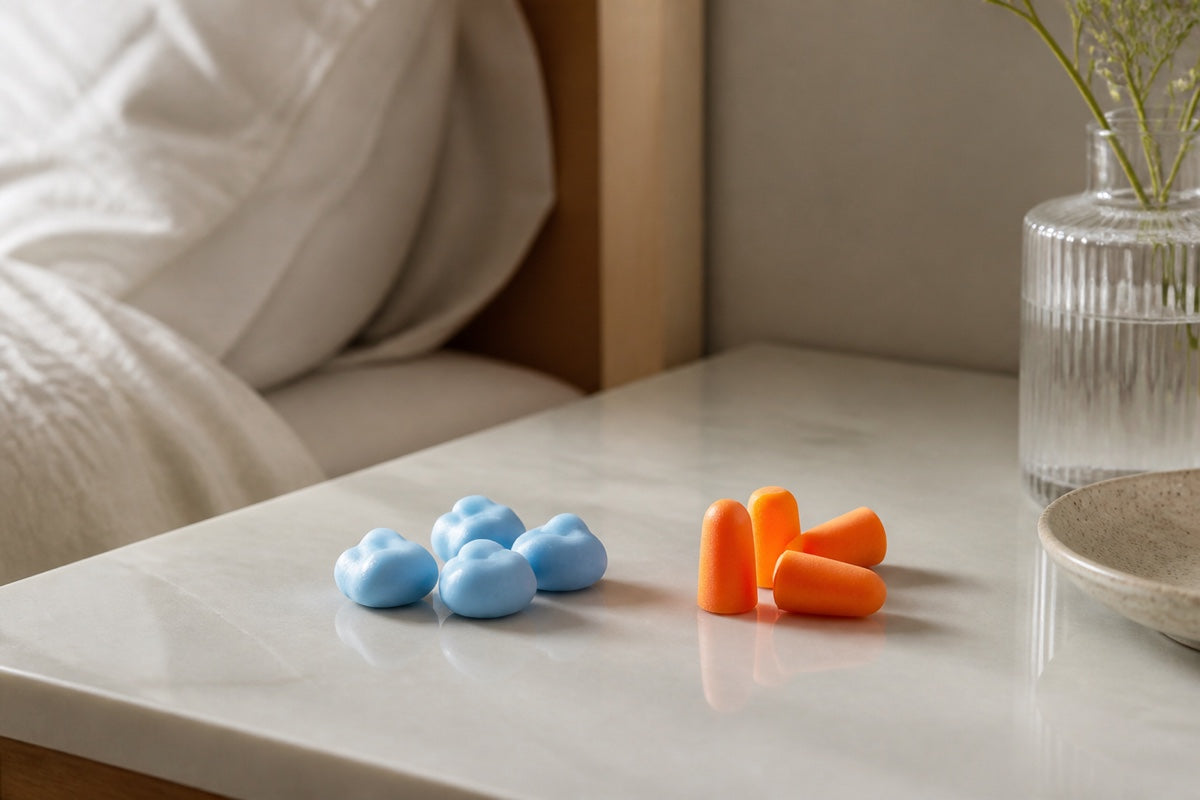
Moldable silicone, roll-down foam and pre-moulded silicone sit differently. That changes pressure, fit technique and the seal you feel at night.

Outer-opening seal
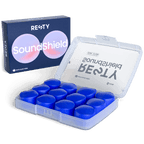
Moldable silicone SoundShields
Soft silicone is shaped over the ear opening rather than pushed deep into the canal. Reusable, low-profile and rated up to 27 dB depending on fit.
Expanding in-canal fit
Roll-down foam earplugs
Compressed into a narrow cylinder, inserted into the canal and held while the foam expands. Often inexpensive, but technique and canal pressure matter.
Do not confuse the formats
Pre-moulded or flanged silicone
Also silicone, but not the same as moldable putty. These plugs enter the canal and can have a stem, filter or several sizes.
Short answer: moldable silicone is the stronger first choice for sleepers who value an outer-opening seal, reuse and less deep insertion. Foam can be the better choice for a small in-canal format, a particular higher-rated product or the lowest initial cost. Keep only the option that seals without pain and stays comfortable on your pillow.
Silicone vs foam earplugs for sleeping at a glance
On mobile, swipe horizontally to view every column.
| Decision factor | Moldable silicone | Roll-down foam |
|---|---|---|
| Where it sits | Pressed over the ear opening | Inserted into the ear canal |
| How it seals | Shaped into a flat outer cover | Compressed, inserted and allowed to expand |
| Side-sleeping pressure | Can stay low-profile when flattened correctly | Can feel fine, but length and expansion pressure vary |
| Fit skill | Shape and smooth the edge evenly | Roll, pull the ear, insert and hold during expansion |
| Sound reduction | Product- and fit-specific; SoundShields publish up to 27 dB | Product- and fit-specific; some foam products list higher ratings |
| Reuse | Often reusable when the manufacturer permits it | Often disposable or limited-use; follow the exact label |
| Cleaning | Care depends on the exact silicone formula and instructions | Porous foam is usually replaced rather than washed |
| Travel and storage | Needs a clean case; easy to reshape | Very compact; fresh pairs are easy to carry |
| Main comfort signal | No material pushed deep into the canal | Soft expansion with the correct size and depth |
| Main trade-off | Can lose seal if hair, oil or poor shaping reaches the edge | Poor insertion can reduce attenuation or create canal pressure |
| Best for hazardous noise? | Only if the exact product is certified for that use | Only if the exact product is certified and correctly fitted |
First decide what “silicone earplugs” means
Silicone describes a material, not one fixed design. Moldable putty-style plugs are pressed over the entrance of the ear. Pre-moulded silicone plugs may use flanges, tips or stems and sit partly inside the canal. Custom silicone plugs are made from an ear impression. Comparing all three as one category creates bad buying advice.
This guide compares the form most relevant to Resty: moldable silicone that covers the opening, versus classic slow-recovery foam that is rolled down and inserted. The difference is practical. One creates an outer seal; the other expands inside the canal.
That distinction also prevents a common mistake. Do not push a moldable outer-ear plug into the canal just because another silicone product is designed for insertion. Follow the placement instructions for the exact product in your hand.
Which blocks more sound: silicone or foam?
Neither material wins automatically. A decibel rating belongs to a tested product and test method, not to every item made from the same material. Shape, size, frequency, insertion depth, seal and user technique all change real-world attenuation.
Some roll-down foam hearing protectors publish high laboratory ratings. That does not mean every sleeper receives that reduction. NIOSH fit-testing research shows that training and personal fit influence the protection people actually achieve. A badly inserted high-rated foam plug can perform worse than its packaging suggests.
Resty SoundShields publish attenuation up to 27 dB depending on fit. “Up to” is a boundary, not a promise that a bedroom becomes 27 dB quieter or that every frequency falls equally. Judge the seal by whether ordinary environmental sound becomes clearly less intrusive while both ears remain comfortable.
Side sleeping: profile and pillow pressure matter
Moldable silicone on the pillow side
A correctly flattened outer seal can avoid the long section that some in-canal plugs leave exposed. That is useful when a pillow presses the outer ear. Too much silicone, a thick edge or a firm pillow can still create a pressure point, so “silicone” does not guarantee side-sleeper comfort.
Shape each ear separately, lie on your usual pillow and turn your head. If the seal shifts, hurts or leaves a bulky bump, reshape it rather than pressing harder.
Foam on the pillow side
A small soft foam plug can also work well for side sleepers when it fits the canal and does not protrude. A plug that is too long, too large or inserted unevenly may transfer pillow pressure into the canal. Cutting a plug without manufacturer permission is not a safe universal fix because it changes removal and tested performance.
The fair test is twenty to thirty minutes while awake in your normal sleep position. Comfort while standing is not enough; the pillow is part of the fit.
Reuse, hygiene and cost per night
Reusable does not mean permanent. Moldable silicone should be stored clean and dry and replaced when it becomes dirty, damaged, stiff, fragmented or no longer forms an even seal. Resty does not publish a fixed number of nights per pair, so this guide does not invent one.
Foam rules vary. Many roll-down plugs are sold as disposable; some manufacturers allow limited reuse while the plug remains clean and recovers properly. Porous foam can collect skin oil, wax and dirt. Do not assume that washing a disposable foam plug preserves its dimensions or attenuation.
For value, compare the pack price, number of pairs and your actual hygienic use, not only the price of one box. SoundShields come in 6, 18 or 36 pairs. The larger pack lowers the supply cost per pair, but the smallest pack is the sensible trial when you do not yet know whether an outer seal suits you.
Snoring, traffic and low-frequency sound
No passive earplug creates silence. Snoring and traffic contain changing frequencies, and low-frequency energy can remain noticeable through air and body conduction. A good seal can make the disturbance less prominent without deleting every engine, voice or bass note.
A tighter seal can also make your own breathing, swallowing or heartbeat seem louder: the occlusion effect. That does not prove the plug is dangerous or superior. If the internal sound is distracting, try a less forceful but still stable seal or a different form factor.
Earplugs have been studied as part of noise-reduction routines, including in intensive-care settings, but those studies do not establish that silicone beats foam or guarantee better sleep at home. The purchase question is narrower: can this exact pair reduce the sound that bothers you without creating a new comfort or safety problem?
Alarms, children and sounds you must hear
Do not buy on the promise that one material will always let an alarm through. Attenuation changes the level of wanted and unwanted sound. Alarm volume, frequency, distance, doors, your hearing and the seal all matter.
Test your real alarm, smoke-alarm audibility and any caregiving signal while awake with the plugs fitted. If missing a sound would create a serious risk, use a suitable vibration, light or connected alert as an additional layer and follow local fire-safety guidance. SoundShields reduce sound; they do not select which sound is important.
Choose silicone when these buying signals fit
- You prefer a seal over the ear opening rather than a plug expanding deeper in the canal.
- A low outer profile matters for side sleeping, provided your pillow test is comfortable.
- You want a reusable format and are willing to keep the plugs and case clean.
- You like shaping each side independently instead of relying on one fixed size.
- Published attenuation up to 27 dB, depending on fit, is appropriate for your ordinary sleep, travel or focus routine.
Choose foam when these buying signals fit
- You already know that a particular foam size sits comfortably in your canals.
- You prefer a fresh disposable pair or the lowest initial purchase price.
- You can roll, insert and hold the plug correctly with clean hands.
- A specific certified foam product is required for a loud environment: separate from a normal sleep purchase.
- You tested it on your pillow and expansion pressure remains comfortable through the night.
How to fit moldable silicone and foam correctly
The two formats should not be fitted the same way. Stop if placement causes pain, sharp pressure or difficulty removing the plug.
Moldable silicone SoundShields
- Wash and dry your hands and make sure the outer ear is dry.
- Soften one whole plug between your fingers without stretching it into a narrow point.
- Place it over the ear opening and flatten the edge into an even cover.
- Do not push the silicone down into the ear canal.
- Move your jaw and test the seal on your pillow; reshape each ear separately.
Roll-down foam
- Start with clean, dry hands and an undamaged plug in the correct size.
- Roll the foam into a smooth narrow cylinder without creases.
- Reach over the head and gently pull the ear according to the product instructions.
- Insert to the specified depth and hold while the foam expands.
- Remove slowly with a gentle twist; never force a painful or inaccessible plug.
Which SoundShields pack should you choose?
Pack counts are quantities, not different physical sizes. Each pair is shaped by hand over the ear opening.
12 pieces
6 pairs
The practical trial pack or a compact travel supply.
36 pieces
18 pairs
For regular use or clean cases in more than one place.
72 pieces
36 pairs
The larger supply for an established routine or household stock.
Current availability and pricing live on the Resty SoundShields product page. Buy the larger pack only after the fit works for your ears.
What the evidence supports, and what it does not
The CDC/NIOSH overview of hearing protectors distinguishes formable foam, pre-formed and custom plugs. It supports comparing design and fit instead of treating material as the only decision.
A recent NIOSH systematic review of fit testing and training found that personal fit and instruction affect achieved protection. It does not rank moldable sleep silicone against foam for overnight comfort.
A systematic review and meta-analysis of earplugs and eye masks in intensive care found potential sleep benefits in that clinical context. The studies do not prove a material winner or a guaranteed result in an ordinary bedroom.
The WHO-linked systematic review on environmental noise and sleep supports reducing disruptive environmental noise as a reasonable sleep-environment goal. It does not turn a consumer earplug into a treatment.
The NHS guidance on ear infections lists wearing earplugs as one possible source of outer-ear irritation. This supports clean, dry use and stopping when symptoms appear, not the claim that normal correct use always causes infection.
Safety and replacement boundaries
Do not use sleep earplugs in an ear that is painful, inflamed, injured, draining fluid or being treated unless a qualified professional says the product is appropriate. Persistent pain, itching, swelling, discharge, new ringing or reduced hearing deserves assessment rather than a tighter seal.
Never share used earplugs. Keep the product and case away from dust, hair and oils, and follow the exact cleaning and replacement instructions. A sleep product with a consumer attenuation statement is not automatically certified hearing protection for machinery, concerts, shooting or hazardous occupational noise.
- Moldable silicone: keep it as one removable piece, press it over the opening and replace it when it no longer stays clean, flexible and intact.
- Foam: do not improvise washing, cutting or repeated use when the label treats the plug as disposable.
- Both: use the least pressure that makes a stable seal, remove slowly and stop if the plug becomes difficult or painful to retrieve.
- Night safety: verify alarms and caregiving signals in your real room; never assume a stated dB value predicts what you personally will hear.
Pressure or slipping? Use the step-by-step side-sleeper earplug fit guide to adjust shape, pillow contact and removal.
Noise is not the only problem? Pair a comfortable sound routine with the Resty 4D Sleep Mask when unwanted light is the bigger remaining disturbance.
Frequently asked questions
Are silicone earplugs better than foam for sleeping?
Not universally. Moldable silicone is often the better format when you want an outer-opening seal, reuse and less deep insertion. Foam can be better when a correctly sized expanding in-canal plug feels comfortable or a specific product rating matters. Test the exact pair on your pillow.
Which blocks more noise, silicone or foam?
Compare product-specific test ratings and your achieved seal. Some foam products publish higher laboratory ratings, while SoundShields publish up to 27 dB depending on fit. Material alone does not predict your real attenuation.
Which is better for side sleepers?
The lower-pressure shape on your own pillow. Flattened moldable silicone can avoid a protruding in-canal stem, but too much material can still press. A short, soft foam plug may also be comfortable when its size and depth suit the ear.
Can silicone earplugs be reused?
Many can, including SoundShields, but reuse is not unlimited. Follow the product care instructions and replace a plug when it is dirty, damaged, stiff, fragmented or no longer seals evenly. Resty does not state a fixed number of nights per pair.
Can foam earplugs be washed and reused?
Do not assume so. Many roll-down foam plugs are disposable, and washing can change the material or recovery. Follow the exact manufacturer label; replace any plug that is dirty, damaged or no longer expands correctly.
Will I still hear my alarm with earplugs?
There is no universal guarantee. Test the exact alarm and room while awake. If missing an alarm, child or smoke detector would be dangerous, add an appropriate vibration, light or connected alert instead of relying on the earplug material.
Do SoundShields go inside the ear canal?
No. Soften the moldable silicone and press it over the ear opening to create a flat seal. Do not push it deep into the canal, stretch it into a narrow point or split it into pieces that are difficult to remove.
Is it safe to sleep with earplugs every night?
Many people use earplugs regularly, but comfort and ear condition remain leading. Use clean hands, dry ears and an undamaged product; stop for persistent pain, irritation, discharge, ringing or reduced hearing and seek appropriate advice.
Choose by real fit
Prefer a moldable seal over the ear opening?
Resty SoundShields use soft, reusable silicone with aloe-vera infusion and published attenuation up to 27 dB depending on fit. Start with 6 pairs, or choose 18 or 36 pairs once the outer seal suits your routine.
View Resty SoundShields