

Infrared Heat Lamp vs Red Light Panel: What Is the Difference?
An infrared heat lamp and a red light panel can both look red and both use the word infrared, but they are not interchangeable products. A heat lamp is bought for noticeable, focused warmth. A wavelength-rated LED panel is bought for a repeatable red- and near-infrared-light routine in which heat is not the main specification. This guide separates the names, mechanisms and buying signals, then compares the current Resty 275 W single-head lamp, 550 W double-head lamp and MARS 400 panel.
The short buying answer
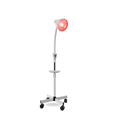
Choose the 275 W single-head heat lamp if: you want focused local warmth on one area and a compact floor-standing setup.
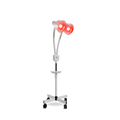
Choose the 550 W double-head heat lamp if: you want the same warmth-first format across a wider area or two nearby zones.
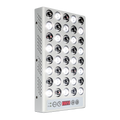
Choose the MARS 400 red light panel if: you specifically want 660 nm red and 850 nm near-infrared LEDs at a stated irradiance and distance.
There is no universal winner: choose by intended use. A high-watt heat lamp is not automatically a stronger photobiomodulation device, and an LED panel is not designed to replace the felt heat of a warming lamp.
Heat lamp vs red light panel at a glance
| Decision factor | 275 W | 550 W | MARS 400 |
|---|---|---|---|
| Main purpose | Focused local warmth | Wider local warmth | Defined red/NIR light routine |
| Configuration | One adjustable head | Two separately adjustable heads | 60-LED tabletop panel |
| Electrical rating | 275 W | 2 × 275 W; 550 W total | 82 W nominal |
| Wavelength specification | Not sold as narrow 660/850 nm LED output | Not sold as narrow 660/850 nm LED output | 660 nm red + 850 nm NIR |
| Session control | 10 to 25-minute timer | 10 to 25-minute timer | Automatic 10-minute timer |
| Best buying signal | You want warmth in one spot | You want broader warmth | You want stated wavelengths and irradiance |
Why infrared lamp, red lamp and red light therapy get confused
The confusion starts with colour. A traditional warming lamp can glow red, while a red light panel visibly emits red LEDs and can also contain invisible near-infrared LEDs. The shared colour does not make the output or purpose identical. Product names such as infrared lamp, red lamp and red light therapy lamp are also used inconsistently across shops, so the title alone is a poor buying test.
Read the specification language instead. A warmth-first device foregrounds electrical wattage, felt heat, adjustable aiming and safe session distance. A photobiomodulation-style LED panel foregrounds wavelengths in nanometres, irradiance at a stated distance, LED layout and exposure time. If a listing does not state a controlled wavelength or optical output, do not assume its red glow provides the same light protocol as a 660/850 nm panel.
How an infrared heat lamp works in practice
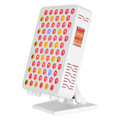
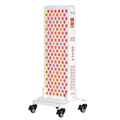
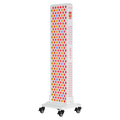
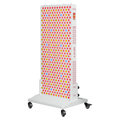
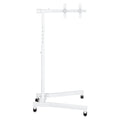
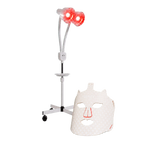
An infrared heat lamp converts electrical energy into radiant warmth aimed at a limited area. The practical feedback is immediate: you feel the area becoming warmer. The Resty single-head model uses one adjustable 275 W lamp head; the double-head model combines two adjustable 275 W heads for 550 W total. Their timer range is 10 to 25 minutes, and both are positioned around a stable floor base.

That makes a heat lamp a straightforward choice for a comfort routine when local warmth is the goal. It does not make every health claim attached to infrared heat valid, and Resty does not sell these lamps as medical devices. More heat, a smaller distance or a longer session is not automatically better. Comfortable distance, secure placement, supervision and the manual define correct use.
How a wavelength-rated red light panel differs
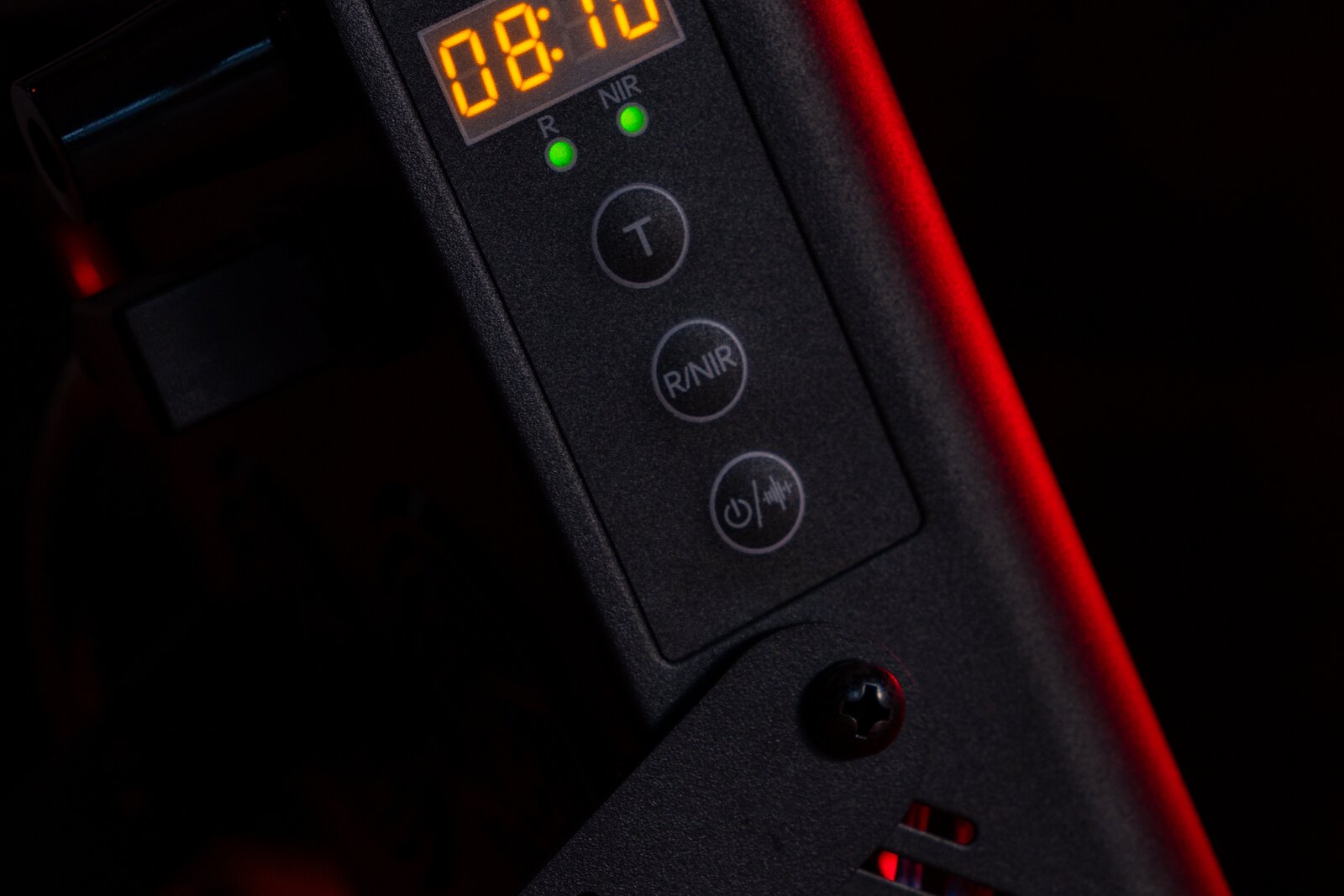
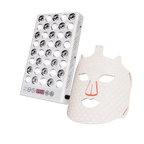
The MARS 400 uses 60 LEDs and offers 660 nm visible red light, 850 nm invisible near-infrared light or both together. Its product specification states at least 130 mW/cm² at 15 cm and an automatic 10-minute timer. The panel is built around controlled light settings rather than around producing an intense warming sensation.
Photobiomodulation is a research term for biological responses to low-level visible and near-infrared light under defined parameters. It does not mean every red LED product produces the same outcome. Wavelength, irradiance, time, treatment area, beam pattern and protocol all matter. MARS 400 is positioned for general wellness, skin-care and fitness routines.
Why 275 W, 550 W and 82 W cannot be ranked as one score
The watts on these product pages describe electrical or nominal device power, not the dose of useful light that reaches skin. A 550 W heat lamp draws and converts much more electrical power because warmth is its primary output. The 82 W MARS 400 uses LEDs and reports irradiance, optical power per unit area, at 15 cm. Those numbers answer different engineering questions.
Do not conclude that the double-head lamp is more than six times as effective as the panel, or that the panel is weak because its electrical rating is lower. For an LED routine, look for wavelength, measured irradiance, distance and time. For a heat routine, look for comfortable warming area, adjustment, stability and timer. Even irradiance values from two panels should only be compared when measurement method and distance are sufficiently alike.
Infrared heat lamp electricity usage: 275 W vs 550 W
Estimated electricity use equals power in kW × hours of use. At the listed power, 15 minutes uses 0.06875 kWh for 275 W or 0.1375 kWh for 550 W. Multiply by your own price per kWh to estimate the cost. This is a calculation example, not a recommended session length; actual consumption can vary.
Single head, double head or compact panel?
The single-head lamp is the simplest warmth option. It costs less, takes less visual space and is easy to aim at one local area. The double-head lamp is useful when you want a wider warmth footprint or two nearby angles without moving one head halfway through the session. Its 550 W total is the sum of two 275 W heads, not a claim about therapeutic light dose.

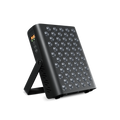
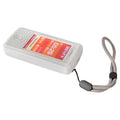
MARS 400 is a 36 × 30 × 10 cm, 2.6 kg tabletop panel. It needs mains power and stable positioning at the instructed distance, but it can be aimed at the face, neck or another smaller area. Choose it when the defined 660/850 nm light setup matters more than felt heat. A panel can feel mildly warm in use, yet warmth is not the purchase criterion.
Choose by the outcome you actually want
You mainly want noticeable local warmth
Choose a heat lamp. Use the 275 W single head for one concentrated area or the two-head version when wider coverage and separate angles justify the higher price and power. Do not buy a panel expecting it to feel like a 275 W warming bulb.
You want a defined red and near-infrared LED routine
Choose MARS 400 when a stated 660 nm and 850 nm specification, measured irradiance at 15 cm and a repeatable 10-minute cycle are the decisive features. Do not substitute a warm red bulb merely because both product names contain red or infrared.
You want both warmth and a light routine
Treat them as two separate tools with separate manuals, not as stackable doses. Decide whether you genuinely need both experiences. Avoid running one immediately after the other by default, because combined heat, brightness and exposure have not been personalised for you.
What the research supports, and what it does not
The International Commission on Non-Ionizing Radiation Protection overview of infrared radiation classifies infrared from 780 nm to 1 mm and explains that excessive exposure can thermally injure skin and eye tissues. That supports a heat-safety boundary; it is not proof that a consumer warming lamp treats a condition.
A peer-reviewed review of molecular evidence for photobiomodulation describes proposed responses to low-level red and near-infrared light. Mechanistic plausibility does not turn an unspecified heat lamp into a wavelength-controlled PBM device, nor does it guarantee a personal outcome from MARS 400.
A separate review of light parameters and PBM efficacy highlights how wavelength, power density, dose and target tissue complicate comparisons. That is why electrical watts alone cannot rank these three products and why another device’s protocol should not be copied.
A 2025 evidence-based clinical consensus on photobiomodulation found support for specific professional applications while also identifying a need for better guidance and further research. It does not validate every consumer claim or make a general-wellness panel a medical treatment.
Heat, eye and skin safety
Place a heat lamp on its stable base, keep flammable materials away, use a comfortable distance and stop before heat becomes painful or the skin remains red. Never fall asleep under it, leave it operating unattended or assume that reduced sensation protects you from burns. Extra care is sensible when heat sensitivity, circulation, skin sensation or medication could alter how warmth is perceived; ask a qualified clinician when unsure.

For MARS 400, follow the manual for distance, timer, frequency and supplied eye protection. Near-infrared LEDs can be operating even when they do not look bright. Stop with pain, persistent redness or visual discomfort, and seek professional advice for photosensitivity, photosensitising medication, pregnancy or a relevant eye or medical condition. Read the separate red-light eye-safety guide for the practical distinction between brightness, closed eyes and actual device instructions.
Exact Resty product specifications
The comparison uses the current product records rather than generic category assumptions:
- Single-head heat lamp: one 275 W head, focused local warmth, 360° adjustable head, arm and height.
- Single-head controls: 10 to 25-minute timer, remote control and stable base.
- Double-head heat lamp: two separately adjustable 275 W heads, 550 W total.
- Double-head controls: 10 to 25-minute timer, remote control and stable cross base.
- MARS 400 light: 60 LEDs with 660 nm red and 850 nm near-infrared modes.
- MARS 400 output: at least 130 mW/cm² at 15 cm according to the product specification.
- MARS 400 format: 82 W nominal power, 36 × 30 × 10 cm, 2.6 kg and automatic 10-minute timer.
Which Resty model should you buy?
Buy the 275 W single-head lamp when one warmth zone is enough
Check the current specifications, price and availability: Resty 275 W infrared heat lamp.
Buy the 550 W double-head lamp for broader positioning
Check the current specifications, price and availability: Resty double-head infrared heat lamp.
Buy MARS 400 for stated 660/850 nm light
Check the current specifications, price and availability: MARS 400 red light panel.
Frequently asked questions
Is an infrared heat lamp the same as red light therapy?
No. A heat lamp is designed and specified around warmth. A wavelength-rated LED panel is specified around defined red/NIR wavelengths, irradiance, distance and time. Some names overlap, so verify the actual specifications.
Which is better: an infrared lamp or a red light panel?
Neither is universally better. Choose the lamp for felt local warmth and the panel for a controlled 660/850 nm LED routine. The better purchase is the one that matches your intended use and manual.
Does a higher wattage mean a better red light device?
No. Electrical wattage is not skin dose. It is especially misleading across a heat lamp and an LED panel because they convert and report power for different purposes.
Can a red light panel also feel warm?
Yes, electronics and absorbed light can create mild warmth, especially at close distance. That does not turn the panel into a heat lamp, and it is not a reason to move closer than instructed.
Can I use a heat lamp and red light panel on the same day?
Do not combine them automatically. Each has its own exposure and safety instructions. If you want both in one routine or have a health concern, ask a qualified professional for individual guidance.
Buy by purpose, not by the colour of the glow
Choose a Resty heat lamp when focused warmth is the goal. Choose MARS 400 when stated 660/850 nm light and a repeatable non-contact setup are the goal. Follow the selected product’s own manual.
View the 275 W heat lamp View MARS 400