
Red Light Therapy Before or After a Workout? Evidence Guide
Should you use red light therapy before or after a workout? Before exercise is the more relevant research timing when your question is performance or fatigue during training. After exercise is the more relevant timing when you want a calm recovery routine. Neither option is universally better, and neither guarantees more strength, less soreness or faster injury recovery.
The important detail is that photobiomodulation studies use specific wavelengths, power, dose, target muscles and treatment schedules. A home panel cannot simply inherit the result of a small clinical trial. Use this guide to choose a repeatable slot, then follow the manual for your actual device.
The answer in 30 seconds
- Choose before a workout when you want to test a pre-training routine and the manual permits that timing.
- Choose after a workout when a recovery block is easier to repeat consistently.
- Do not copy study minutes blindly: time alone does not describe wavelength, irradiance, dose or covered area.
- Training still leads: light does not replace a warm-up, progressive loading, sleep, nutrition or medical assessment.
Red light therapy before vs after a workout
| Timing | Best fit | What human studies show | Main limitation |
|---|---|---|---|
| Before | A pre-training performance or fatigue experiment | Some small trials report benefits; another controlled trial found no improvement | Results depend heavily on protocol and device |
| After | A structured post-training recovery routine | Some trials report less soreness or strength loss; other trials found no recovery advantage | Soreness markers do not prove faster injury healing |
| Both | Only when the device instructions explicitly support the total schedule | No strong evidence that two sessions are automatically better than one | More exposure is not automatically a better dose |
| Whichever is repeatable | Most home users comparing routines | Consistency makes a personal comparison easier to interpret | A personal result is not clinical proof |
Red light therapy before a workout
Pre-workout use is sometimes described as pre-conditioning. In a randomized, placebo-controlled trial with 28 high-level soccer players, 810 nm photobiomodulation was applied before an eccentric exercise protocol. Certain power settings were associated with better strength and recovery outcomes, while higher output was not automatically better. Read the trial abstract and exact protocol.
That positive result is not universal. Two randomized double-blind trials involving 60 physical-education students tested an 808 nm laser for ten minutes immediately before exercise and found no improvement in maximal performance or measured recovery. The null trial is an important counterweight to simple “before is best” claims.
Red light therapy after a workout
Post-workout use has also produced mixed results. A small randomized double-blind trial in 17 healthy young men applied 630 nm LED phototherapy immediately after damaging eccentric elbow exercise. The treated group had less soreness, strength loss and range-of-motion impairment during follow-up. See the post-exercise trial.

A different randomized study tested 660 to 850 nm photobiomodulation after two sprint-interval sessions and found no improvement in the selected inflammation, muscle-damage, soreness or jump-performance indicators versus placebo. That negative recovery trial shows why “after” should not be sold as a guaranteed recovery shortcut.
Why panel size and protocol change the answer
Localized research devices, LED clusters and whole-body systems are not interchangeable. A 2025 systematic review found only five eligible whole-body photobiomodulation studies with 105 participants; none showed a benefit for fatigue biomarkers or exercise performance. Read the whole-body review. Its conclusion does not erase localized studies, but it does limit broad claims about every red light setup.
Minutes are therefore not a portable dose. Distance, irradiance, beam angle, wavelength, skin exposure and treatment area all change what reaches the tissue. Compare the published protocol with the specification and manual of your own panel instead of converting a study into a universal home prescription. For the wider evidence and safety context, use the Resty red light evidence guide.
How to choose your timing
Use the smallest routine that answers your actual question:

- Name one goal. Choose performance/readiness before training or comfort/recovery after training; do not claim both from one untracked routine.
- Check the manual. Use its distance, session length, eye guidance and frequency for the model you own.
- Keep the comparison stable. Use the same target area and similar workout type for two to four weeks.
- Track one useful outcome. Examples are completed repetitions, perceived soreness the next day or whether the routine was practical.
- Stop when the signal is poor. Pain, persistent irritation, headaches or worsening symptoms are reasons to stop, not to increase exposure.
Can you use red light therapy before and after the same workout?
Possibly, if the manufacturer specifically allows that frequency and total exposure. But doing both is not a neutral default. Photobiomodulation can show a dose-response relationship, and the trials above do not prove that doubling a home-panel routine doubles the result. Start with one timing slot so you can tell whether it is practical and well tolerated.
Safety matters more than workout timing
Do not stare into bright LEDs. Follow the device instructions for eye protection, distance and session duration. Ask a qualified clinician before use if you have a light-sensitive condition, use photosensitising medication or are recovering from surgery or another procedure.
Red light therapy does not diagnose an injury and does not clear you to train. New swelling, loss of function, severe pain, weakness or symptoms that keep returning need appropriate assessment.
Frequently asked questions
Should you do red light therapy before or after a workout?
Before is the more relevant experimental slot for performance or fatigue; after is the more practical slot for a recovery routine. Human results are mixed, so choose one timing that matches your goal and device manual.
How long before a workout should you use red light therapy?
There is no universal number of minutes. Research timing and dose vary, and a study device may differ greatly from a home panel. Follow your model’s manual rather than copying a trial duration.
Can you use red light therapy immediately after a workout?
Some studies applied light immediately after exercise, but their results were mixed. Immediate use is not automatically required; the device instructions and a repeatable routine matter more than an invented narrow window.
Can you use a red light panel after every workout?
Only if the product instructions support that frequency and you tolerate it well. More sessions are not automatically better, especially when total dose and target area change.
Does red light therapy speed up injury recovery?
This article does not establish that claim. Exercise soreness and laboratory markers are not the same as healing an injury. Use clinical assessment and rehabilitation guidance for an injury.
Choose a panel for the area you want to cover
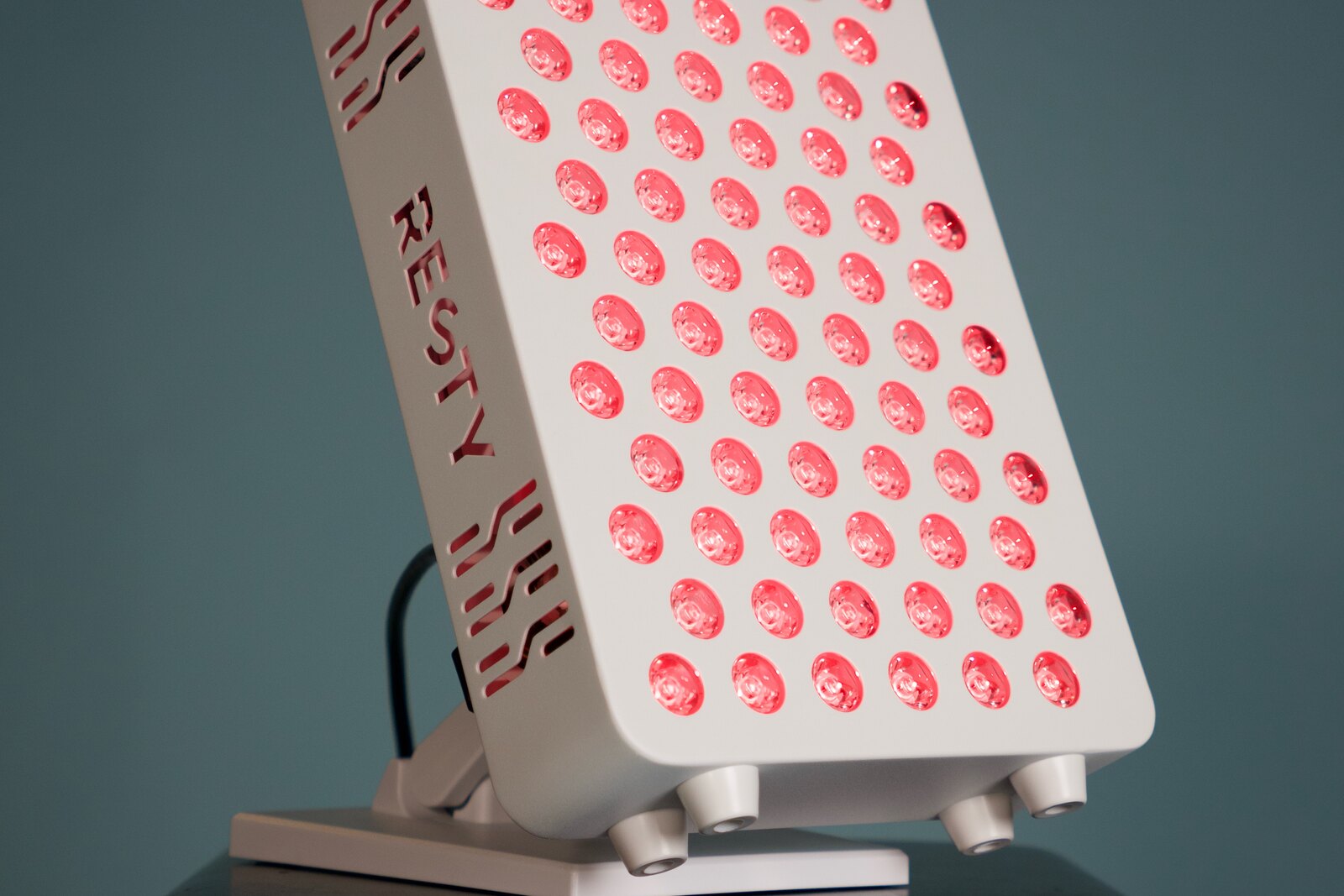
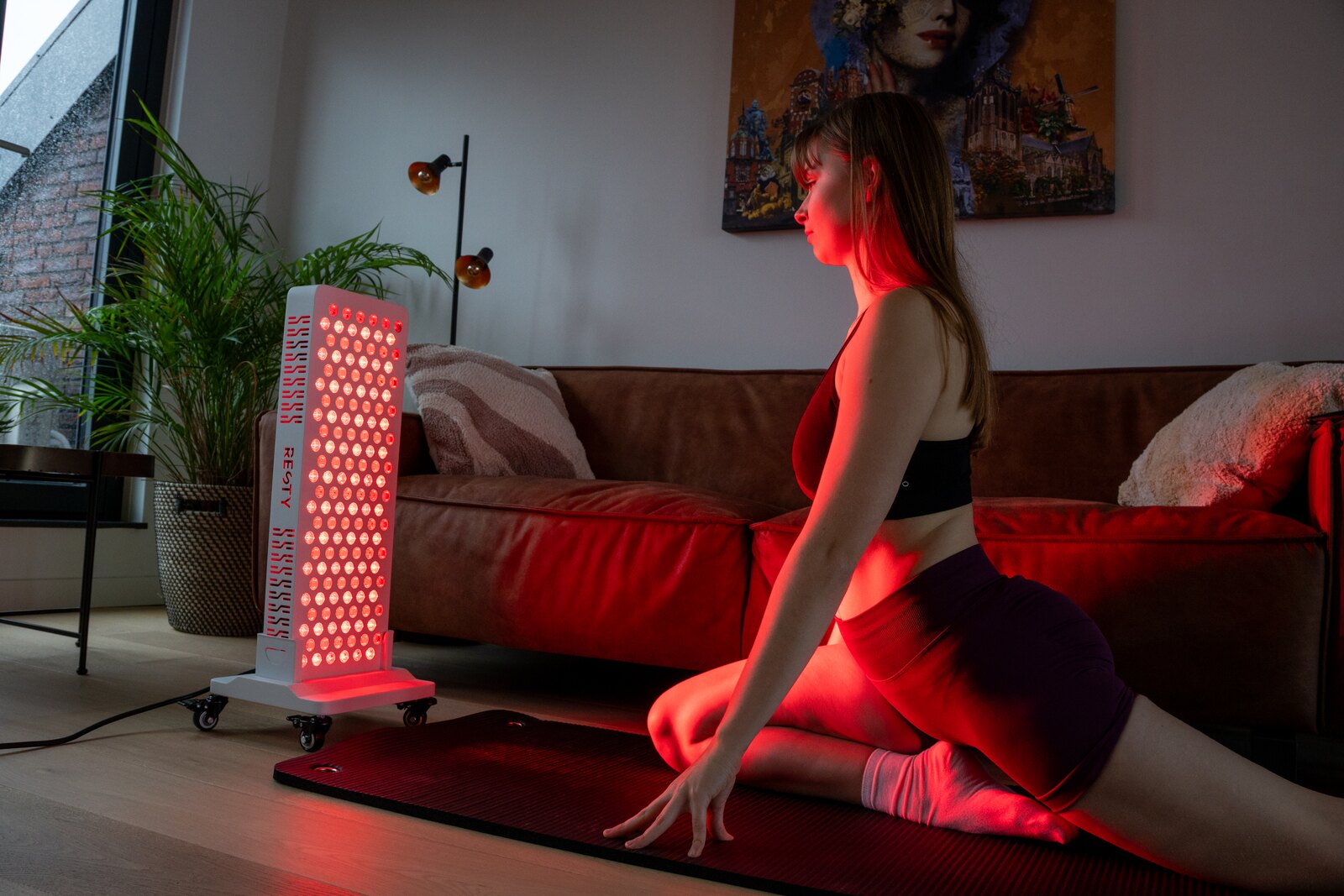
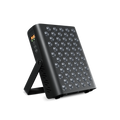
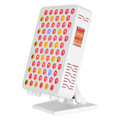
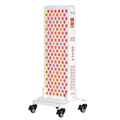
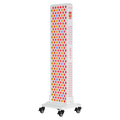
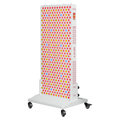
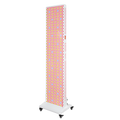
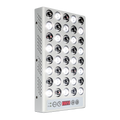
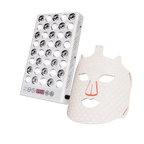
Compare MARS 400 for a simple 660/850 nm routine and MARS 600 for nine selectable wavelengths and more controls. Both are compact formats. Use the panel-size guide if several muscle groups would require repeated repositioning. Device size and features do not establish whether pre- or post-workout use will work better.
Teaching Pilates? Resty helps you add red light in your Pilates studio as a bookable extra.