




7-Day Nose Breathing Practice: A Gentle Daily Plan
This 7-day nose-breathing practice is a gentle awareness plan, not a test of how long you can force your mouth closed. Spend five to ten minutes a day noticing when nasal breathing feels easy, when it does not, and which cue is realistic enough to repeat.
The goal for this week
Build one calm, repeatable cue for breathing through your nose at rest or during easy movement. Do not force nasal breathing through blockage, significant breathlessness or hard exercise. Comfort comes before a streak.
Before you start: a two-minute check
- Sit or stand in a relaxed position.
- Keep your jaw loose and lips resting together without clenching.
- Breathe normally through your nose for two minutes.
- Notice airflow, effort, dryness and whether one side feels more blocked.
- Stop if you feel dizzy, short of breath, panicky or uncomfortable.
If nasal breathing is difficult at rest, do not push through it. A cold, allergies, structural narrowing or another cause may need attention. Persistent one-sided blockage, repeated nosebleeds, breathing difficulty, chest pain or concerning sleep symptoms deserve professional assessment.
What the evidence supports, and what it does not
The research on deliberate breathing is broader than nose breathing alone. A 2023 meta-analysis of randomized breathwork trials found a small-to-moderate association with lower self-reported stress, but the authors stressed study limitations and the need to avoid hype. This challenge is therefore framed as practice and observation.
The nose helps warm, humidify and filter incoming air. A review of nasal function during exercise also notes that nasal blockage and exercise-induced rhinitis can matter for active people. That is a reason to notice comfort, not to insist on nasal-only breathing at every intensity.
External nasal strips may mechanically open the nasal valve and can change how airflow feels for some people. However, a systematic review and meta-analysis did not find improvements in VO₂max, heart rate or perceived exertion in healthy participants. A strip is an optional comfort tool, not a shortcut to performance.
Your 7-day nose-breathing plan
Day 1: establish your baseline
Repeat the two-minute check once in the morning and once in the evening. Score ease from 1 to 5. Write down the setting, not just the number: after waking, at a desk, after a meal or before bed. The purpose is to find an easy moment that already exists.
Day 2: relax the jaw and shoulders
Set a five-minute timer. Let your shoulders drop, keep your teeth slightly apart and allow the lips to rest together. Breathe quietly through the nose without trying to take unusually deep breaths. If you need to open your mouth, do so. Restart only when breathing feels normal.
Day 3: add an easy walk
Walk for ten minutes at a pace at which you could speak in full sentences. Use nasal breathing while it remains comfortable. Switch naturally when effort rises; this is not a breath-holding exercise. Record when you changed and how quickly comfortable breathing returned.
Day 4: build a desk reset
Choose one repeatable trigger, such as closing a meeting, making tea or plugging in your phone. For five minutes, sit upright and breathe quietly through the nose. Avoid exaggerated breaths. A small cue repeated reliably is more useful than a complicated routine you skip.
Day 5: create an evening wind-down cue
Thirty to sixty minutes before bed, reduce stimulation and repeat five minutes of comfortable nasal breathing. Do not add mouth tape simply to complete the challenge. Night-time products require their own safety check, and they should never be used to force breathing through a blocked nose.
Day 6: use it in an easy warm-up
During a gentle warm-up, try nasal breathing for the first few minutes while effort stays low. As intensity rises, let breathing respond naturally. The goal is awareness and pacing, not proving that nasal breathing is superior during hard work. Read our guide to nasal breathing during exercise for the limits and practical context.
Day 7: choose the one cue you will keep
Review the week and choose one situation in which nasal breathing felt both comfortable and easy to remember. Keep that cue for the next two weeks. Drop any step that caused strain or depended on perfect conditions. A useful habit should reduce friction, not create another rule to fail.
A simple tracking template
- Moment: morning, work break, walk, warm-up or wind-down.
- Duration: actual comfortable minutes, not the planned target.
- Ease: 1 means forced; 5 means effortless.
- Nose: clear, dry, runny, one-sided or blocked.
- Next step: repeat, shorten, move to another moment or stop.
Do not use this tracker to diagnose yourself. It is simply a way to notice patterns that may be useful if you later discuss persistent symptoms with a professional.
Do you need a nasal strip for the challenge?
No. Start without a product so you understand your baseline. If the front of the nose feels narrow and an external strip is comfortable for you, it can be tested as one variable. Keep expectations practical: it may change perceived airflow, but it is not proven to improve endurance performance in healthy people.
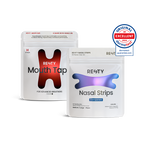
Learn more about the role of nasal breathing or view Resty transparent nasal strips. Follow the product instructions, apply only to clean, dry skin and stop if irritation occurs.
Frequently asked questions
Should I breathe only through my nose all day?
No. Nasal breathing can be a comfortable default at rest and during easy activity, but breathing should adapt to effort and health. Do not force it during hard exercise, congestion or breathlessness.
Should the breath be slow or deep?
For this challenge, keep it quiet and comfortable. Bigger is not automatically better. If a slower rhythm feels strained, return to normal breathing.
Can I do the challenge if my nose is blocked?
Do not force air through a blocked nose. Pause and address the cause. Seek professional advice for persistent, severe or one-sided obstruction or other concerning symptoms.
Is this a treatment for anxiety, sleep problems or snoring?
No. It is a seven-day awareness routine.
What to do after day 7
Keep one cue, repeat it for two weeks and reassess comfort. If the habit still fits, connect it to a broader routine rather than adding more rules. Explore our nose-breathing guide for more context and use symptoms, not a challenge streak, as the reason to seek care.