

















Blocked Nose All the Time: Causes, Diagnosis and Relief
You wake up with your mouth open again. The bedding feels dry, your nose feels sealed, and by breakfast you've already reached for a tissue twice, even though you're not ill. By evening, you're breathing around the blockage, not through it, and the whole thing starts to feel less like a temporary nuisance and more like a pattern you can't ignore.
That pattern matters. A nose that stays blocked all the time is often less about “getting rid of mucus” and more about reading what the nose is reacting to, or what is narrowing the airway. If you've started mouth-breathing at night, Resty's guidance on the risks of mouth breathing is a useful reminder that airflow problems can affect more than comfort.
Table of Contents
- Living With a Blocked Nose Every Day
- The Main Reasons a Nose Stays Blocked
- When One Cause Isn't the Whole Story
- How Doctors Work Out the Real Cause
- Self-Care and Conservative Management
- Knowing When to See Your GP or ENT
- A Clear Way Forward With Chronic Blockage
Living With a Blocked Nose Every Day
The daily version of a blocked nose is easy to underestimate because it creeps into ordinary moments. You wake with a dry throat, you notice your smell fading halfway through a meal, and you stop trusting your nose to work without warning. After a while, tissues, sprays, and half-hearted breathing through your mouth become part of the background, like a low-level problem you've learned to work around.
The nose is not just being “stuffy”
A blocked nose all the time is better understood as a clue than as a complaint to suppress. The nose has its own normal nasal cycle, where one side can feel more open than the other at different times, but you might barely notice it unless something else is already narrowing the passage. When blockage becomes constant, the cycle stops looking like normal variation and starts looking like a signal that a trigger, swelling, or structural narrowing is being layered on top.
Practical rule: if the blockage feels predictable, such as worse at night, worse in one room, or worse in pollen season, treat that pattern as information.
That's why the question is not “how do I unblock my nose today?” It's “what keeps making it close again?” Sometimes the answer is a recurring irritant. Sometimes it's anatomy. Often it's both.
What persistent blockage can point to
A steady blocked nose can sit behind allergy symptoms, chronic inflammation, or a narrowing inside the nose that makes every small bit of swelling feel bigger than it should. The same symptom can also change from hour to hour, which is why many people feel confused by it. One side can seem almost normal in the morning, then shut down after lying down, a hot shower, or an evening drink.
That shifting pattern is useful. It gives you a way to spot whether the problem behaves like a recurring trigger, a swelling problem, or a more fixed physical bottleneck. Once you start noticing the pattern, you stop treating every blocked day as if it were the same problem.
The Main Reasons a Nose Stays Blocked
A useful way to think about a blocked nose all the time is to imagine a hallway. Sometimes the hallway itself is narrow, sometimes the people in it are too many, and sometimes the walls are swollen because the fire alarm keeps going off. The nose works in a similar way, and most long-lasting blockage falls into four cause families.
Anatomy, allergy, inflammation and medication
Anatomy is the hardware. A deviated septum, enlarged turbinates, or polyps can physically reduce the space for air to move. If the hallway is already narrow, even a little extra swelling makes it feel jammed.
Allergy is the overzealous bouncer. Harmless particles such as dust mites or pollen are treated as threats, so the lining swells and starts making mucus. In UK terms, allergic rhinitis is a major background cause of persistent blockage, and the BSACI guideline says it affects 26% of adults in the UK and 10 to 15% of children (BSACI rhinitis guideline). That helps explain why many people think they have “a blocked nose all the time” when they are dealing with a recurring allergic pattern.
Inflammation is the lining overreacting after an infection or to ongoing irritants. The passages stay puffy even after the obvious cold has gone, so the nose behaves as if it's still recovering. A major UK review notes nasal obstruction affects over 30% of adults in the UK and that allergic rhinitis and chronic rhinosinusitis are the most common causes (UK nasal obstruction review).
Medication-related blockage is the side effect many people never expect. Rebound congestion after overusing decongestant sprays is the classic example, but some blood pressure and pain medicines can also matter. Resty's breathing guidance on science on nosebreathing fits neatly here because airflow support only helps if the underlying cause is also being addressed.
| Cause Family | What Is Happening | Typical Trigger | Earliest Clue |
|---|---|---|---|
| Anatomy | The nasal passage is physically narrow | A fixed shape issue or long-standing narrowing | One side often feels more blocked, especially at night |
| Allergy | The lining swells in response to harmless particles | Pollen, dust, pets, seasonal exposure | Sneezing, itching, watery nose alongside blockage |
| Inflammation | The nasal lining stays puffy after irritation | A recent cold, smoke, dry air, repeated irritation | Blockage lingers after the obvious infection has eased |
| Medication-related | The nose becomes dependent on a spray or affected by a medicine | Prolonged decongestant spray use, some tablets | Short relief at first, then worse blockage when it wears off |
A blocked nose is often a traffic problem, not a mucus problem.
When One Cause Isn't the Whole Story
A label like “sinusitis” can sound neat, but blocked noses are often a mix of issues. A slightly crooked septum, background allergy, and rebound spray use can each narrow the airway a little. Add them together, and the nose stays blocked even if one piece is treated.
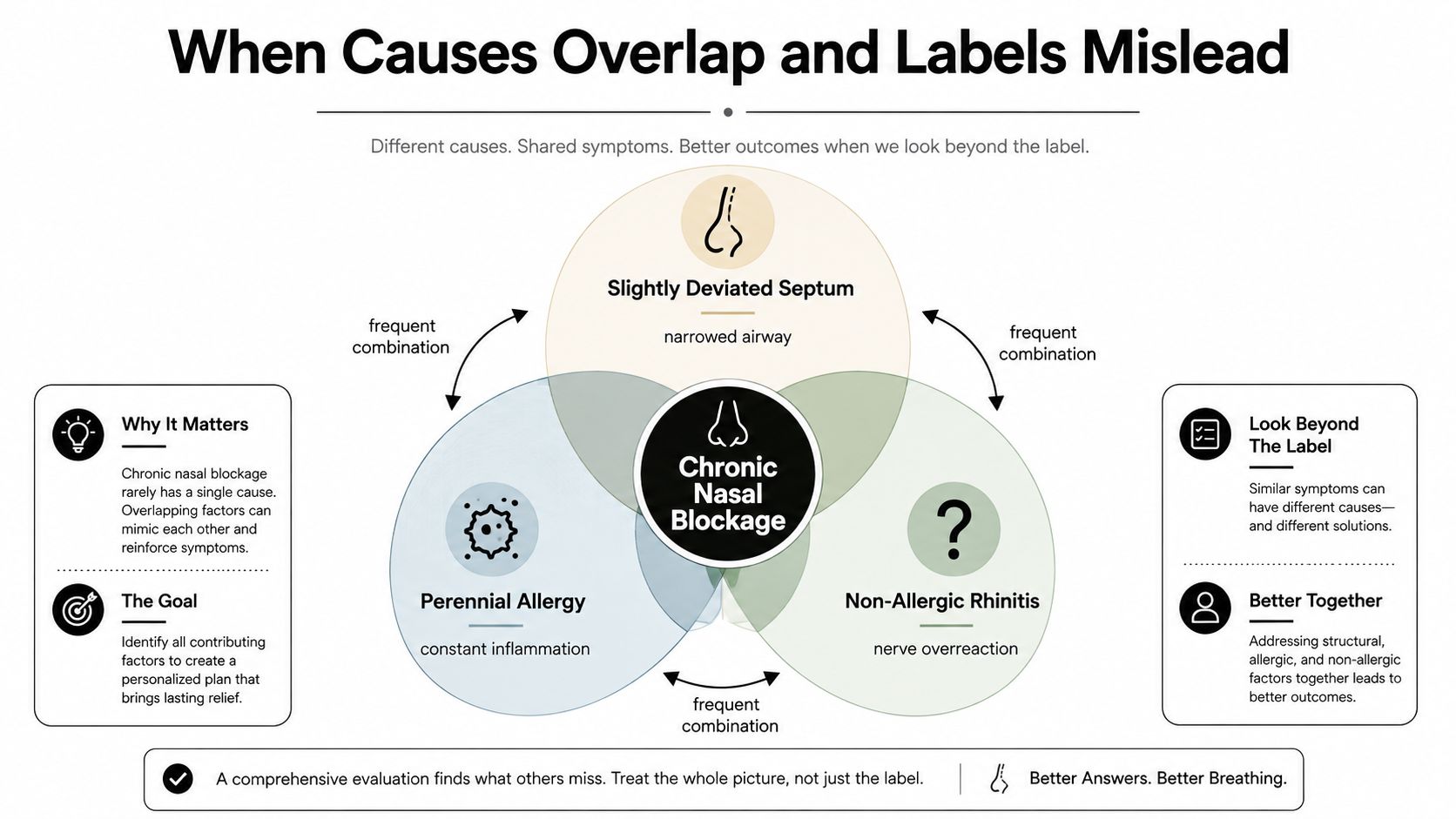
A single remedy often gives only partial relief. An antihistamine may help the allergy part, then stop there because the swelling also has a structural or inflammatory cause. A decongestant spray may open the nose for a short time, then leave the lining more reliant on it once the effect wears off.
Chronic rhinosinusitis is a common cause of obstruction, and the Royal College of Surgeons commissioning guide says it affects 10% of the UK adult population. That matters because chronic inflammation behaves differently from a short cold. It sits under the symptom, so the blockage can feel constant even when the nose is not full of obvious discharge or fever.
ENT thinking looks for the dominant layer and the compounding layers. One person mainly has swollen tissue. Another has a structural bottleneck that only becomes obvious once the lining swells. Someone else has ongoing inflammation and does not realise that repeated spray use is keeping the cycle going.
Useful way to think about it: several small problems can each feel manageable on their own, then together they make one stubborn blockage.
That is why broad congestion advice can disappoint. A general remedy may help one layer while leaving the others untouched. The better question is which pieces are contributing, and which one is doing most of the blocking.
How Doctors Work Out the Real Cause
The diagnostic path is usually more practical than people expect. It starts with pattern-spotting, because a nose that is blocked all the time often behaves differently across the day, and those changes tell a story. A simple diary makes the story easier to see.
What a diary and GP review are for
A two-week symptom diary can help you track whether blockage changes with sleep, exercise, meals, exposure to dust, or time spent in certain rooms. It also shows whether one side stays narrower, whether the blockage alternates, and whether sleep quality is being affected. That information is often more useful than trying to remember “it's been bad for ages”.
In a GP appointment, the questions usually focus on likely drivers, such as allergies, sprays, past nasal injury, snoring, and medicines. The GP may also ask about decongestant spray use and medicines for blood pressure or pain, because those can change the picture. The exam in primary care is often limited, so treatment may begin with a steroid spray or another conservative trial before referral is considered.
What happens if it doesn't settle
If symptoms persist, ENT assessment is usually the next map point. Flexible nasendoscopy lets the clinician look at the septum, turbinates, and opening areas in a way that isn't possible with a quick look from outside. Allergy testing can help when the history points to a clear trigger pattern, and CT imaging is generally used when surgery is being planned rather than as a first-line test.
You may hear this as a series of steps, but it's really a process of narrowing down the route. The goal is to separate a recurring trigger from a structural problem and from chronic inflammation, then decide which one deserves the most attention first.
Self-Care and Conservative Management
The most useful conservative options work on different parts of the problem. Some reduce swelling, some clear irritants, and some help the airway stay open while you sleep. Matching the tool to the pattern matters more than piling on everything at once.
Compare the options by what they actually do
Lifestyle changes are the quiet foundation. Humidity can matter in dry rooms, and sleep position can change which side feels blocked. People also overlook irritants at home and work, plus alcohol and spicy foods, both of which can make some noses feel more swollen.
For a saline rinse, follow the device instructions and use distilled, sterile, or previously boiled and cooled water. Do not use untreated tap water. Clean and dry the device as directed; see the FDA guidance on safe nasal rinsing. Ask a pharmacist if the instructions are unclear.
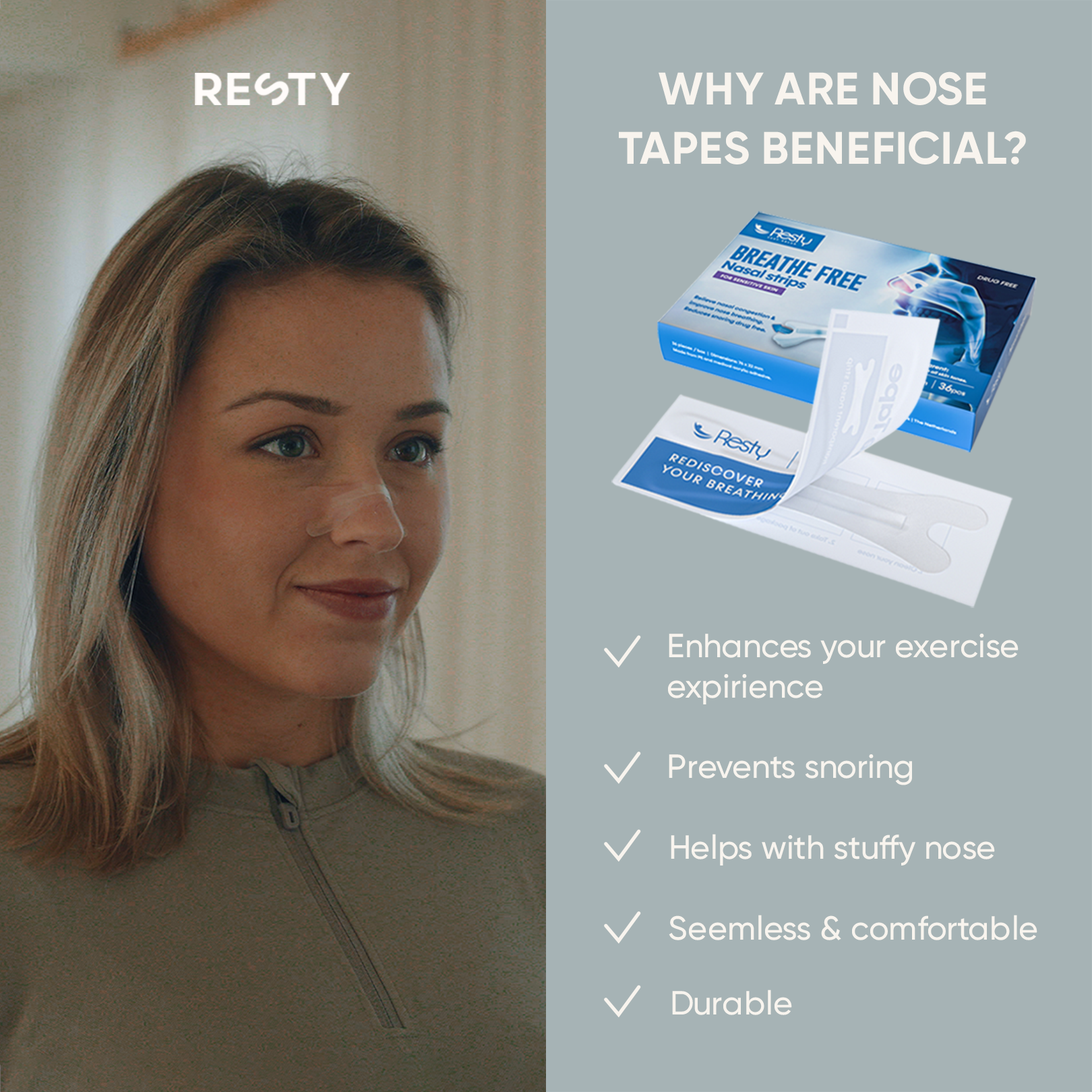
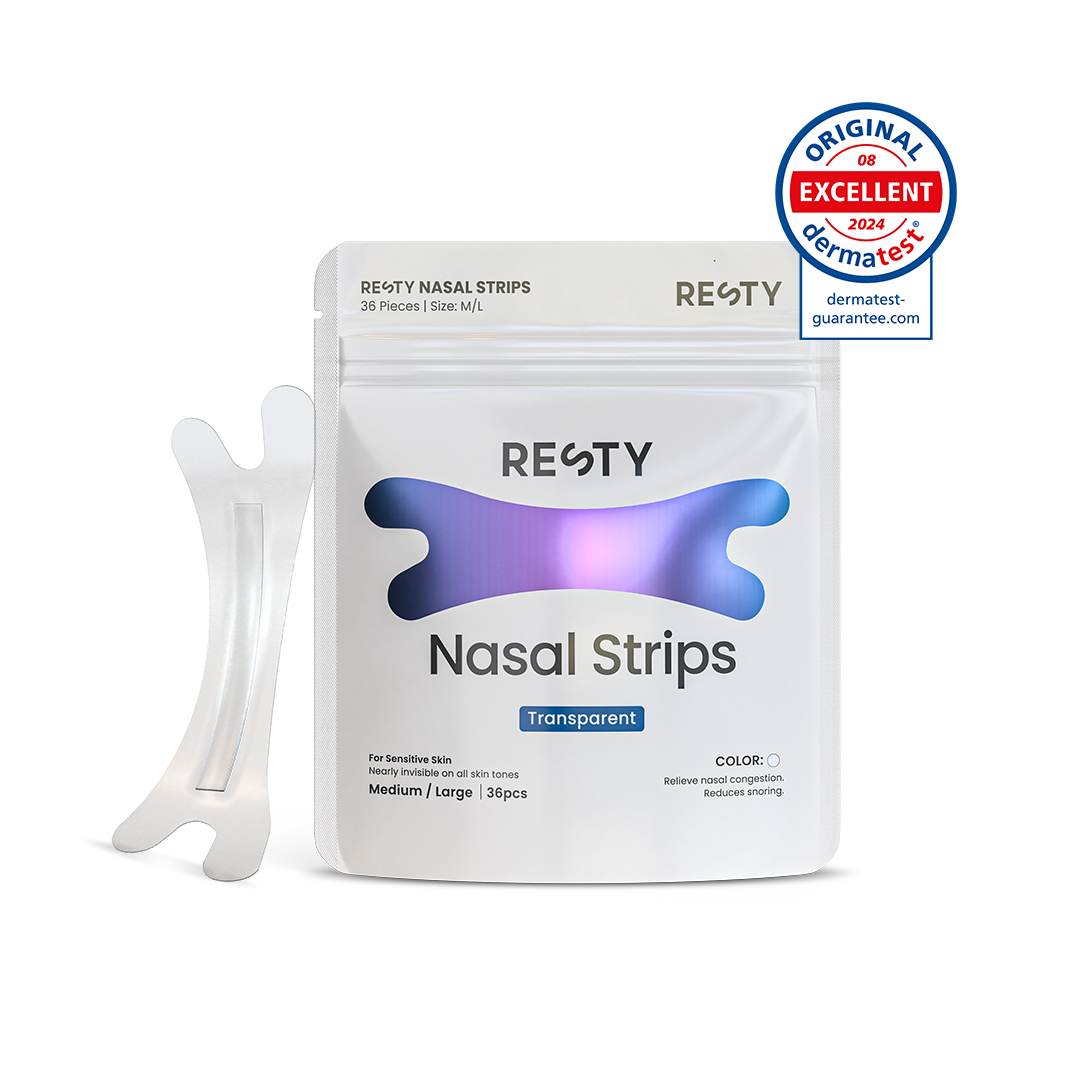
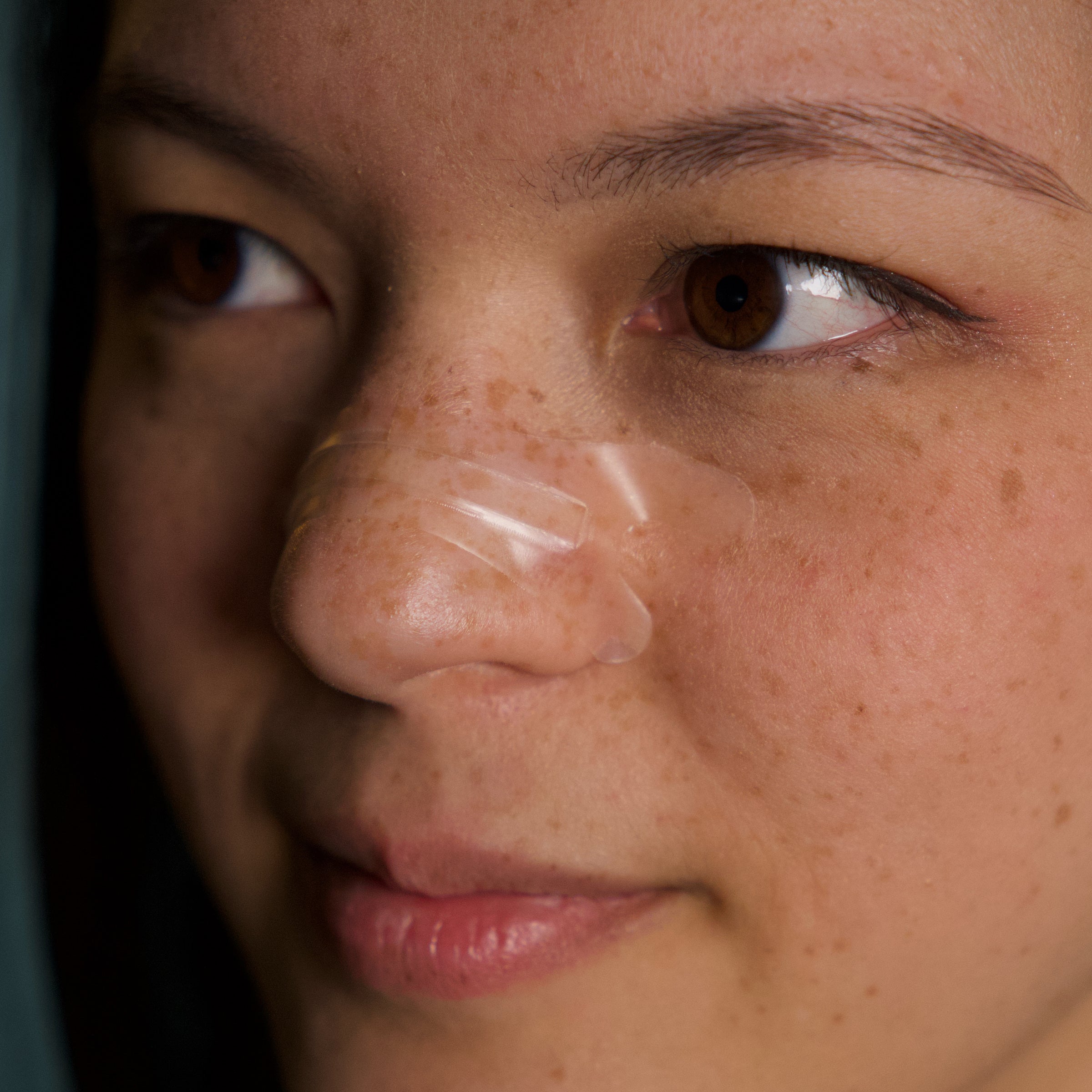
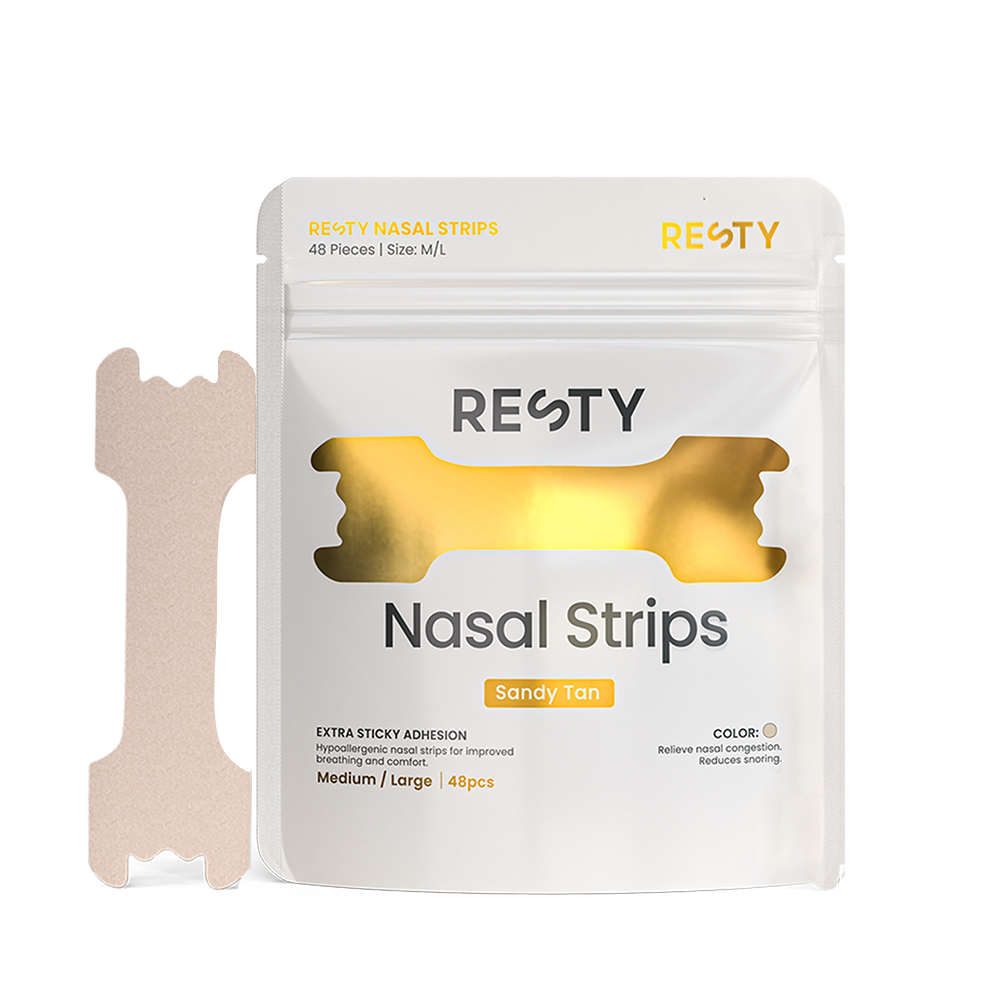
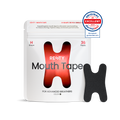
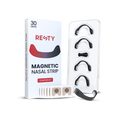
External nasal strips may support the nostril entrance when that area narrows. They do not treat internal inflammation or a deviated septum. Compare magnetic and regular nasal strips for fit. Do not use mouth tape while your nose is blocked.
| Option | Best For | Limitations |
|---|---|---|
| Lifestyle measures | Dry air, irritant exposure, sleep-related worsening | Slow to show effect and won't fix a structural blockage |
| Saline irrigation | Mucus, irritant build-up, daily maintenance | Needs regular use and good technique |
| Nasal strips | Collapse-prone nostrils or sleep-time narrowing | Helps airflow, but doesn't change the underlying cause |
| Antihistamines | Allergy-driven blockage with sneezing or itch | Won't solve anatomy or non-allergic inflammation |
| Steroid sprays | Swollen nasal lining from allergy or inflammation | Needs consistent use and proper placement |
| Decongestant sprays | Short-term relief in selected situations | Prolonged use can worsen blockage through rebound |
Medication deserves special caution. Antihistamines can help when allergy is the main driver, and intranasal steroid sprays are often used for ongoing swelling. Decongestant sprays are the trap. They can work quickly, but prolonged use can leave you with worse blockage after the initial relief fades.
If a spray starts feeling like the only way you can breathe at night, that's a sign to step back and review the cause, not just repeat the spray.
Knowing When to See Your GP or ENT
Some blocked noses are annoying. Others deserve review because they hint at a problem that needs a closer look. The key is to treat certain features as decision points, not as reasons to panic.
The practical checkpoints
A unilateral blockage that persists is worth attention, especially if it never seems to swap sides. Blood-stained mucus also deserves a check if it keeps happening, rather than appearing once after a hard nose blow. Sudden loss of smell, especially without a clear cold to explain it, is another reason to speak up.
Sleep matters too. If the blockage keeps disturbing sleep or concentration, the symptom has moved beyond simple inconvenience. That is especially relevant when the nose feels closed at night, because mouth-breathing and snoring can become part of the pattern instead of separate issues.
The NHS sinusitis guidance notes that persistent nasal blockage can last for weeks and that chronic sinusitis commonly presents with a blocked nose (NHS sinusitis guidance). In practical terms, GP review suits new allergy patterns, medication questions, ongoing discharge, and repeat congestion that doesn't settle with pharmacy treatment. ENT referral becomes more likely when polyps, septal deviation, or structural collapse are being considered.
A simple decision rule helps: if blockage has lasted over three months, comes back seasonally with poor response to pharmacy treatment, or affects sleep quality, book a GP visit. If the pattern suggests a structural issue or if a GP trial hasn't helped, ENT assessment is the next step.
What to bring to the appointment
Bring notes on timing, side-to-side changes, sprays you've used, and what happens overnight. That makes the appointment more productive, especially if waiting times mean you only get one clear shot at explaining the pattern. A short record often helps more than a long story told from memory.
A Clear Way Forward With Chronic Blockage
A persistently blocked nose is usually a puzzle made of overlapping pieces, not one single fault. The easiest way to work with it is to observe your pattern, try layered self-care, and escalate when the pattern points to a red flag or when nothing changes.
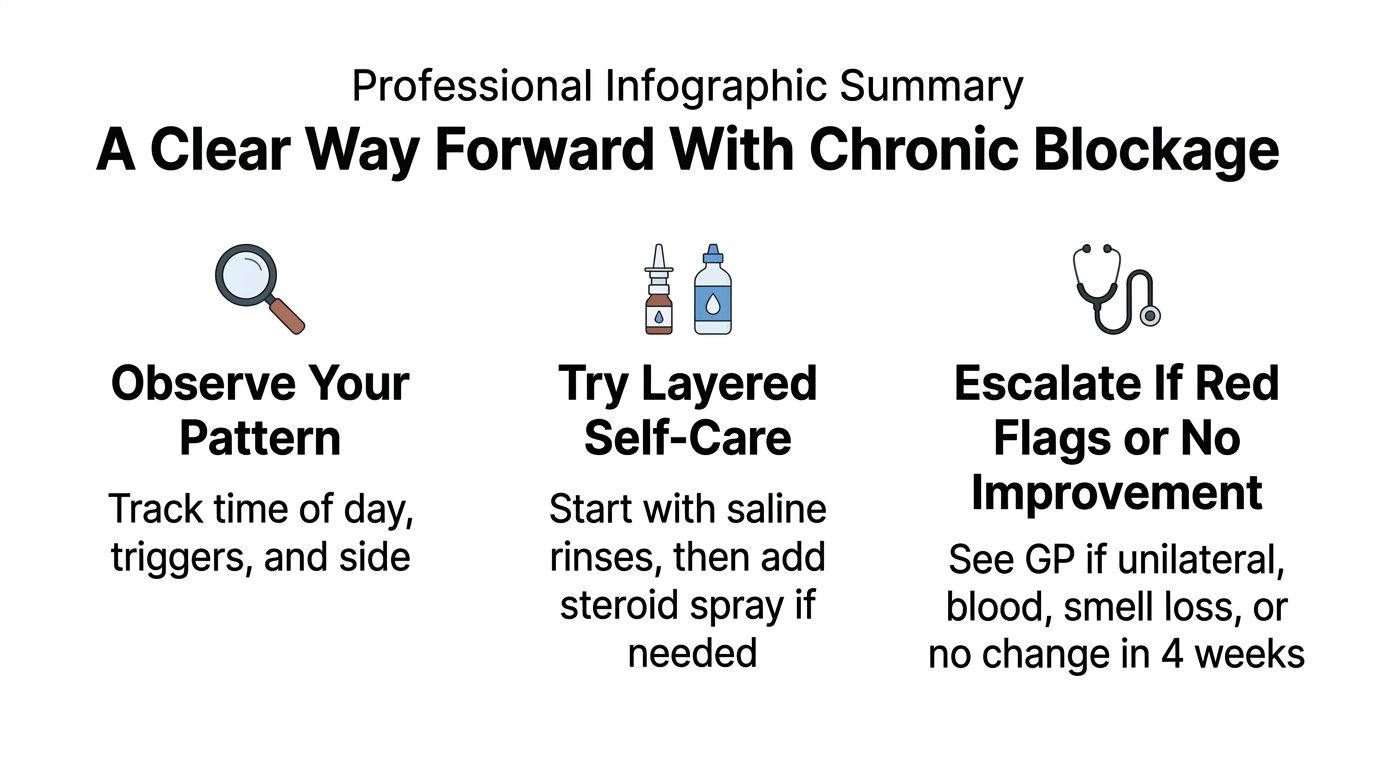
A simple three-step mindset
First, notice when the blockage behaves differently. Night-time worsening, side-to-side switching, and trigger-linked flares tell you more than the word “congestion” ever will.
Second, use the least complicated support that fits the pattern. Saline rinses, steroid sprays when appropriate, and airflow aids such as nasal strips each serve different jobs. None of them replaces diagnosis if the blockage keeps returning.
Third, move on if the clues point that way. A blocked nose that keeps affecting sleep, smell, or one-sided breathing is no longer just an irritation. It's a signal to ask for a proper review.
If you're still guessing, start with one concrete step today. Book a GP medication review, begin a two-week saline routine, or write down your night-time breathing pattern so you can take it in with you. If you want simple breathing and sleep-support tools to explore alongside that plan, visit Resty and choose the option that fits the pattern you're seeing.