
Daylight (SAD) Lamp vs Red Light Therapy: Which Light Do You Need?
A daylight lamp and a red light therapy device are not two strengths of the same treatment. A daylight lamp uses bright visible light to change the light environment around your eyes while you are awake. Red and near-infrared devices direct selected wavelengths toward skin or a body area in a timed routine. The useful unit, distance and buying question are different.
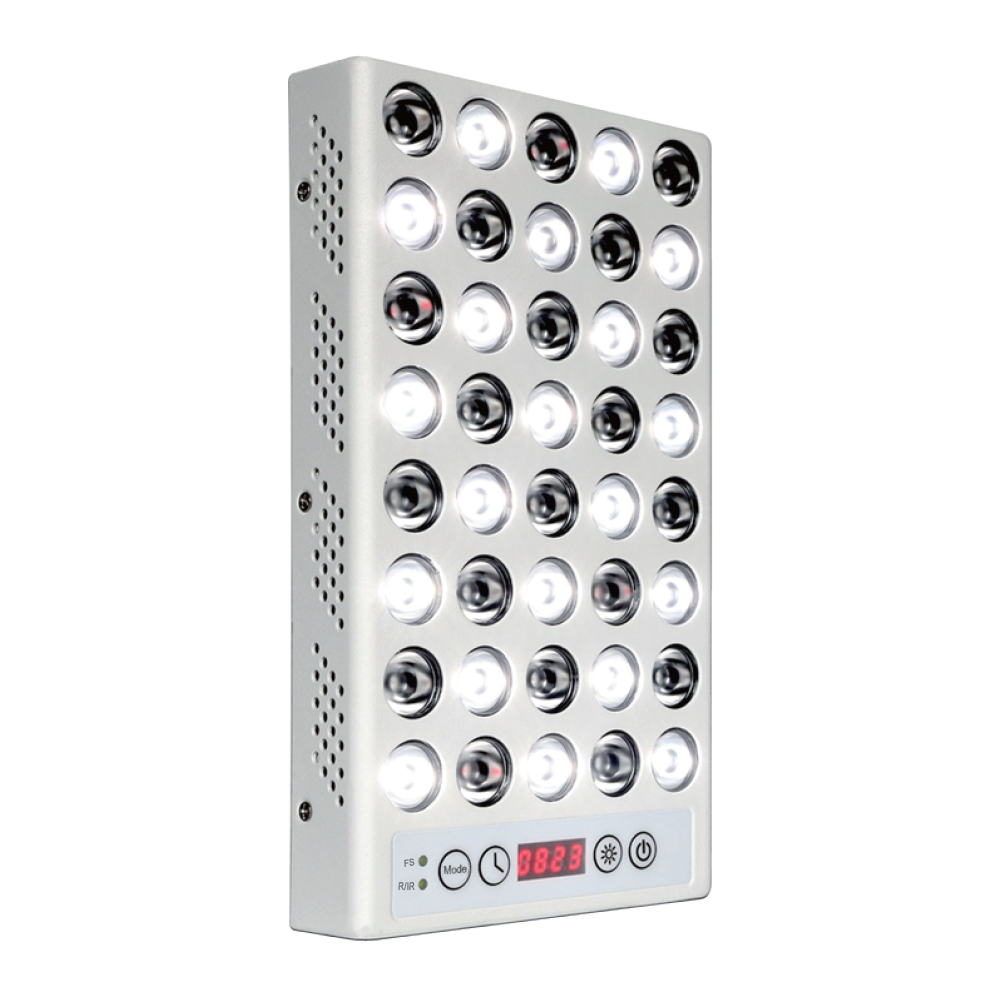
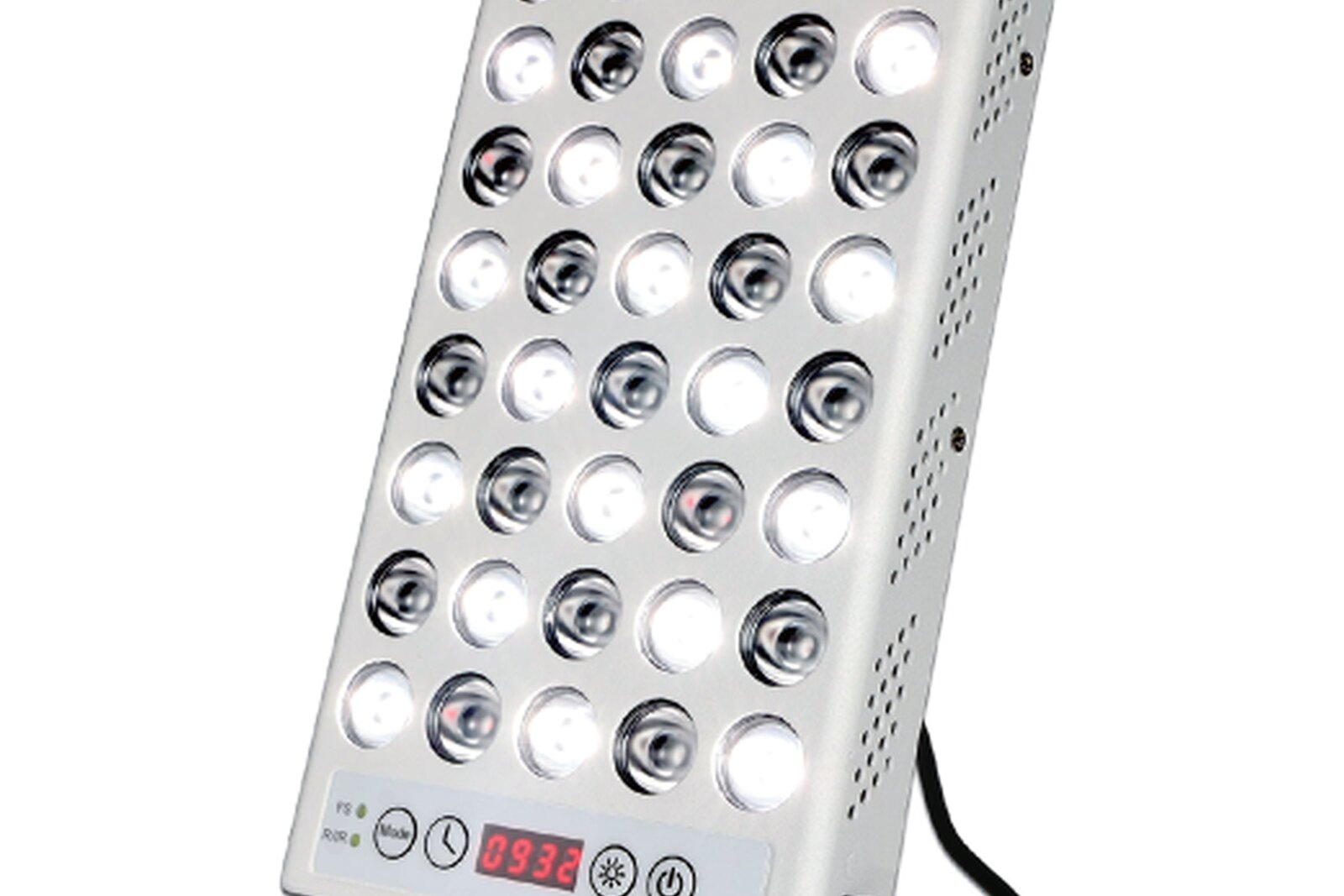
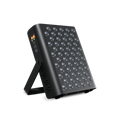
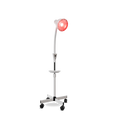
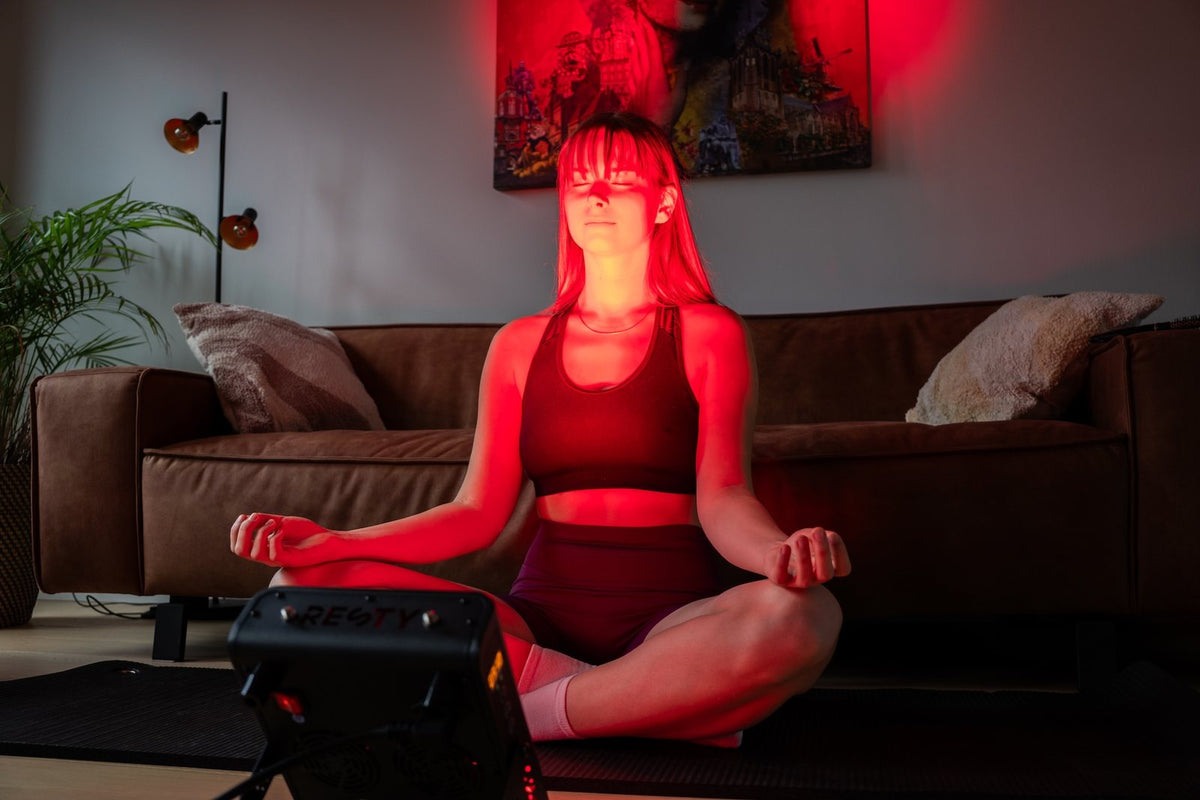
The distinction matters for Resty because the Resty Daylight Lamp 10,000 Lux combines a full-spectrum daylight mode with separate 660 nm red and 850 nm near-infrared modes. That makes it versatile, but does not make every mode interchangeable or turn a compact lamp into a dedicated full-body panel.
The short answer
- Choose daylight mode when bright visible light for a dark morning, desk or indoor daytime environment is the priority.
- Choose red or near-infrared light when you want a targeted skin, wellness or fitness routine described by wavelength and device dose.
- Choose a dedicated MARS panel when body-area coverage and published irradiance matter more than compact desk use.
- Do not compare lux with mW/cm². They answer different physical questions.
- Do not transfer session time between modes. Follow the exact device and mode instructions.
Daylight lamp vs red light therapy comparison
| Decision point | Daylight lamp | Red/NIR device |
|---|---|---|
| Main purpose | Bright visible daytime environment | Targeted photobiomodulation-style routine |
| Key specification | Lux at a stated eye-position distance | Wavelength, irradiance, time and delivered energy |
| Typical light | Broad visible white/full-spectrum light | Selected red and near-infrared wavelengths |
| Where light goes | Into the visual field without staring | Toward a selected skin or body area |
| Common timing | Morning or daytime | According to product, goal and routine |
| Format | Desk lamp or light box | Panel, mask, cap or targeted device |
| Resty compact option | Daylight Lamp full-spectrum mode | Separate 660 and 850 nm modes on the same lamp |
| Resty dedicated option | Not needed for red/NIR coverage | MARS 400 and larger MARS panels |
Lux, wavelength and irradiance are not interchangeable
Lux weights visible light according to human visual sensitivity. It tells you how much visible illuminance reaches a point, which is why a daylight claim is incomplete without distance, angle and brightness setting. Resty lists up to approximately 10,000 lux at 80 cm in full-spectrum mode. The detailed guide explains how distance changes that daylight position.

Red-light devices are normally described by wavelength in nanometres and, when properly specified, irradiance in mW/cm² at a distance. Session energy also depends on time. A high lux number does not prove a high red-light dose, and a powerful near-infrared output may contribute little to a lux meter because near-infrared is outside visible light.
This is the fastest way to reject bad comparisons: if a seller uses 10,000 lux to prove red-light performance or uses one wavelength to prove a bright-light routine, the units have been mixed. Ask for the specification that matches the intended mode.
Choose by the job the light must perform
Brighten a dark morning or desk
Choose full-spectrum daylight. Put the lamp roughly in front of you at the disclosed distance and keep the light in the visual field without staring into the LEDs. Outdoor daylight and ordinary room lighting still have roles; a compact lamp is a defined personal light source, not the sun or whole-room architecture.
Create a targeted skin or wellness routine
Choose a red or near-infrared mode with device-specific instructions. Coverage, distance and output matter.
Cover a larger body area
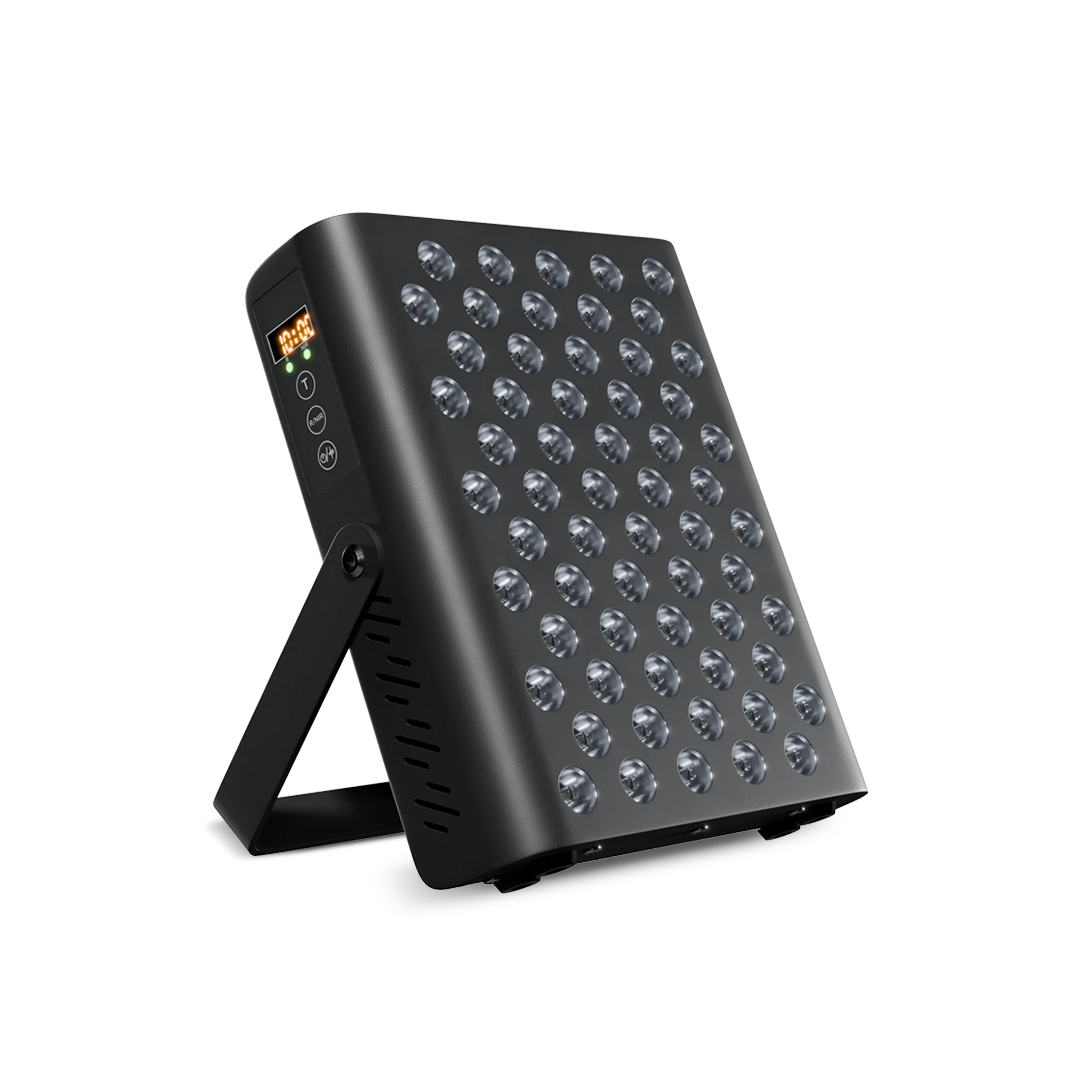
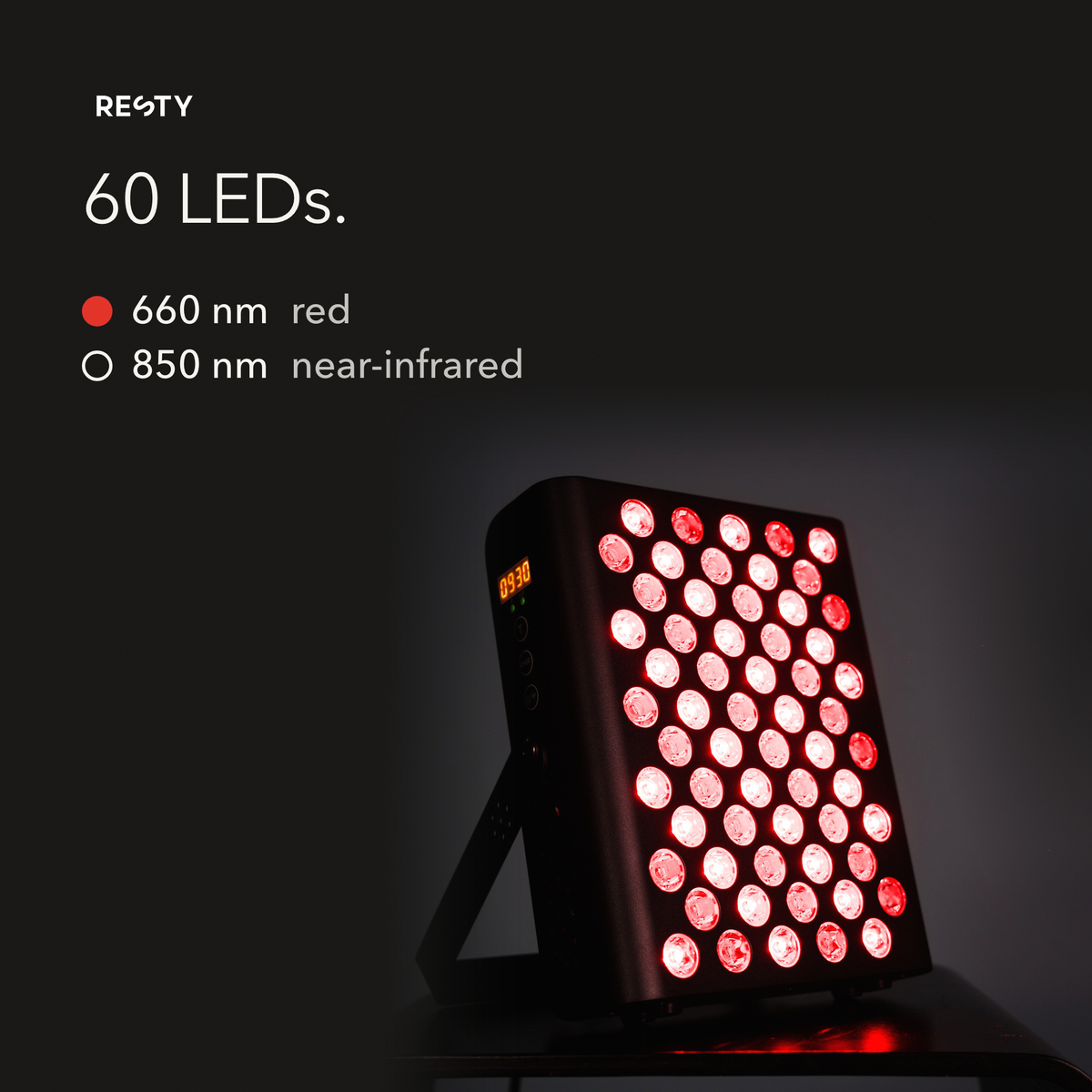
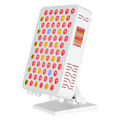
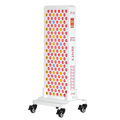
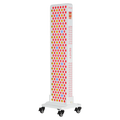
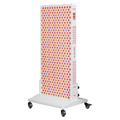
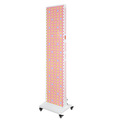
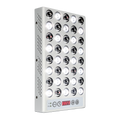
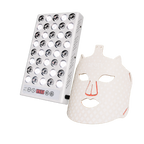
A dedicated panel is more practical. The MARS 400 Red Light Panel lists 60 LEDs, 82 W, 660 and 850 nm modes, at least 130 mW/cm² at 15 cm in its product specification and a 10-minute timer. Larger MARS models increase coverage. Those are different buying facts from daylight lux.
Use one compact device for several routines
The Resty Daylight Lamp can be attractive when desk-sized full-spectrum light is the main purchase and separate red/NIR modes are useful extras. Do not assume those compact modes match the coverage or published irradiance of a dedicated panel. Buy the combined format for convenience, not for an unsupported equivalence.
What each Resty Daylight Lamp mode means
Full-spectrum mode is the visible daylight mode connected to the approximate 10,000-lux position. The laboratory report lists 1,428 lm, 5,430 K, CRI Ra 89.4 and TM-30 Rf 93 / Rg 107 under the recorded test conditions. You can inspect the HAAS-1200 report. The lux-by-distance values are product-derived, not three direct measurements in that PDF.
660 nm red mode and 850 nm near-infrared mode are separate wavelength choices. They are not 10,000-lux modes. The current public product description does not provide a separate irradiance figure for these compact modes, so this guide does not invent one or copy the MARS 400 output.
Five brightness levels and the timer help make a repeatable routine, but a control being available does not mean every duration is appropriate for every mode. Use the final manual and stop if a mode causes discomfort.
Can the combined lamp replace a red light panel?
Not for every buyer. If your priority is a bright morning and occasional compact red/NIR use, one combined lamp may be the lowest-friction setup. It takes less space and keeps the buying decision simple.

If your priority is red/NIR coverage across back, legs or larger body areas, a dedicated panel is the better category. Panel dimensions, LED count, irradiance at distance, mounting and session controls become central. The daylight function no longer solves the main problem.
- Write down the primary job: visible daytime light or targeted red/NIR.
- Measure the desk distance or body area before choosing a format.
- Compare the correct unit for that job.
- Use only the instructions for the selected mode and device.
- Add a second device only when coverage or control is measurably missing.
What the evidence supports, and where it stops
The US National Institute of Mental Health describes 10,000-lux bright-light treatment for winter-pattern seasonal affective disorder as a specific morning clinical protocol. That does not make every daylight lamp a medical device or prove that red light has the same job.
An international consensus on daytime, evening and nighttime light explains how ocular light exposure relates to circadian physiology, sleep and wakefulness. The recommendations use melanopic equivalent daylight illuminance, showing why spectrum and timing matter beyond a retail lux headline.
A review of photobiomodulation mechanisms discusses red and near-infrared light at low power densities and proposed mitochondrial signalling. Mechanistic plausibility is not a universal outcome guarantee. Wavelength, irradiance, energy, tissue, condition and study protocol still determine what a claim can support.
Safety differs by mode and person
For bright visible light, keep the source in the visual field without staring. A systematic review of ocular safety did not find general evidence of eye damage in healthy, unmedicated participants, while noting uncertainty for pre-existing ocular abnormalities and increased photosensitivity.
For red/NIR, follow the device manual and eye-protection instructions. Near-infrared can be invisible, so lack of glare is not proof of low output. Do not point an active device at other people, use damaged equipment or extend a session by borrowing the schedule from another product.
- Ask for advice with eye disease, retinal change, glaucoma, cataract or photosensitising medication.
- Discuss clinical bright-light timing with a professional when bipolar disorder or mania is relevant.
- Stop for eye pain, lasting visual disturbance, severe headache, skin pain, burning or unusual agitation.
- Do not use either product to delay assessment of persistent mood, sleep, skin or pain symptoms.
- Keep children, pets, liquids and damaged cables away from active devices.
Buying checklist
The best product is the one whose primary specification matches your primary job. Convenience features are useful only after the light type, output information and usable position make sense.
- Morning or desk light? Check lux at distance, beam, colour measurements, timer and placement.
- Targeted red/NIR? Check wavelength, irradiance at distance, coverage, timer and eye guidance.
- Combined device? Confirm which specifications belong to each mode.
- Large body area? Compare a dedicated MARS panel instead of stretching a compact format.
- Medical goal? Verify the device status and use qualified guidance rather than a wellness claim.
Frequently asked questions
Is a daylight lamp the same as red light therapy?
No. Daylight mode supplies bright visible light to the visual environment. Red-light routines use selected red or near-infrared wavelengths directed at a target area.
Does 10,000 lux mean strong red light?
No. Lux is weighted visible illuminance. Red/NIR performance needs wavelength and output information; near-infrared is not visible and is not represented normally by a lux headline.
Does the Resty Daylight Lamp include red light?
Yes. It has separate 660 nm red and 850 nm near-infrared modes in addition to full-spectrum daylight. These modes have different purposes and should not share an assumed session protocol.
Can it replace the MARS 400?
It may replace a second compact device when convenience is the priority. It does not automatically replace the MARS 400’s larger targeted format and published panel output.
Can I use daylight mode in the evening?
If you want a deliberately dim presleep environment, keep intense full-spectrum light out of the late evening. People with shift-work or clinical timing goals need personalised advice.
Can I run daylight and red modes together?
Use only combinations explicitly supported by the product controls and manual. Do not assume simultaneous modes preserve the same lux, output or recommended duration as each mode separately.
Choose the light by its primary job
Start with bright daylight for the morning or targeted red/NIR for a body-area routine. Then choose the compact combined lamp or dedicated MARS panel that fits.
View the Resty Daylight Lamp