


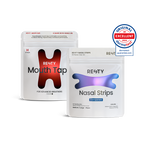

Does Mouth Tape Stop Snoring? Evidence, Risks & Alternatives
Mouth tape is often marketed as a quick answer to snoring. The more accurate answer is narrower: it may act as a cue for some adults who already breathe comfortably through the nose, but it does not treat the causes of snoring and does not treat sleep apnoea.
Mouth tape vs an anti-snoring mouthpiece
A mandibular advancement device holds the lower jaw forward during sleep. Mouth tape acts at the lips and does not move the jaw forward. These are different approaches, not interchangeable treatments. Ask a doctor or dentist which option suits the cause of your snoring; do not replace prescribed treatment with mouth tape. NHS.
Why people snore
Snoring happens when relaxed tissues in the upper airway vibrate during sleep. Nasal congestion, sleeping position, alcohol, anatomy and sleep-disordered breathing can all play a role. The sound alone cannot tell you which cause is present.
What mouth tape can and cannot do
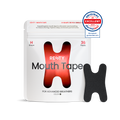
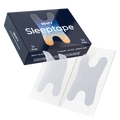
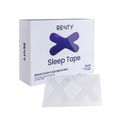
A purpose-designed strip may give the lips a gentle reminder to stay together. Some people notice less mouth dryness or a different airflow sensation. That does not prove that the airway is clear, that snoring will stop or that oxygen levels will improve.
The 2025 systematic review of mouth taping included ten studies and 213 patients. It found limited evidence, mixed results and potential risk when nasal obstruction is present. Many studies excluded people with nasal obstruction or pathology, so the findings do not support indiscriminate use.
Where nasal strips fit
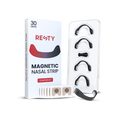
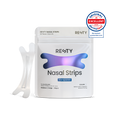
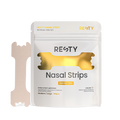
External nasal strips lift the sides of the nose from the outside. They may help when the front of the nose feels narrow or congested, but they do not open the throat and do not treat sleep apnoea. A systematic review of nasal dilators found improved nasal breathing without a reliable improvement in objective sleep apnoea outcomes.

A small study of habitual snorers without sleep apnoea reported lower snoring with an external nasal strip, while other trials show that results vary by cause. Read the habitual snoring study and the nasal dilator review together rather than treating one result as a universal guarantee.
Safer steps for a product routine
- Check that you can breathe comfortably through your nose while awake.
- Use only a strip made for the intended area; never use household tape.
- Apply to clean, dry, non-irritated skin and leave the mouth and nostrils able to release comfortably.
- Remove it if you feel panic, air hunger, congestion or skin discomfort.
- Do not combine products to push through a blocked nose.
Can you still snore with mouth tape?
Yes. Keeping the lips together does not prevent tissues farther back in the airway from vibrating. Persistent snoring is a reason to investigate the cause, not to add more tape. A quieter recording also cannot rule out sleep apnoea. Read the mouth-taping evidence and safety guide before changing your routine.
What else can help?
Side sleeping, reducing alcohol close to bedtime, managing nasal congestion with appropriate advice and keeping a consistent sleep routine may be reasonable steps. If snoring is persistent or disruptive, ask a clinician or sleep service about the cause instead of escalating tape or strips.
Get assessed promptly when
A bed partner notices breathing pauses, you wake choking or gasping, you have severe daytime sleepiness or morning headaches, or snoring suddenly changes. Mouth tape is not a substitute for sleep-apnoea testing or prescribed treatment.
The useful question is not “does mouth tape prevent snoring?” It is “what is causing the snoring, and is this product appropriate for that cause?”
Read the next safety step
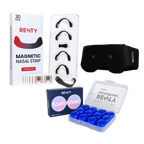
Compare the mouth-tape range and learn about nasal strips before changing your sleep routine.