



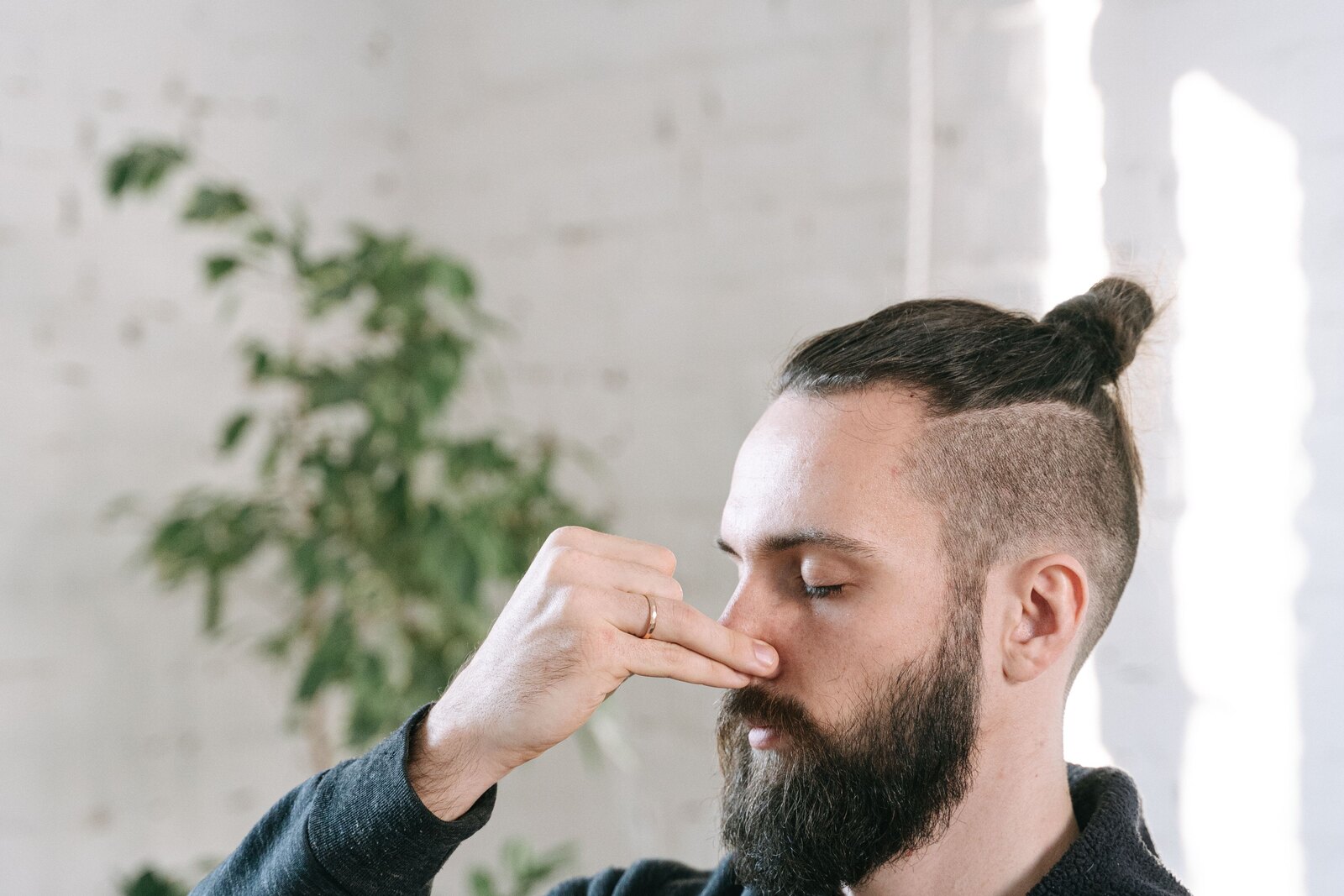
Nose Breathing for Anxiety and Stress: Practical Techniques
Breathing is one way to influence how a stressful moment feels, because it is both automatic and partly controllable. A slower, comfortable rhythm may help some people feel less activated. It is not a cure for anxiety, and a breathing exercise should never be used to dismiss serious symptoms or replace professional support.
Why breathing can feel calming
Stress often changes breathing speed, depth and muscle tension. Deliberately slowing down can give your attention a simple task and may change how your body feels in the moment. A 2025 systematic review of breathing exercises found promising reductions in anxiety and stress, while also noting that larger, stronger trials are still needed.
That evidence supports breathing as a complementary practice, not as a universal result. The response depends on the exercise, the person and the situation.
1. Comfortable paced breathing
- Sit or stand in a position that lets your shoulders relax.
- Breathe in gently through your nose if that feels clear.
- Let the exhale be a little longer than the inhale, without forcing it.
- Continue for three to five minutes and notice whether the pace feels sustainable.
There is no prize for taking the largest breath or holding it for the longest time. Comfortable and repeatable is the useful target.
2. The physiological sigh
Take a gentle inhale, add a short second inhale if it feels comfortable, then exhale slowly. Try one or two cycles and return to ordinary breathing. If double inhales make you light-headed, skip this technique.
3. Box breathing without the pressure
Some people like an even pattern such as inhale, pause, exhale, pause. Start with short, comfortable counts and remove the pauses if they create tension. A strict four-second pattern is not suitable for everyone.

4. Nasal breathing as a daily cue
When your nose is clear, quiet nasal breathing can be a useful reminder to soften the pace during a walk, desk break or wind-down. It does not need to continue during every exercise intensity, and mouth breathing is not a failure when demand rises.
When a breathing exercise is not enough
Ongoing anxiety, panic attacks, depression, trauma symptoms or stress that interferes with daily life deserves appropriate support. Seek urgent help for severe chest pain, fainting, sudden breathing difficulty or other emergency symptoms.
A small breathing practice can be a useful part of a wider stress routine: sleep, movement, social support and professional care still matter. Use the technique as a tool, not a promise.