

Sleep Mask vs Blackout Curtains: Which Fits Your Room and Routine?
Choose a sleep mask when the light problem is personal, occasional or portable. Choose blackout curtains when the whole room needs a fixed solution. If light leaks around curtain edges or one partner sleeps later, combining both can be more practical than trying to crown one universal winner.
The useful comparison is not simply which option blocks more light. It is which option solves the actual source of light without creating a new problem such as facial pressure, heat, installation cost or a room that is too dark for someone else's morning.
Direct comparison
Personal darkness versus room-wide darkness
A mask follows you and changes only what reaches your eyes. Curtains treat the window and benefit everyone in the room, but they cannot block hall lights, device LEDs or every gap. Start with the smallest reversible fix that matches the light source.
Best for travelSleep mask Best for the whole roomBlackout curtains Best for edge leaksOften bothStart with your room, not the product
Three questions reveal which solution is likely to be easier to live with every night.
Source
Where does the light enter?
Window-wide dawn light points toward curtains. A partner's lamp, hallway glow or changing hotel room often points toward a mask.
Body
Can you tolerate contact?
A mask must remain comfortable around the nose, eyes, ears and strap. Curtains avoid facial contact completely.
Home
Can you change the room?
Renters and travellers may need a portable solution. Homeowners can justify a measured curtain or blind installation.
A five-minute light audit before you buy
Do this audit at the time the light normally bothers you. Daytime guesses often miss small but important gaps.
-
Identify the dominant source
Look for sunrise around the window, streetlights, door gaps, device LEDs and a partner's reading light. Name the largest source first.
-
Test a temporary room fix
Close existing curtains fully, cover small LEDs and block safe door gaps. If the problem largely disappears, room treatment may be worthwhile.
-
Test personal darkness
Use a comfortable mask for several positions. Check nose leakage, strap pressure, blinking room and whether it moves when you turn.
-
Check the morning consequence
Decide whether full room darkness makes waking harder for you or a partner. Keep alarms audible and use a planned morning-light cue when needed.
-
Choose the smallest complete solution
Buy curtains only when the window is the owner. Buy a mask when portability and personal control matter. Combine them when each solves a different gap.
Sleep mask versus blackout curtains at a glance
The strongest choice changes with the bedroom and the person.

| Decision factor | Sleep mask | Blackout curtains |
|---|---|---|
| Up-front effort | Immediate; adjust the strap | Measure, buy and install |
| Travel | Excellent portability | Usually unavailable or inconsistent |
| Renting | No room changes | May need landlord-safe fittings |
| Shared bedroom | Darkness for one person | Darkness for everyone |
| Heat | May feel warm on the face | Can also reduce daytime solar gain when closed |
| Light leaks | Blocks light at the eyes when fit is good | Gaps can remain at edges and rails |
| Side sleeping | Depends on contour and strap stability | No facial contact |
| Cleaning | Regular gentle cleaning | Less frequent but larger-scale cleaning |
When a sleep mask is the smarter first purchase
A mask makes sense for travel, naps, shift work, shared rooms and rentals where you cannot redesign the window. It is also the faster test: if personal darkness does not change the problem, expensive curtains may not solve the real cause either.
Look for a shape that leaves room to blink, blocks light around the nose and remains secure without painful tension. A contoured mask can reduce direct pressure on eyelids compared with a flat fabric mask, but no design fits every face.
When blackout curtains solve more
Curtains are stronger when the full window glows at dawn, headlights sweep across the room or several people need darkness. A properly measured installation can reduce wide-area light without touching the face.
Blackout is not a regulated promise of perfect zero light in every installation. Fabric, lining, rail position, wall gaps and the direction of the window all matter. Test edge leakage before assuming thicker fabric alone is the answer.
Why combining both is not overkill
Curtains handle the large window load; a mask handles edge glow, door light and different partner schedules. The combination can be especially useful during early summer sunrise, daytime sleep or unfamiliar accommodation.

Keep the morning intentional. Use an alarm you can hear and restore light after waking by opening the curtains or stepping outside. Darkness should protect the chosen sleep window, not remove every daytime cue.
What studies can and cannot tell us
Build a darker routine
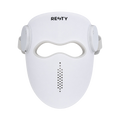
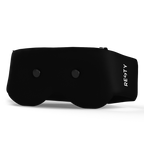
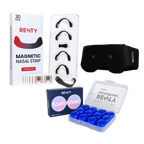
Resty 4D Sleep MaskA contoured, adjustable personal light-blocking option. Sleep-mask evidence guideRead what research supports and where claims stop. Sleep mask for long flightsChoose portable darkness by fit, pressure and packing.Sleep mask and blackout-curtain FAQ
Do blackout curtains block 100% of light?
The fabric may be highly opaque, but real rooms often leak light at the top, sides or bottom. Installation matters as much as the material.
Is a sleep mask too hot in summer?
Some people notice facial warmth. Choose breathable contact materials, keep the strap comfortable and stop if heat or skin irritation outweighs the light benefit.
Which is better for shift workers?
Curtains treat a regular daytime bedroom; a mask adds portable protection and covers edge leaks. Many shift workers may prefer both.
Will a mask damage eyelashes?
A contoured shape can leave more room than a flat mask, but fit must be checked with your own lash length and sleeping position.
Can darkness make waking harder?
It can remove a natural morning cue. Use a reliable alarm and expose yourself to daylight after waking rather than leaving the room dark all morning.
Try the reversible option first
Personal darkness without changing the room
For travel, rentals, partner light or curtain-edge glow, a contoured mask is the quickest way to test whether light control belongs in your routine.
View the Resty 4D Sleep MaskStocking guest rooms? Resty supplies sleep amenities for hotel rooms, from masks to earplugs.