






Nasal Congestion in the Morning: Causes and Solutions
Allergic rhinitis is common in the UK, and morning nasal congestion is often driven by overnight allergen exposure, normal nasal-cycle swelling, or mucus settling while you're lying flat. Positioning, humidification, saline support, and external nasal support can often ease the pattern, but persistent or one-sided blockage needs a closer look.
You wake before the alarm, reach for the tissues, and discover that one nostril is almost closed while the other barely works. After a shower, a hot drink, and some time upright, breathing improves. By midday, you may feel normal again, which makes the morning pattern easy to dismiss as a cold, dry air, or just sleeping in the wrong position.
The timing is useful information. Nasal congestion in the morning often reflects what happened during several hours of lying down, including contact with bedroom allergens, changes in blood flow through the nasal tissues, mucus drainage, and exposure to irritants. A cold can certainly cause blockage, but morning-worse symptoms that ease later often point towards rhinitis or a mechanical narrowing rather than an isolated infection.
Table of Contents
- Why You Wake Up With a Blocked Nose
- Common Causes of Morning Nasal Congestion
- Evidence-Based Strategies to Reduce Morning Congestion
- Choosing the Right Nasal Support Options
- When Morning Congestion Signals Something More
- Building Your Morning Breathing Routine
Why You Wake Up With a Blocked Nose
The classic pattern is easy to recognise. You wake with a dry mouth, blocked nostrils, and the sense that your nose has been working against you all night. You blow your nose, sit up, and perhaps notice that the congestion gradually loosens as you move around.
That improvement matters. Lying flat can encourage nasal mucosal swelling and allow mucus to remain in the nasal passages instead of draining as readily. If you sleep on one side, the lower nostril may feel more obstructed, while the upper side opens slightly. This can be part of the normal nasal cycle, but the effect becomes more noticeable when allergies, a deviated septum, or enlarged turbinates have already narrowed the airway.

Read the timing, not just the symptom
A blocked nose that appears mainly after sleep has a different diagnostic feel from congestion that stays constant throughout the day. Ask yourself:
- Does it improve after you stand up? That supports a contribution from overnight swelling or mucus pooling.
- Do you sneeze, itch, or have watery eyes? Allergic rhinitis becomes more likely.
- Is one side almost always worse? A structural narrowing, such as a deviated septum or turbinate enlargement, deserves consideration.
- Do you wake with throat clearing or a sour taste? Reflux or post-nasal drainage may be contributing.
- Do you use a decongestant spray regularly? Rebound congestion can maintain the blockage even when the original trigger has passed.
The British allergy charity Allergy UK reports estimates cited in a 2017 clinical guideline: allergic rhinitis affects 26% of adults and 10–15% of children in the UK. These figures show that allergic nasal symptoms are common; they do not diagnose the cause of your own morning congestion.
If your symptoms are specifically worse when you lie down, compare them with the practical explanations in this guide to a blocked nose when lying down. The useful question isn't “What can unblock my nose?” but “What makes it swell or fill overnight?”
Practical rule: A symptom that changes with posture, location, or time of day is giving you a clue about its mechanism.
Common Causes of Morning Nasal Congestion
Four patterns account for much of the morning congestion people describe, although more than one can be present at once.
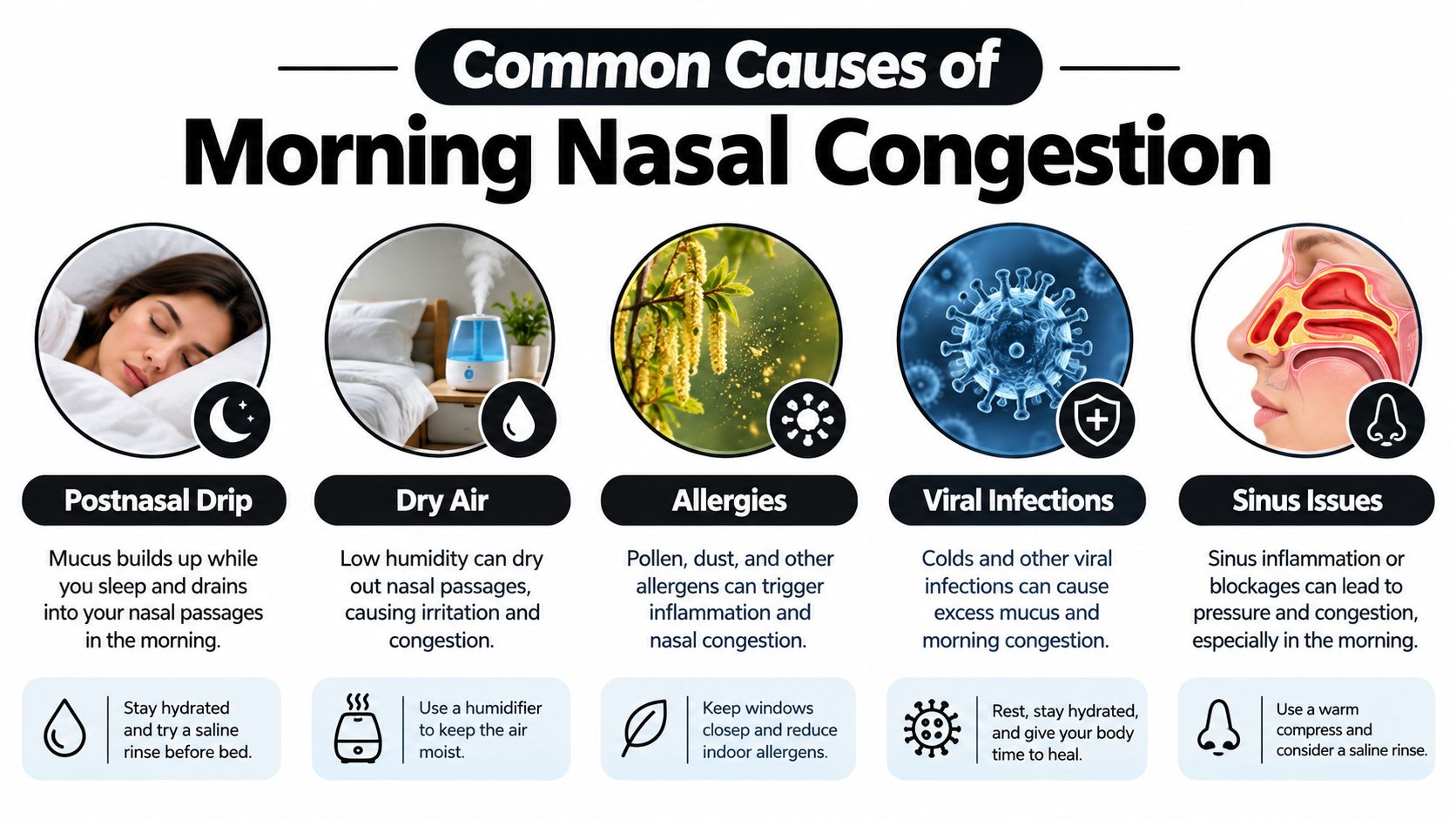
Allergic rhinitis and bedroom exposure
Dust mites, pet dander, and pollen can inflame the nasal lining while you sleep. A bedroom is particularly relevant because exposure may continue for hours through bedding, carpets, upholstered furniture, or an animal that sleeps nearby. Morning sneezing, nasal itching, watery discharge, and congestion that eases during the day fit this pattern.
UK NHS-linked guidance notes that house dust mite, cat, and dog allergy can cause symptoms that are worse in the morning and improve later. Nuffield Health's nasal congestion guidance also highlights the importance of allergens such as dust mites, pollen, and pet dander when congestion follows a bedroom-based pattern.
The normal nasal cycle
Your nasal passages naturally alternate in relative openness. Tissue inside each nostril gradually becomes more or less swollen, so one side can feel restricted while the other carries more airflow. Lying on one side may make that difference more obvious.
The nasal cycle is normal. It becomes a practical problem when inflammation or a narrow nasal passage leaves too little room for comfortable airflow. If the blocked side alternates and improves when you change position, the cycle may be amplifying another issue rather than causing the entire problem.
Post-nasal drip and reflux
Mucus can collect overnight and create a blocked sensation, throat clearing, coughing, or a need to swallow repeatedly after waking. Reflux can irritate the throat and upper airway, particularly if you wake hoarse, notice an unpleasant taste, or experience symptoms after a late meal.
These clues aren't proof of reflux. They make it worth tracking meal timing, alcohol, spicy foods, and the relationship between symptoms and lying down. Avoiding a heavy meal close to bedtime may help some people, but persistent reflux symptoms should be discussed with a clinician rather than treated solely as nasal congestion.
Structural narrowing and persistent swelling
A deviated septum, enlarged turbinates, or narrowing at the nostril entrance can make the normal overnight swelling feel much more severe. Structural problems tend to produce a consistent side preference, reduced exercise airflow, or congestion that remains present during the day as well as on waking.
UK NHS guidance lists allergic and non-allergic rhinitis, turbinate hypertrophy, a deviated septum, viral inflammation, and rebound congestion from decongestant overuse among the recognised causes of nasal obstruction. The mechanism is straightforward: swollen tissue reduces the available airway space, so a modest increase in overnight swelling can feel disproportionately obstructive. Devon NHS guidance on rhinitis explains rhinitis, its triggers, and rebound congestion from decongestant overuse.
Evidence-Based Strategies to Reduce Morning Congestion
Start with the intervention that matches your pattern instead of buying several products at once. A person with dust-mite exposure needs a different approach from someone whose nostrils narrow during inhalation, and neither problem will be solved reliably by repeatedly using a medicated decongestant spray.
Change the overnight conditions
Raise your upper body slightly if lying flat clearly worsens the blockage. The aim isn't to bend your neck sharply, but to use a supportive arrangement that keeps your head and chest comfortably raised. Side sleeping may help one person and worsen another, so judge it by whether airflow improves rather than by a fixed rule.
Control bedroom triggers where the pattern suggests allergy. Wash bedding according to the care instructions, reduce dust-collecting clutter, keep pets out of the bedroom if they trigger symptoms, and consider whether congestion is worse after sleeping in a particular room. These changes take consistency. A single deep clean won't necessarily alter a reaction that returns every night.
Add moisture carefully
Dry air can irritate nasal tissues, while excessive humidity can make a room feel stuffy and may encourage indoor allergen problems. Use a clean humidifier only when the room feels dry or your nose feels irritated, and follow the device's cleaning instructions closely. Humidification can soothe dryness, but it won't remove a deviated septum, treat an allergy by itself, or correct rebound congestion.
A saline spray or rinse can loosen mucus and remove irritants before bed or after waking. If you use a nasal irrigation device, use it exactly as directed and only with water that is safe for nasal rinsing. Stop if it causes pain, bleeding, or a marked worsening of symptoms.
Support the front of the nose
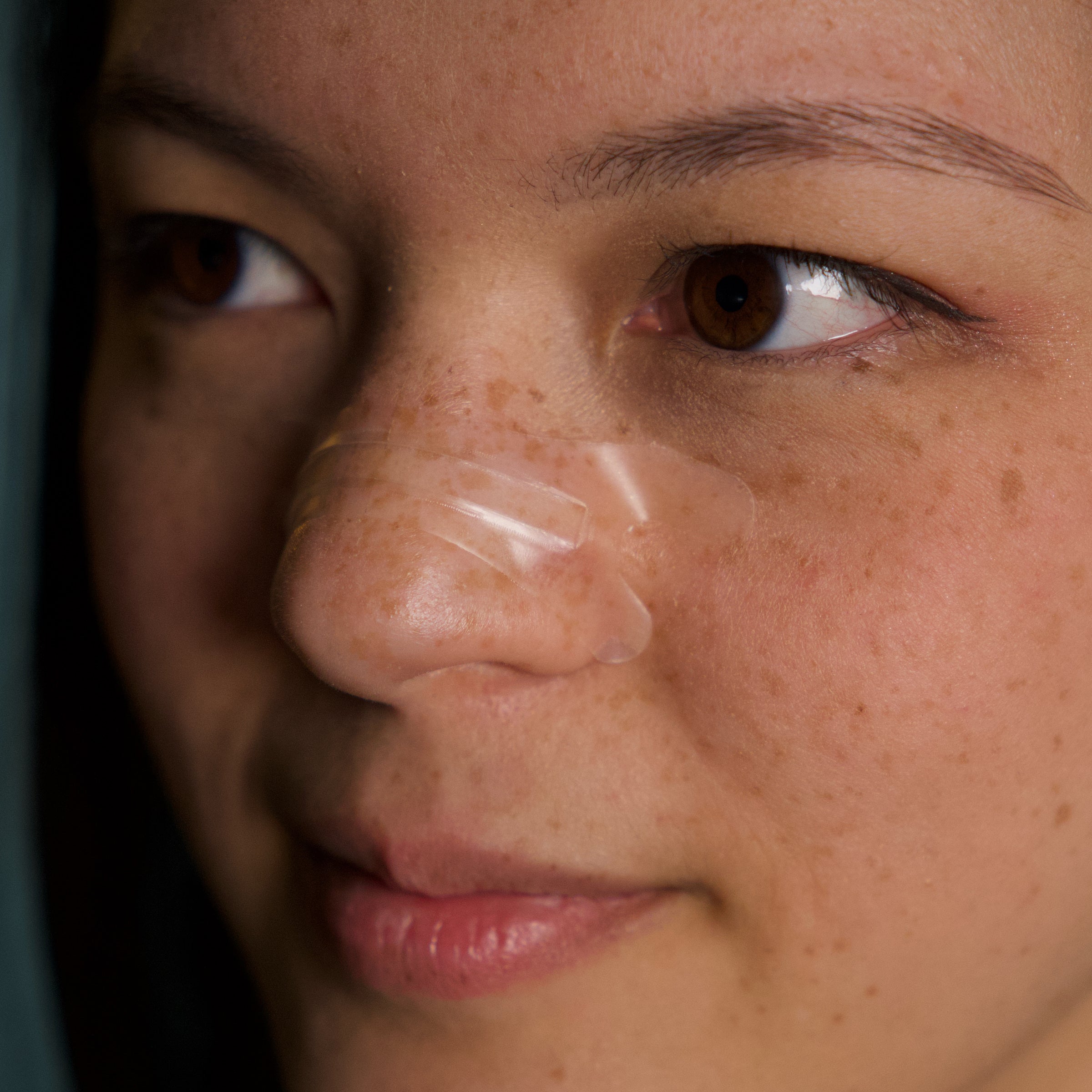
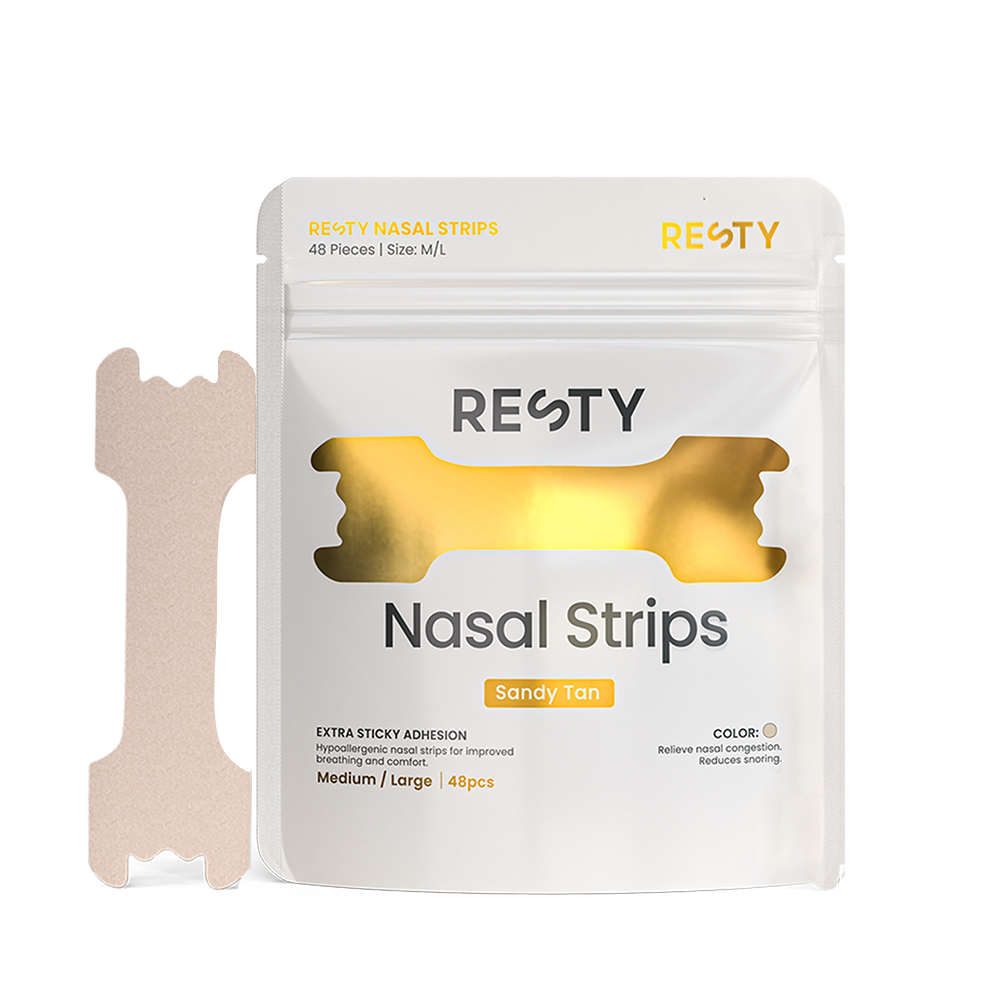
External nasal strips work by lifting the skin and sides of the nose, which can make the entrance feel more open. They're most plausible when the problem involves nostril narrowing or a sensation of restricted airflow at the front of the nose. They won't reduce internal inflammation, clear mucus, or treat sleep apnoea.

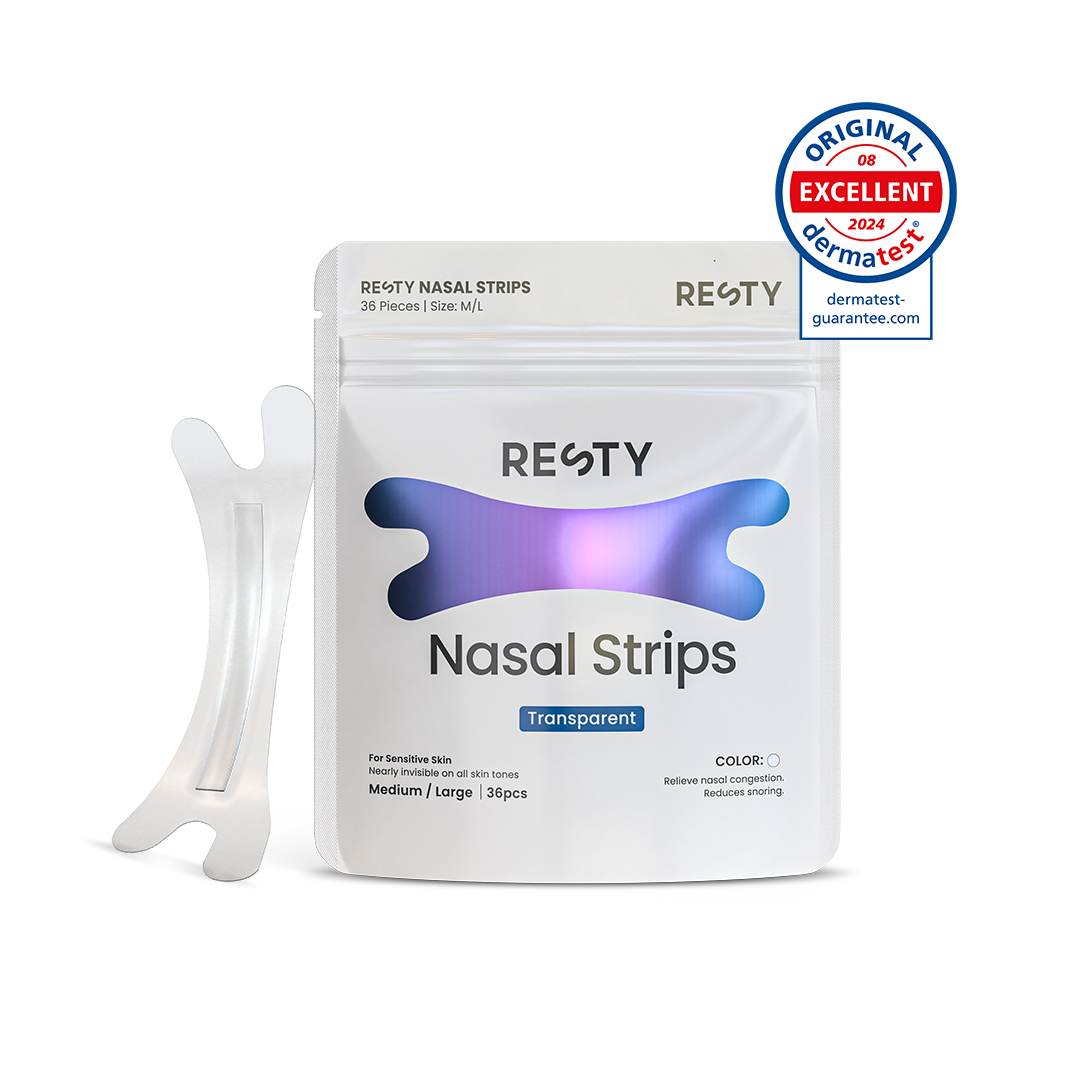
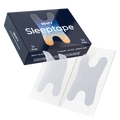
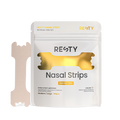
For a discreet, single-use option, Transparent nasal strips provide external mechanical lift without placing anything inside the nose. Apply one to clean, dry skin before sweating or getting into bed, press both sides firmly, and remove it slowly after use. Stop if your skin reacts, and don't apply it to irritated or damaged skin.
Choosing the Right Nasal Support Options
Nasal support is a mechanical aid, not a diagnosis. It can improve the feeling of airflow when the narrowest point is near the nostrils, but it won't resolve swollen turbinates, allergic inflammation, reflux, or a sinus problem. The right choice depends on where the restriction occurs and what you can tolerate consistently.
| Option | Most useful when | Main trade-off |
|---|---|---|
| Adhesive nasal strip | The nostril entrance feels narrow or collapses slightly during inhalation | Single-use adhesive can irritate sensitive skin |
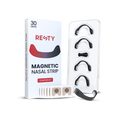
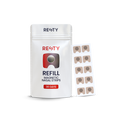
| Magnetic external strip | You prefer a reusable bridge component and adjustable routine | Adhesive tabs still contact the skin and require careful placement |
| Internal nasal dilator | External adhesive isn't suitable and an internal device feels comfortable | Some people dislike the sensation or find insertion uncomfortable |
| Positioning support | Lying flat clearly worsens the blockage | It may help swelling but won't correct a fixed narrowing |
| Saline support | Mucus, dryness, or irritants are prominent | It doesn't provide structural lift or anti-inflammatory treatment |
Adhesive strips are simple and easy to test for a night, but the cost is repeated use and possible skin sensitivity. Magnetic systems separate the reusable clip from the disposable adhesive tabs, which may suit someone who wants to keep the bridge component between sessions. Internal dilators avoid external adhesive, yet the device sits inside the nose and isn't comfortable for everyone.
Mechanical lift can make breathing feel easier, but easier airflow at the nostrils doesn't prove that the deeper nasal passage is healthy.
Try one option while keeping the rest of your routine stable. If you change bedding, start a spray, switch sleep position, and add a nasal device on the same night, you won't know what helped. For a broader comparison of how nasal support performs in a snoring context, see which nasal strips actually work, while remembering that opening the nose isn't the same as treating obstructive sleep apnoea.
When Morning Congestion Signals Something More
Self-care is reasonable when symptoms are mild, clearly linked to a trigger, and improving with sensible changes. It becomes less appropriate when you keep treating the symptom without identifying the pattern.
Arrange a medical review if congestion persists, repeatedly disrupts sleep, or fails to improve after reducing obvious bedroom triggers and trying basic nasal care. Persistent mouth breathing can leave you with a dry mouth and fragmented sleep, but nasal support shouldn't be used to conceal a problem that needs assessment.
Warning patterns
- One-sided blockage: A nostril that stays blocked on one side, particularly when the pattern is progressive, can point towards a structural issue or another local cause.
- Pain or pressure: Facial pain, persistent headache, fever, or thick discharge deserves assessment rather than repeated self-treatment.
- Sleep disruption: Abnormal sleep and sleep disturbance are recognised features of more troublesome rhinitis in London NHS guidance.
- Urgent symptoms: Unilateral serosanguinous discharge, progressive headache, visual or neurological changes, or significant unilateral obstruction require prompt medical attention.
The London regional rhinitis guideline separates allergic rhinitis, non-allergic rhinitis, and turbinate-related obstruction, which is more useful than treating every blocked nose as a cold. Your GP, pharmacist, or ENT clinician can review medication use, examine the nasal passages, and decide whether allergy management, a different treatment, or further investigation is appropriate.
Don't use topical decongestant sprays as an indefinite bedtime solution. They can provide short-term relief, but overuse may cause rebound congestion, creating the frustrating cycle of needing the spray to achieve the airflow you had before.
Building Your Morning Breathing Routine
Use a simple routine for the next fortnight, changing one variable at a time.
- Record the pattern. Note which nostril is blocked, whether you sneeze or itch, your sleep position, bedroom conditions, throat symptoms, and how long congestion lasts after getting up.
- Match the first intervention. For an allergy pattern, focus on bedroom trigger reduction. For positional swelling, adjust support and sleep posture. For front-of-nose narrowing, trial external mechanical support. For mucus and dryness, use appropriate saline care.
- Review the response. Look for a consistent change across several mornings, not a single unusually good night.
- Escalate when needed. Seek professional advice for persistent symptoms, one-sided blockage, recurrent bleeding, facial pain, visual or neurological symptoms, or sleep that remains disrupted.
Nasal breathing techniques can be a useful part of a calm daytime practice, but don't force nasal breathing when the airway is completely blocked. The guidance in reducing stress and anxiety through nose breathing is best treated as a complement to, not a replacement for, identifying the cause of congestion.
Resty offers practical nighttime breathing accessories, including external nasal strips designed to create mechanical lift at the sides of the nose. Visit Resty to compare options and build a routine around the specific morning congestion pattern you've tracked.