




















8 Hrs of Sleep and Still Tired? Find Out Why
You go to bed at a sensible time, stay there for eight hours, and still wake up feeling as though the night never properly began. The alarm rings, your eyes open, and your body feels heavy before the day has even started. You may wonder whether you need more sleep, or whether something else is happening while you're asleep.
That frustration is understandable. Eight hours measures sleep opportunity or time in bed, not the quality of the recovery taking place inside it. In the UK, NHS guidance says adults generally need around 6 to 9 hours, while fatigue can continue after a full eight hours when sleep is poor or repeatedly disrupted (NHS guidance on fatigue and sleep). A major YouGov sleep study also found that 22% of Britons typically get eight hours or more, compared with 35% reporting seven hours, 22% six hours, and 13% fewer than six hours (YouGov UK sleep study).
The useful question, then, isn't “How long did I sleep?” It's “What happened during those hours?” The answer usually becomes clearer when you separate sleep quantity, continuity, architecture, breathing quality, and circadian timing, then compare those factors with the way you feel when you wake.
Table of Contents
- Why Eight Hours Does Not Always Feel Refreshing
- How Sleep Quality Changes the Meaning of Eight Hours
- When Night-Time Breathing Disrupts Sleep
- How Circadian Misalignment Creates Morning Tiredness
- Lifestyle, Environment and Medical Clues
- Track Symptoms and Choose the Right Next Tests
- Practical Changes to Make First
- Take the Next Step Based on Your Pattern
Why Eight Hours Does Not Always Feel Refreshing
At 6.30 in the morning, Sam's alarm goes off after what appears to be a complete night. The sleep app says eight hours. There's no obvious memory of being awake for long, yet Sam feels foggy, irritable and desperate for coffee. By lunchtime, concentration is still poor, even though the night looked successful on paper.
That experience doesn't mean the eight-hour target is useless. It means duration is only one input. A night can contain enough time for sleep while still being interrupted by noise, uncomfortable temperature, pain, alcohol, breathing problems or an internal body clock that expects sleep at a different time.
UK survey findings show why the distinction matters. In a 2024 YouGov study, 77% of Britons hoped to sleep eight hours or more, but only around a quarter typically managed it. 38% rarely felt well rested and 14% never felt well rested, creating a clear gap between desired sleep duration and actual refreshment (YouGov on how well Britons sleep).
Five questions make the mystery smaller
- Quantity: Did you allow enough time for your individual sleep need?
- Continuity: Did sleep remain reasonably unbroken, or did your brain keep responding to disturbances?
- Architecture: Did you move through the normal pattern of lighter sleep, deeper sleep and REM sleep?
- Breathing: Was airflow steady, or did congestion, mouth breathing or airway obstruction repeatedly disturb the night?
- Timing: Did your sleep schedule match your internal body clock?
These lenses don't diagnose the cause, but they prevent a common mistake: assuming that a full-looking number proves a restorative night. Eight hours can be a useful target without being a guarantee that you'll feel recovered.
How Sleep Quality Changes the Meaning of Eight Hours
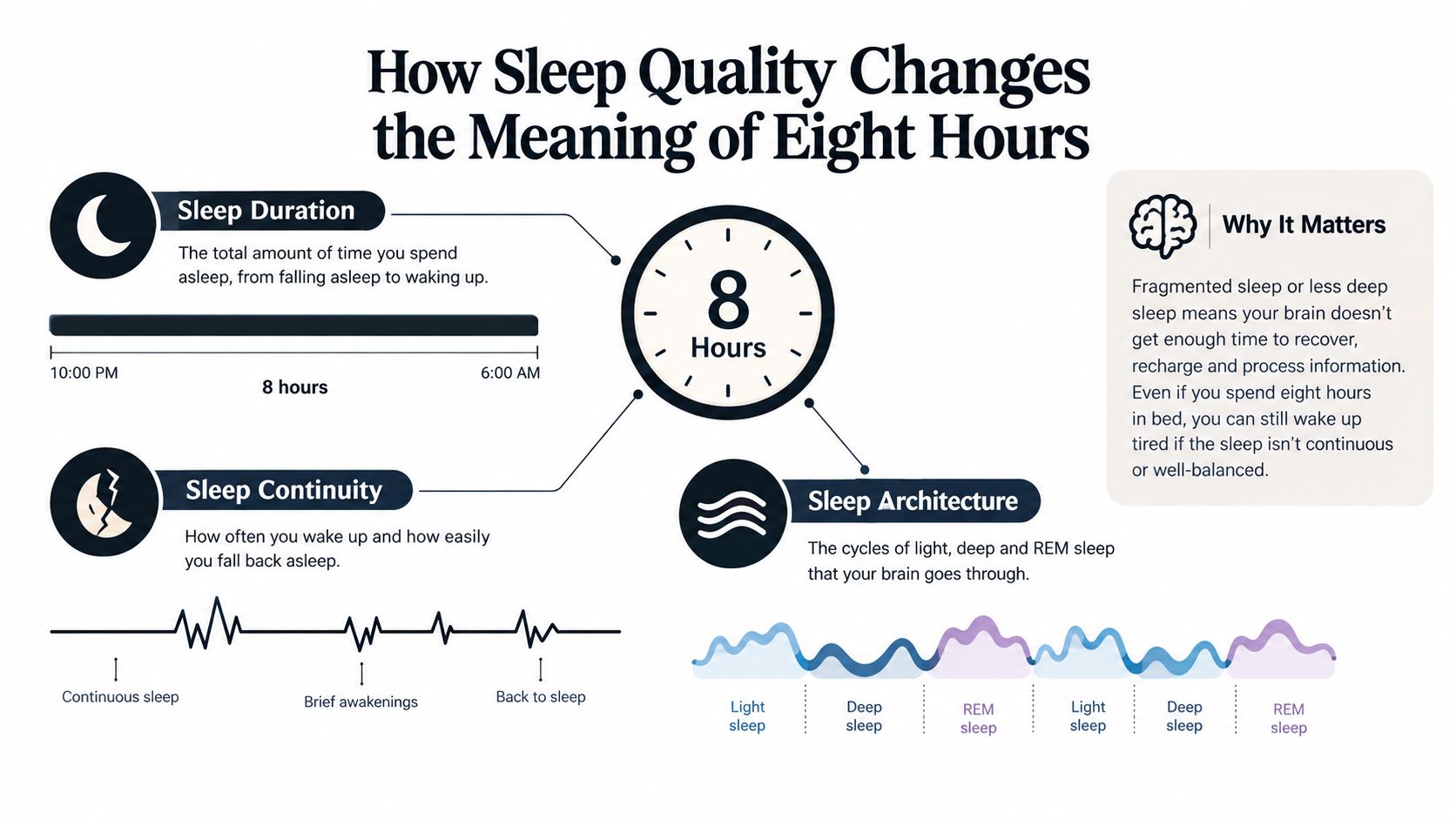
Sleep duration tells you how much time passed. Sleep continuity tells you whether sleep stayed together, while sleep architecture describes how your brain moved through its different stages. Those measures overlap, but they aren't interchangeable.
During a typical night, sleep moves through lighter stages, deeper slow-wave sleep and REM sleep in repeating cycles. Deep sleep supports physical restoration, while REM sleep is involved in processes such as learning and memory. You don't need to monitor every stage yourself, but the overall pattern matters because repeated interruptions can prevent the night from functioning as one connected period of recovery.
Think of sleep as travelling through a series of connected rooms. Spending eight hours inside the building doesn't help as much if an alarm keeps pulling you back to the entrance. You might not remember every interruption, because many are brief arousals rather than fully conscious awakenings, but the night can still feel shallow by morning.
What can break the circuit
Several disruptions can change what eight hours means:
- Noise and light can prompt brief arousals or make it harder to remain asleep.
- Temperature can create repeated discomfort, sweating or a restless second half of the night.
- Pain can keep the brain alert even when the sleeper doesn't fully wake.
- Stress can increase mental and physical arousal, making sleep lighter.
- Alcohol can make you drowsy at first but reduce sleep depth later. The NHS specifically notes that evening drinking can leave you tired the next day despite a full eight hours (NHS fatigue advice).
That last example shows why sedation isn't the same as recovery. Falling asleep quickly after alcohol doesn't prove that the night will contain stable, restorative sleep.
A useful distinction: Time asleep is the total journey. Sleep continuity and architecture tell you whether you completed the journey without repeated detours.
You also don't need a wearable to notice every possible disruption. Waking with a dry mouth, remembering several awakenings, feeling hot, hearing household noise or noticing that tiredness follows evening drinking can provide more useful clues than a single sleep score. Breathing and circadian timing deserve particular attention because they can disturb the night without producing a clear memory of waking.
When Night-Time Breathing Disrupts Sleep
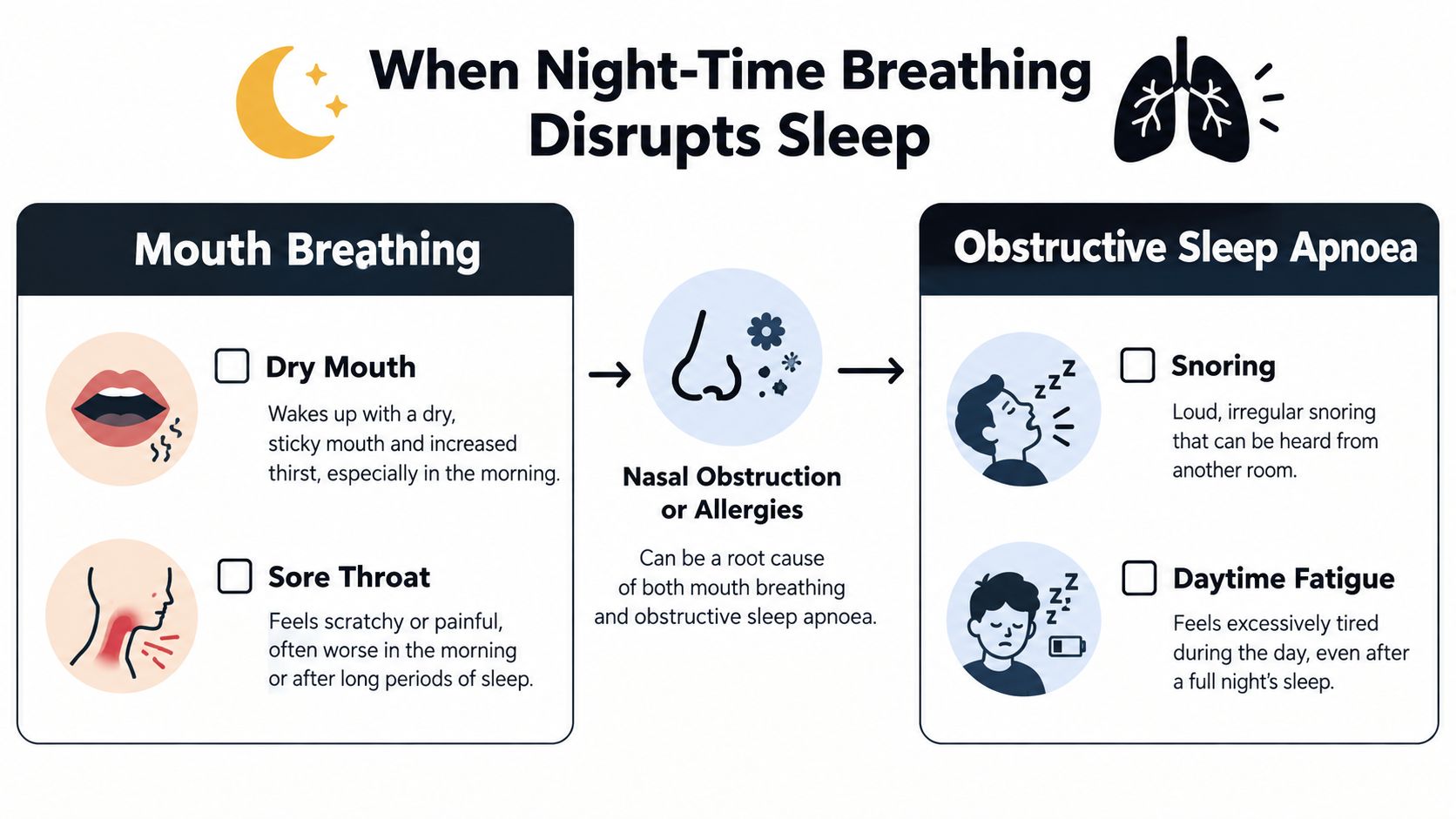
Breathing through your mouth and obstructive sleep apnoea aren't the same problem, although nasal blockage can make breathing feel more difficult and may encourage mouth opening during sleep. Mouth breathing can leave you with a dry mouth or sore throat, while obstructive sleep apnoea involves repeated narrowing or closure of the upper airway during sleep, followed by brief arousals that help restore airflow.
Those arousals may be so short that you don't remember them. The result can be a night that appears long enough but contains repeated interruptions to breathing and sleep stability. The NHS lists excessive daytime sleepiness as a classic presentation of obstructive sleep apnoea and identifies loud snorting, breathing or snoring at night as an important clue (NHS information on excessive daytime sleepiness).
Persistent tiredness after eight hours of sleep, especially when it comes with loud snoring or witnessed pauses in breathing, is worth discussing with a clinician rather than dismissing as a lifestyle issue.
A symptom screen for awareness
Ask yourself, or ask a sleep partner what they notice:
- Snoring: Is it loud, persistent or punctuated by changes in breathing?
- Breathing pauses: Has anyone seen you stop breathing, gasp or choke?
- Dry mouth: Do you regularly wake with a dry mouth or sore throat?
- Morning headache: Do headaches appear on waking and ease later?
- Daytime sleepiness: Do you struggle to stay alert at work, in meetings or while reading?
- Night-time urination: Are repeated bathroom trips part of the same pattern?
This checklist is for pattern recognition, not diagnosis. Nasal allergies, congestion and structural factors can affect nasal airflow, but external nasal support won't treat an airway that repeatedly collapses deeper in the throat.
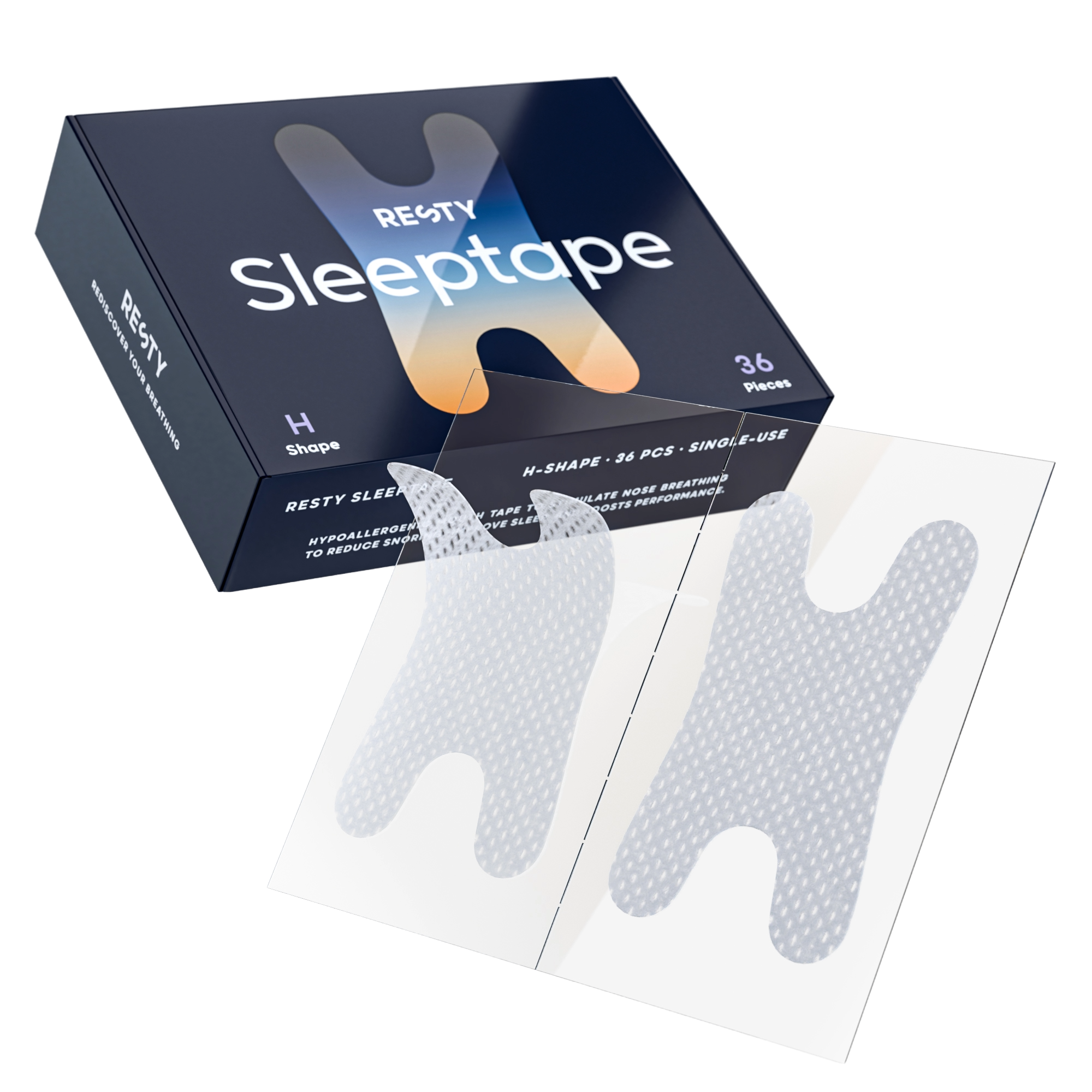
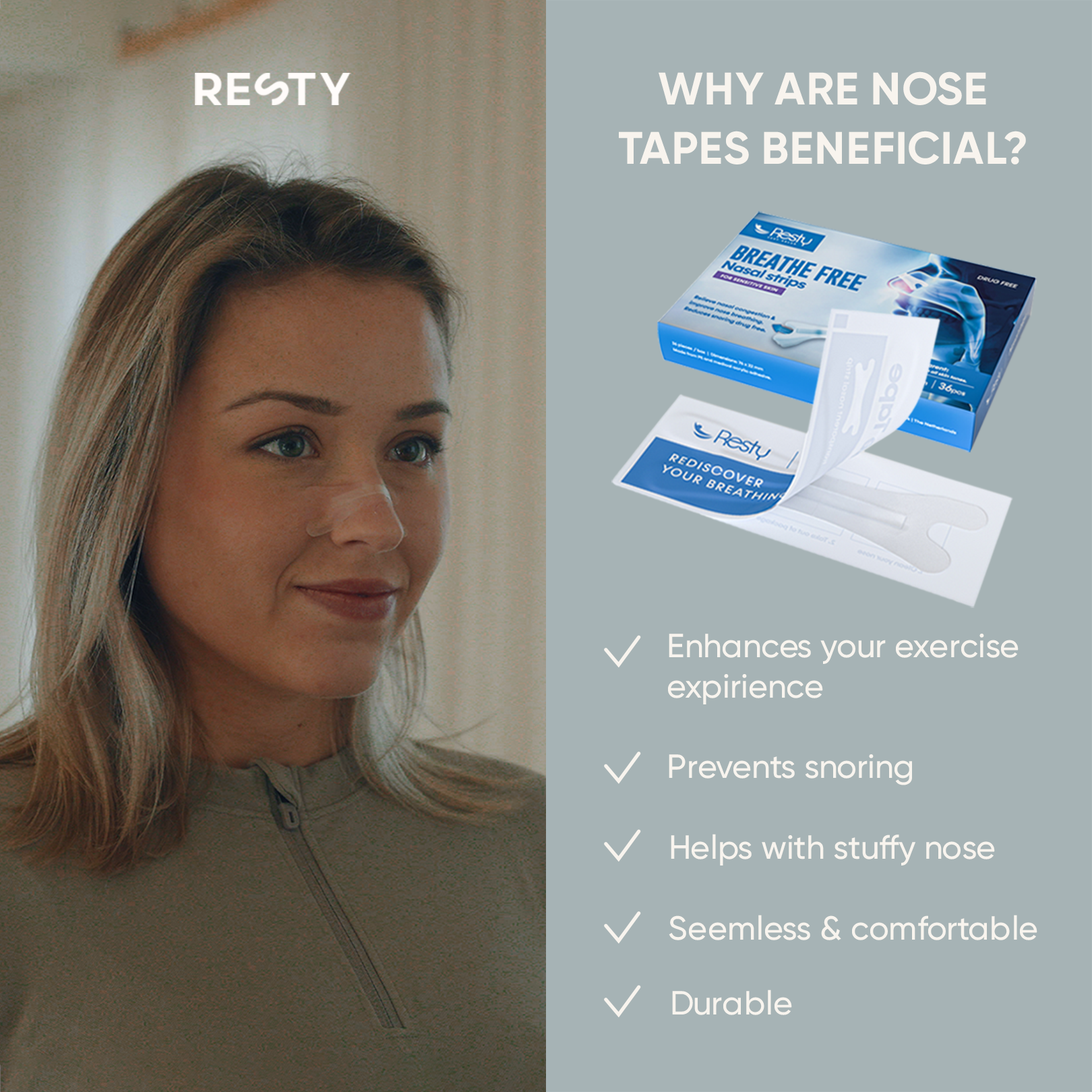
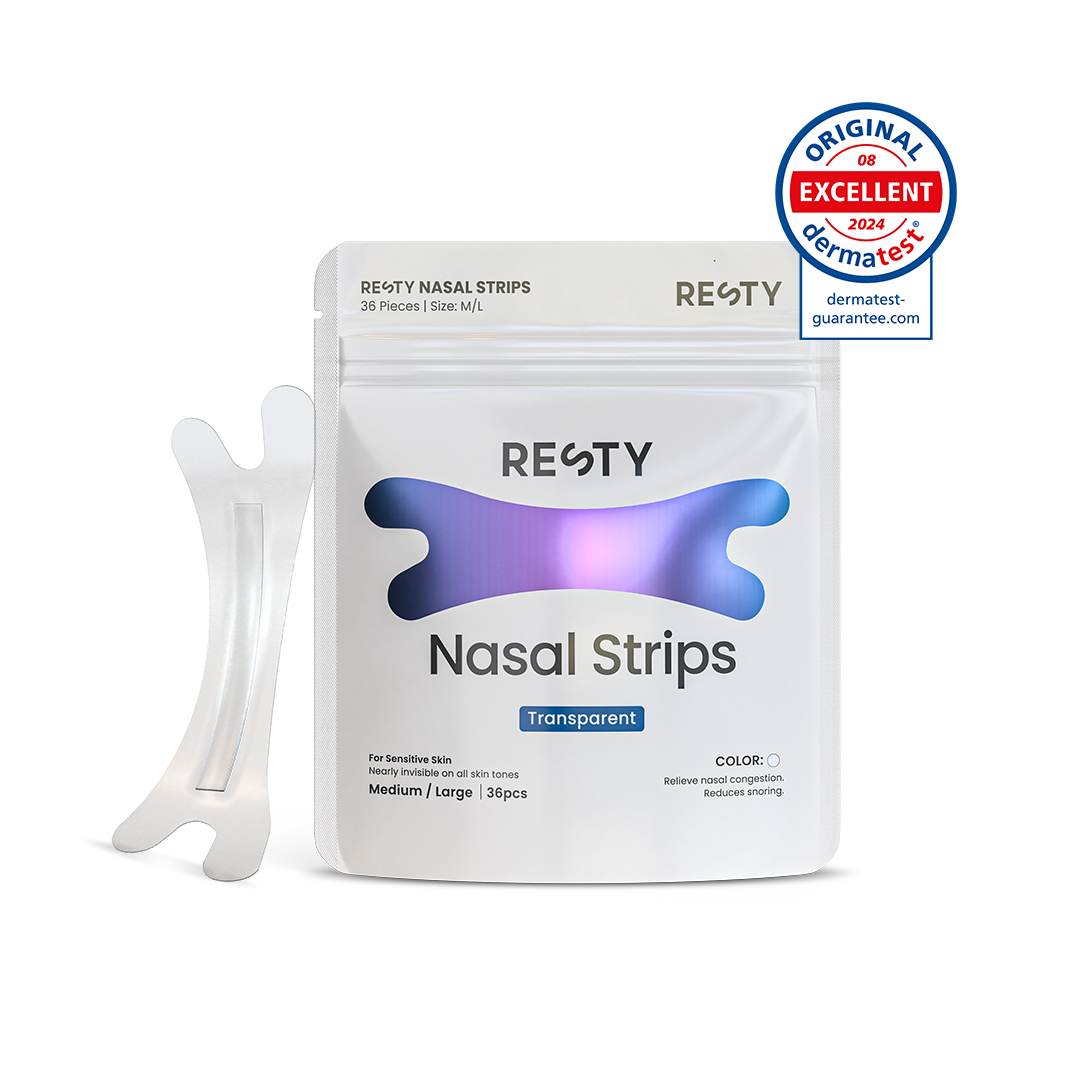
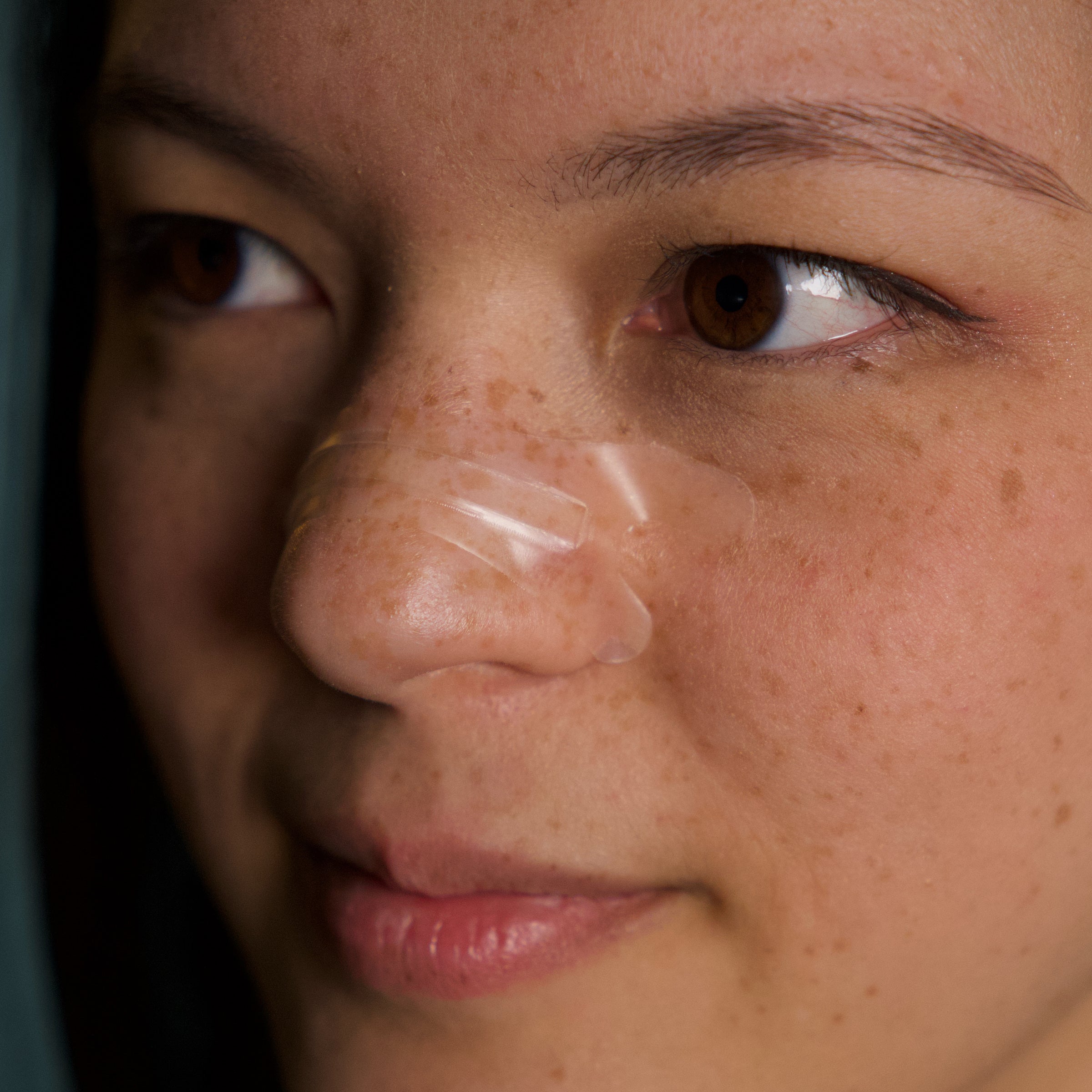
For readers exploring nasal airflow, Reusable Magnetic Nose Strips for Breathing use a reusable clip and fresh adhesive tabs to create a gentle external lift at the sides of the nose. They may make airflow at the front of the nose feel more open for some people, but they're a wellness accessory, not a treatment for snoring or sleep apnoea.
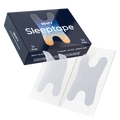
This overview of how sleeping with your mouth open affects your health may help you separate a dry-mouth pattern from signs that need medical assessment.
If a partner reports pauses, choking or loud breathing, or if daytime sleepiness affects safety, arrange a clinical review rather than trying to solve the issue with mouth tape or an over-the-counter product.
How Circadian Misalignment Creates Morning Tiredness
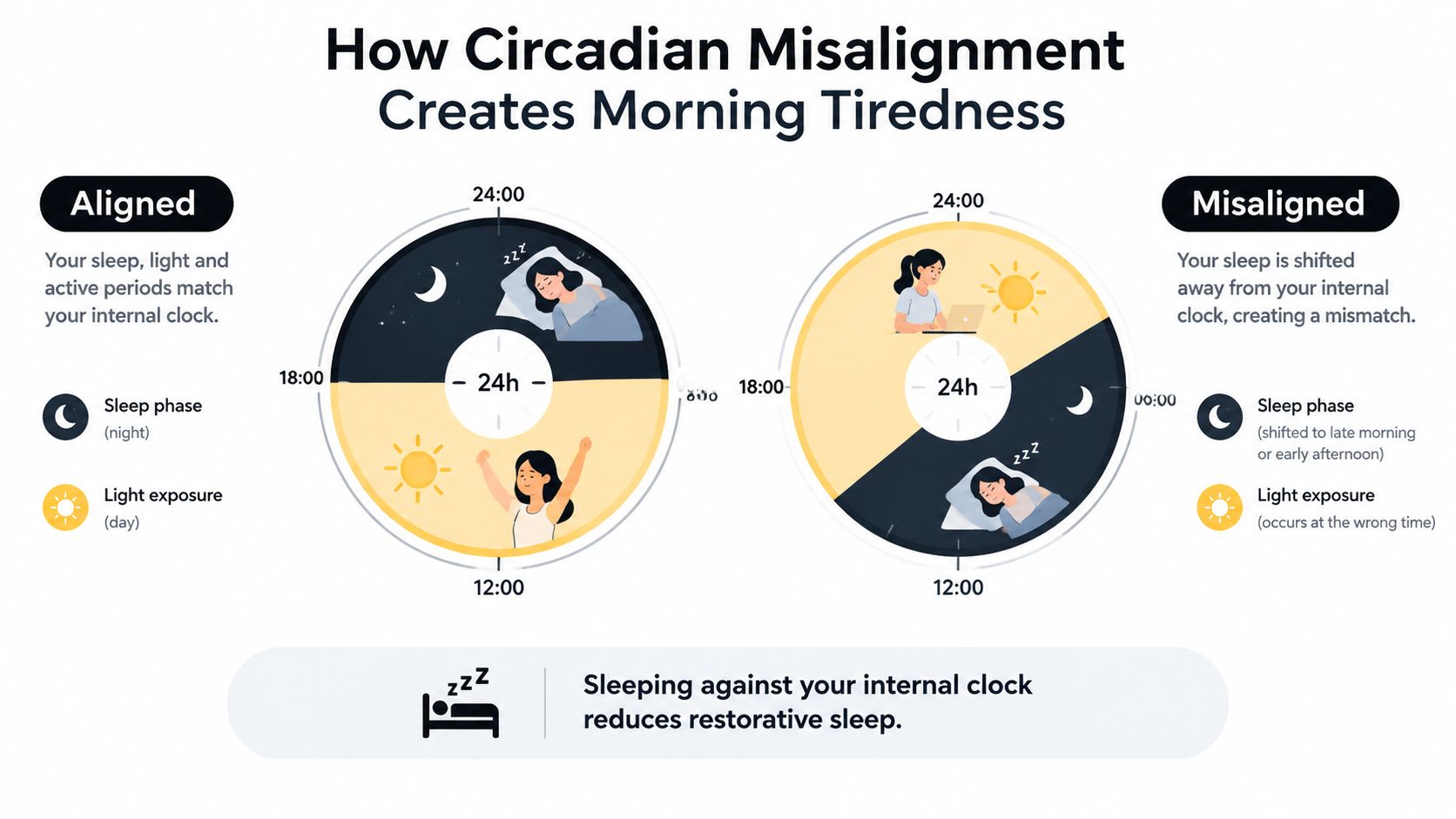
Your body runs on an internal timing system that coordinates sleepiness, alertness, body temperature and hormone release across the day. You can spend eight hours in bed and still wake tired when those hours occur at odds with your internal clock.
Late-night light, irregular bedtimes, weekend lie-ins and night shifts can all make the signal less predictable. The problem isn't necessarily that you slept too little. Your alarm may have arrived while your biology was still promoting sleep, leaving you groggy even after a seemingly adequate duration.
Look for the timing signature
A timing problem often has a recognisable pattern:
- Delayed sleep phase: You don't feel naturally sleepy until late, then struggle with early alarms. Sleep may feel easier when you can follow your preferred late schedule.
- Advanced sleep phase: Sleepiness arrives unusually early, followed by waking earlier than intended.
- Shift-work disruption: Night shifts or rotating schedules repeatedly place sleep and alertness in conflict.
Age and routine can shape these patterns, but a calendar label isn't enough to identify the cause. Track what happens on workdays, days off and after night shifts instead.
Notice whether you take a long time to fall asleep at an early bedtime but fall asleep more readily at a later hour. Also note when your alertness peaks. Feeling most capable late in the afternoon or overnight, then struggling during an early morning commute, points more towards timing than a hot bedroom or a single noisy night.
Morning daylight can provide a useful observation. If consistent exposure to daylight after waking gradually makes mornings easier, timing may be contributing. A guide to daylight lamps, including exposure distance and duration can help you think about light routines, but people with significant timing problems should discuss treatment with a healthcare professional.
Keep wake time reasonably consistent, dim bright evening light and adjust a late schedule gradually rather than forcing a sudden change. If tiredness remains identical regardless of schedule, or comes with snoring and breathing pauses, investigate other explanations too.
Lifestyle, Environment and Medical Clues
Not every case of waking tired involves breathing or circadian timing. The pattern often changes depending on the trigger, so compare your mornings rather than judging one night in isolation.
Alcohol is a common example. It may make you sleepy at bedtime, then contribute to lighter or more fragmented sleep later. If awakenings and next-day heaviness follow evening drinking, move alcohol earlier or reduce it and observe whether the pattern changes.
Caffeine can remain stimulating well beyond the moment you drink it. If you fall asleep normally but wake unrefreshed after late coffee, tea, energy drinks or pre-workout products, review timing rather than assuming rapid sleep onset means caffeine isn't involved.
Match the clue to the possible contributor
| Morning or night-time pattern | Possibility to consider |
|---|---|
| Repeated awakenings after evening drinking | Alcohol-related sleep fragmentation |
| Heat, sweating or morning headache in a warm room | Temperature and bedroom conditions |
| Creeping bedtime shifts and difficult early alarms | Circadian timing |
| Mental activity, tension or frequent checking of the clock | Stress-related arousal |
| Pain, uncomfortable bedding or repeated position changes | Physical discomfort |
| Urge to move the legs or uncomfortable sensations | Restless legs |
| Persistent fatigue with broader health changes | Thyroid, iron, hormonal or other medical contributors |
Noise, light, an uncomfortable mattress and an unsuitable room can disturb sleep without producing a dramatic awakening. Stress and anxiety can do something similar by keeping the nervous system ready to respond throughout the night.
NHS Lothian identifies behaviourally induced sleep restriction as the commonest cause of community sleepiness and also flags poor sleep hygiene, lifestyle, bedroom safety issues and bed poverty as contributors (NHS Lothian guidance on excessive daytime sleepiness). In other words, “eight hours in bed” may overstate actual sleep if the opportunity is repeatedly reduced by late work, scrolling, caring responsibilities or shift work.
Medical contributors are worth considering when tiredness persists despite a genuine chance to sleep. Restless legs, thyroid dysfunction, iron deficiency, chronic pain and hormonal change can all deserve discussion with a clinician. Don't assume a medical explanation, but don't treat persistent fatigue as a personal failure either.
Observation beats guesswork: Change one obvious factor at a time where possible, and record what happens the next morning.
Track Symptoms and Choose the Right Next Tests
A short sleep log can turn “I'm always tired” into information a clinician can use. Keep it for one to two weeks, recording the night and the next day without trying to make the entries perfect.
Write down your bedtime, lights-out time, estimated time to fall asleep, awakenings and approximate duration, final wake time and morning energy. Add naps, caffeine, alcohol, exercise, evening meals, stress and any report of snoring, gasping or breathing pauses. Also record when tiredness appears, because sleepiness on waking, an afternoon slump and falling asleep during passive activities suggest different patterns.
A practical observation sheet
- Timing: Bedtime, lights-out, wake time and whether the schedule differed from workdays.
- Continuity: Remembered awakenings, noise, temperature, pain and bathroom trips.
- Breathing: Snoring, dry mouth, blocked nose, gasping or a partner's observations.
- Daytime function: Morning energy, concentration, naps and accidental dozing.
- Inputs: Caffeine, alcohol, nicotine, medication changes, exercise and stress.
You can use the Stop-Bang questionnaire as a screening conversation starter for obstructive sleep apnoea risk and the Epworth Sleepiness Scale to describe daytime sleepiness. Neither test confirms a diagnosis. Consumer watches and sleep apps can highlight trends in timing or movement, but their sleep-stage estimates shouldn't replace clinical assessment.
| Symptom pattern | Self-check to try | Clinical test often discussed | Urgency |
|---|---|---|---|
| Loud snoring, witnessed pauses, gasping or marked daytime sleepiness | Stop-Bang and partner observations | Home sleep apnoea testing or polysomnography | Prompt review, urgent if driving is unsafe |
| Late sleepiness, difficult early waking, improvement on a later schedule | Sleep diary and consistent timing observations | Actigraphy and sleep diary review | Routine review unless safety is affected |
| Repeated awakenings with stress, pain or clock-watching | Sleep diary and mood review | Clinical assessment for insomnia and contributing conditions | Routine review if persistent |
| Fatigue with possible iron or thyroid symptoms | Medication and health review | Blood tests for anaemia, thyroid or iron problems | Arrange review when unexplained or persistent |
| Sudden sleepiness after a medication change | Check the timing of the change and dozing episodes | Medication review with a clinician | Prompt review |
Seek prompt clinical advice if a partner witnesses repeated apnoeas, you fall asleep while driving, or severe sleepiness follows a recent medication change. Confusion, breathing difficulty or any situation where you can't stay awake safely needs urgent help.
The log isn't a home diagnosis. Its value is that it shows whether the problem follows a schedule, a breathing pattern, an environmental trigger or a broader health change.
Practical Changes to Make First
Buying a new sleep accessory or extending time in bed isn't always the right first move. Start by making the problem visible, then change the factors that are easy to reverse and most clearly connected to your symptoms.
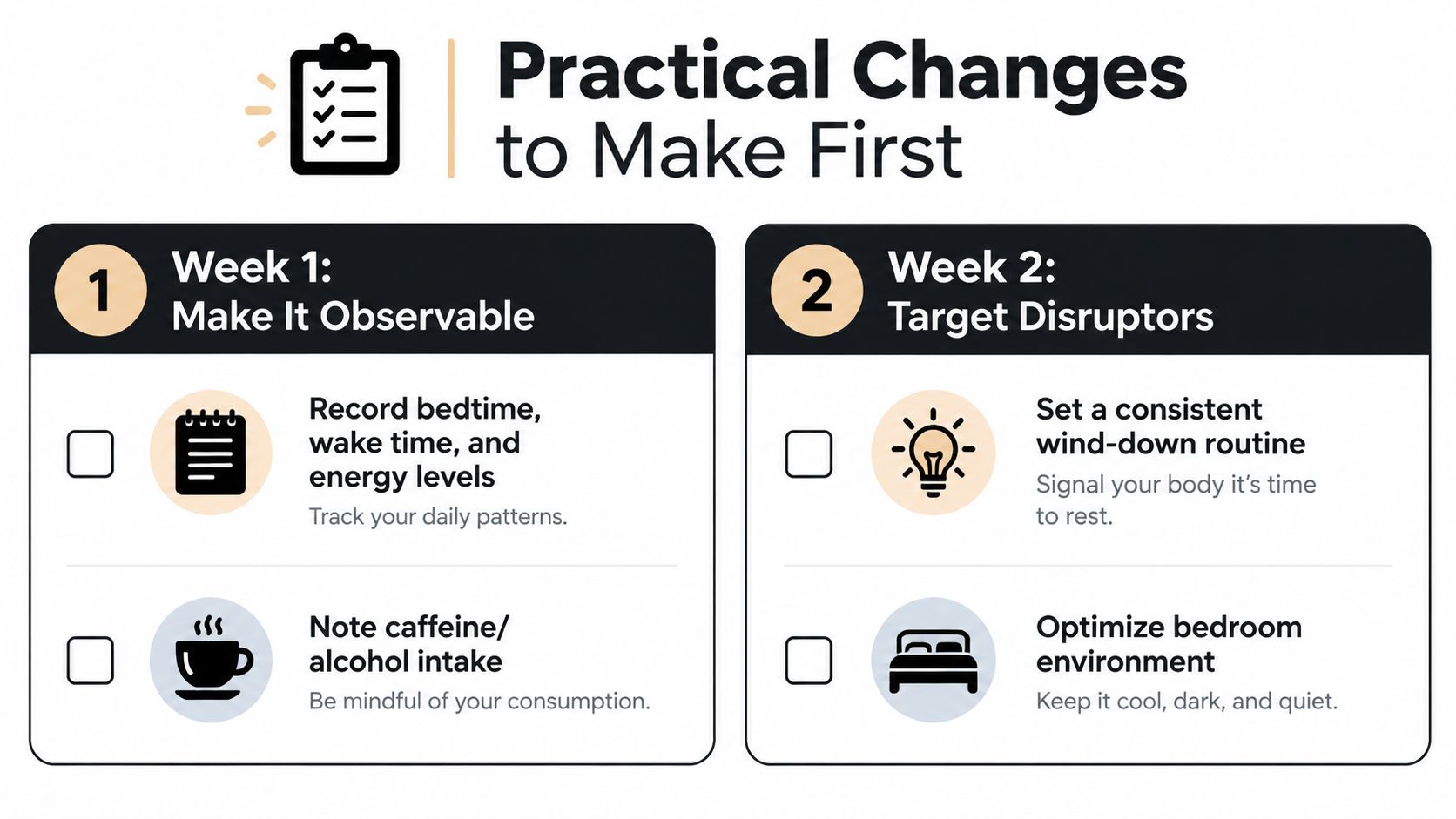
For one to two weeks, record bedtime, estimated sleep time, awakenings, snoring or breathing observations, naps, caffeine, alcohol, exercise, meals, stress and the time of day when tiredness appears. Aim for a realistic and consistent sleep opportunity that suits your age and health rather than chasing an arbitrary number.
Make the low-risk changes first
- Stabilise the schedule. Keep wake time reasonably consistent and seek morning daylight. Regular daytime movement can also support a clearer difference between day and night.
- Improve the room. Make the bedroom dark, quiet and comfortably cool. Reduce avoidable noise and light, and address bedding or temperature problems that repeatedly wake you.
- Review stimulation. Reduce late caffeine and nicotine, avoid heavy meals close to bedtime, and observe whether evening alcohol predicts a rougher second half of the night.
- Protect the wind-down. Dim bright evening light and give your mind a calmer transition into bed instead of moving directly from demanding work or intense screen use to sleep.
The aim is not to create a flawless routine. It's to remove obvious disruptors and see whether your morning changes. A practical overview of evidence-informed sleep habits can support that process, but lifestyle changes aren't a universal fix.
If your partner notices pauses, gasping or choking, or if you wake with dry mouth, headaches or pronounced daytime sleepiness, seek clinical assessment. Don't rely on mouth tape or an over-the-counter device to manage possible airway obstruction.
Take the Next Step Based on Your Pattern
A late schedule, irregular wake time and strong evening light call for a timing experiment: keep wake time consistent, get morning daylight, dim the evening and shift bedtime gradually. If the difficulty changes substantially when you can sleep on your preferred schedule, discuss circadian timing with a professional.
Snoring, gasping, witnessed pauses, morning headaches or pronounced daytime sleepiness point towards a breathing assessment rather than just adding more time in bed. A clinician may consider sleep apnoea testing and review other causes.
If awakenings cluster around stress, pain, noise, temperature, caffeine, nicotine or alcohol, address the clearest contributor and seek help if the pattern continues. Persistent tiredness despite a fair sleep opportunity also deserves clinical review, particularly when it affects driving, work, mood or daily functioning.
The decision is straightforward: a problem that changes when you adjust the room or routine can be observed and refined, while persistent symptoms, breathing interruptions or unsafe sleepiness need professional attention.
If nasal airflow is part of your bedtime routine, Resty offers breathing-focused accessories, including reusable magnetic nasal strips, alongside practical guidance for building a more organised sleep routine. Visit Resty to explore the available options, but use persistent snoring, breathing pauses or severe daytime sleepiness as reasons to seek clinical assessment rather than relying on an accessory alone.